
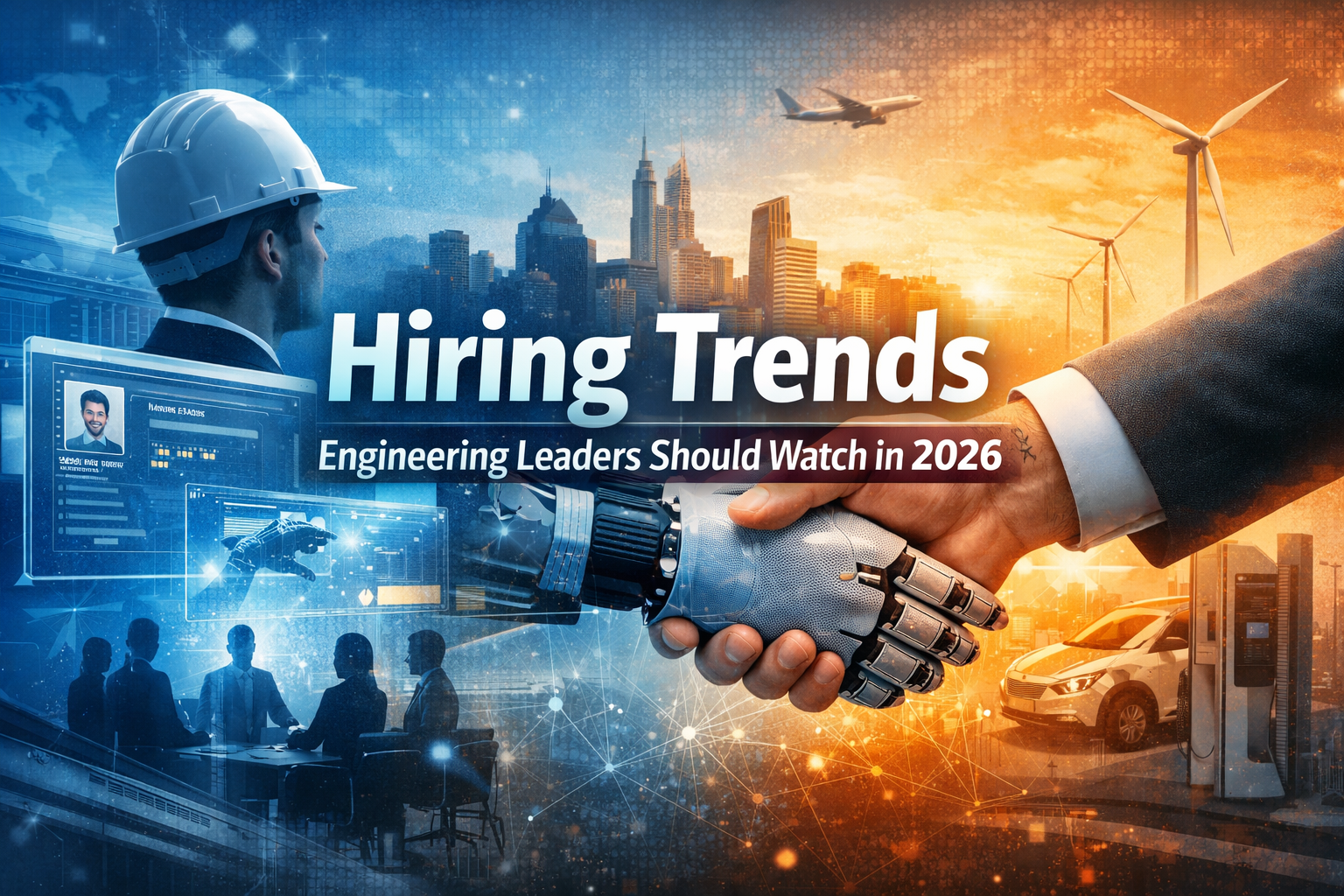
Hiring engineers in 2026 will require more than competitive salaries and strong job descriptions. Rapid advances in AI, persistent skills shortages, and shifting candidate expectations are reshaping how engineering leaders attract and retain talent. Organizations that adapt their recruitment strategies early will be better positioned to secure top engineers in an increasingly competitive market.
1. AI Becomes a Core Part of Engineering Recruitment
Artificial intelligence is no longer experimental in hiring — it’s foundational.
AI-powered recruiting tools are now widely used to:
Screen resumes faster and more accurately
Source passive engineering candidates
Schedule interviews and improve hiring speed
For engineering leaders, the challenge is balancing automation with human oversight. Ethical AI usage, bias mitigation, and transparency are now essential components of responsible hiring practices.
2. Skills-Based Hiring Replaces Degree-First Models
Engineering hiring is shifting away from traditional degree requirements toward skills-based evaluation.
Instead of filtering candidates by education alone, companies are:
Prioritizing hands-on experience and technical assessments
Designing roles around measurable competencies
Expanding access to nontraditional but highly capable talent
This approach not only widens the talent pool but also aligns hiring more closely with real-world engineering performance.
3. Candidate Experience Is a Competitive Advantage
In 2026, engineering candidates expect a hiring process that reflects professionalism and respect.
Key expectations include:
Clear communication and transparent timelines
Fewer, more focused interviews
Timely feedback and decision-making
Poor candidate experience leads to higher drop-off rates — especially among in-demand engineers with multiple offers. Companies that streamline and humanize the hiring journey will win more top talent.
4. Recruiters Evolve Into Strategic Talent Partners
Recruiting teams are becoming strategic advisors to engineering leadership.
Rather than simply filling roles, recruiters now:
Provide real-time market insights on talent availability
Help define realistic role requirements
Advise on compensation, interview structure, and hiring timelines
Strong collaboration between engineering leaders and recruiters directly improves hiring outcomes.
5. Flexibility and Employer Brand Influence Hiring Decisions
Hybrid and flexible work options are no longer perks — they’re expectations.
Engineering candidates increasingly evaluate employers based on:
Remote or hybrid work policies
Leadership transparency and culture
Long-term growth opportunities
Employer branding plays a major role in whether candidates engage, apply, or accept offers.
6. Compensation Transparency and Total Rewards Matter More
As competition for engineering talent remains strong, compensation strategy is under greater scrutiny.
Successful organizations are:
Publishing salary ranges more frequently
Communicating total rewards clearly
Aligning pay with skills and market demand
Transparency builds trust and reduces friction late in the hiring process.
7. Data-Driven Hiring Guides Better Decisions
Engineering leaders are increasingly relying on hiring analytics to plan ahead.
Key metrics include:
Time-to-hire
Quality-of-hire
Offer acceptance rates
Workforce forecasting
Using data to guide hiring decisions allows organizations to anticipate talent gaps and optimize recruitment investment.
Conclusion: How Engineering Leaders Can Prepare for 2026
To stay competitive in 2026, engineering leaders should:
Embrace AI-enabled recruiting responsibly
Shift toward skills-based hiring models
Invest in candidate experience
Strengthen recruiter–leader collaboration
Use data to guide workforce planning
Hiring success in 2026 will depend on adaptability, transparency, and strategic foresight.
Engineering hiring in 2026 will be shaped by AI-driven recruitment, skills-based evaluation, stronger candidate experience, and data-backed decision-making. Leaders who modernize their hiring strategy now will be best positioned to attract and retain top engineering talent.
FAQs
Is AI replacing human recruiters in 2026?
No. AI enhances efficiency, but human judgment remains essential for evaluating candidates, culture fit, and ethical decision-making.
Are engineering degrees still important?
Degrees still matter, but skills, experience, and demonstrated ability are becoming more influential in hiring decisions.
Why is candidate experience so important?
Top engineers often have multiple options. A poor hiring experience can quickly push candidates toward competitors.
Sources
-
Ongig — Recruiting Trends for 2026 (Published 2025)
-
Korn Ferry — Talent Acquisition Trends Shaping 2026 (Published 2025)
-
Corporate Navigators — 2026 Recruitment Trends
-
Bouló Solutions — Skills-Based Hiring in 2026