
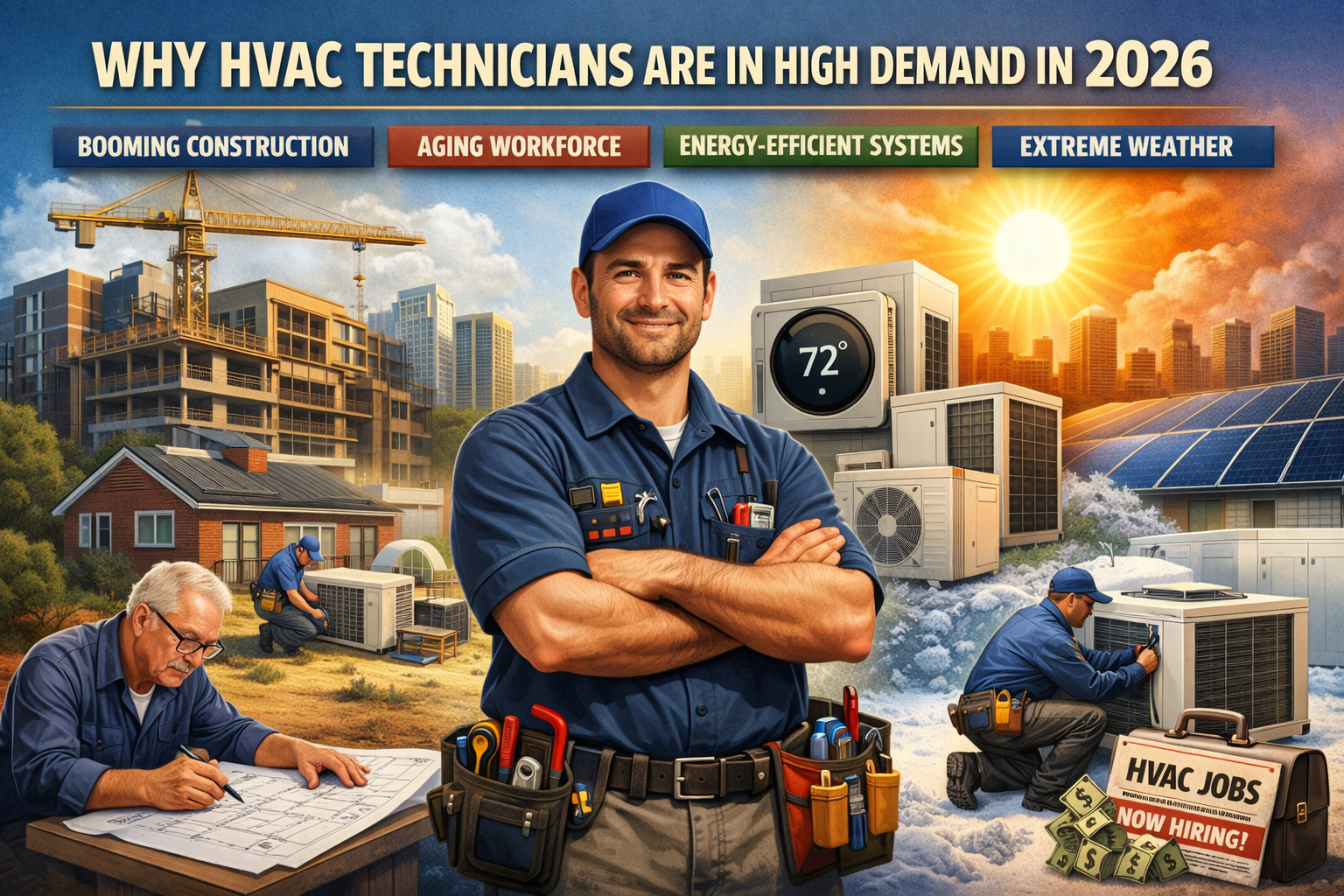
The demand for HVAC technicians in 2026 is stronger than ever. As residential and commercial buildings rely increasingly on advanced heating, ventilation, and air conditioning systems, skilled technicians are essential to keep these systems running efficiently. With rapid construction growth, evolving energy regulations, and an aging workforce, HVAC professionals are becoming one of the most sought-after trades in the job market.
In this article, we’ll explore the key reasons HVAC technicians are in high demand in 2026, why the industry continues to grow, and why this career path is attracting more professionals each year.
Growing Construction and Infrastructure Projects
One of the biggest drivers of HVAC technician demand is the booming construction industry. New homes, commercial buildings, hospitals, warehouses, and data centers all require advanced climate control systems.
Every new building requires:
HVAC system design and installation
Routine maintenance and inspections
Repairs and system upgrades
Because HVAC systems are essential for comfort, safety, and air quality, qualified technicians are needed at every stage of construction and throughout the life of the building.
Aging HVAC Workforce
Another major factor contributing to the shortage of HVAC technicians is the retirement of experienced professionals.
Many skilled technicians who entered the industry decades ago are now reaching retirement age. As they leave the workforce, companies are struggling to find qualified replacements.
This trend has created:
Increased job openings
Higher wages for skilled technicians
More training programs and apprenticeships
For individuals entering the trade today, this workforce gap creates excellent long-term career opportunities.
Demand for Energy-Efficient HVAC Systems
Energy efficiency is a major priority for businesses, homeowners, and governments in 2026. New regulations and sustainability initiatives are pushing companies to upgrade outdated heating and cooling systems with modern, energy-efficient HVAC technology.
These upgrades require technicians who understand advanced systems such as:
Smart thermostats and building automation
High-efficiency heat pumps
Energy recovery ventilation systems
Variable refrigerant flow (VRF) systems
Because of these innovations, technicians with specialized training in modern HVAC systems are highly valuable.
Extreme Weather and Climate Changes
As climate patterns become more unpredictable, reliable heating and cooling systems are more important than ever. Extreme heat waves and colder winters place additional strain on HVAC systems, increasing the need for regular maintenance and repairs.
This means HVAC technicians are essential for:
Emergency repairs
Preventative maintenance
System upgrades to handle extreme temperatures
Unlike many other professions, HVAC work remains consistently in demand year-round.
HVAC Careers Offer Strong Job Security
One of the biggest reasons people are pursuing HVAC careers is the job stability the industry provides. HVAC systems are essential infrastructure—homes, hospitals, schools, and businesses cannot operate without them.
According to labor industry trends, HVAC technicians benefit from:
Strong job growth projections
Competitive salaries
Opportunities for overtime
Career advancement into supervisory or management roles
The potential to start their own HVAC businesses
Because of these advantages, the HVAC trade continues to attract new workers seeking stable and rewarding careers.
The Future of HVAC Careers
The HVAC industry is expected to continue growing well beyond 2026. With increasing construction, new environmental regulations, and evolving technology, skilled technicians will remain a critical part of maintaining modern infrastructure.
For individuals interested in hands-on work, problem-solving, and long-term job security, becoming an HVAC technician offers a reliable and rewarding career path.