
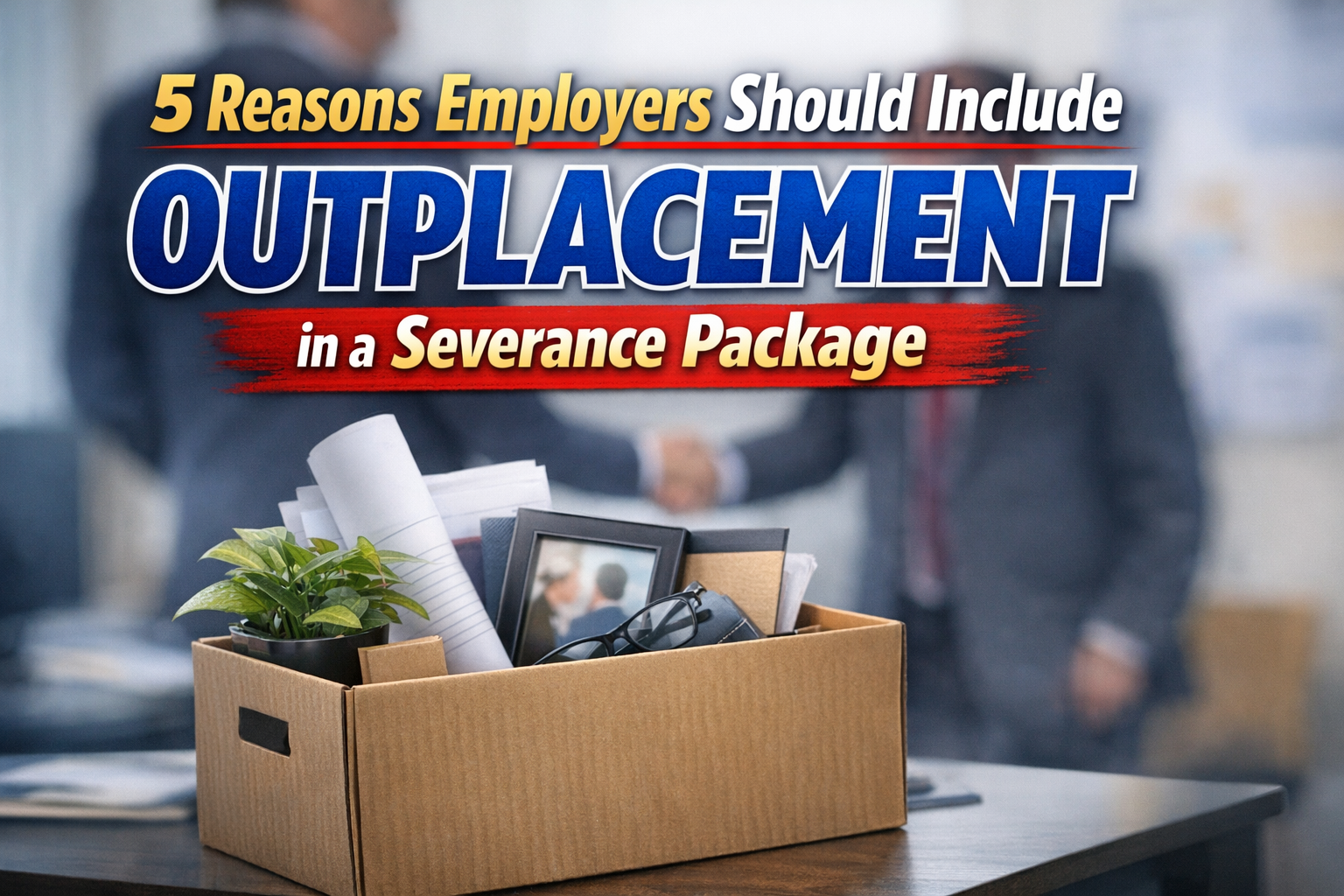
When a company makes the difficult decision to eliminate positions, the severance package is often treated as a checklist item: finalize compensation, confirm legal requirements, and move on. That approach can be shortsighted. How you handle employee exits can affect your reputation, internal morale, and even your ability to hire in the future.
Outplacement is one of the most overlooked parts of a severance strategy. It is not just a goodwill gesture. It can help employers manage workforce transitions more professionally while reducing friction during a sensitive moment. For companies in engineering, architecture, construction, and manufacturing, where reputation and relationships matter, that can have real business value.
What is outplacement?
Outplacement is career transition support provided to departing employees. It often includes resume assistance, interview coaching, job search guidance, career counseling, and help navigating the next step professionally.
In practice, outplacement gives affected employees structure and support at a time when they are likely dealing with uncertainty. For the employer, it shows that the company is handling the separation with more care and professionalism than a paycheck and a formal notice alone.
1. It helps protect your employer brand
Layoffs and separations do not stay private for long. Employees talk. Online reviews appear. Industry peers hear what happened. The market forms an opinion not only about the fact that cuts occurred, but about how the company handled them.
Including outplacement in a severance package helps demonstrate that the business took the transition seriously. That matters because employer brand is built in difficult moments just as much as in recruiting campaigns. A company that provides support during an exit is more likely to be seen as responsible, organized, and professional.
This is especially important in specialized industries where talent networks are smaller and reputations travel quickly. In engineering, architecture, construction, and manufacturing, future candidates may know former employees personally. The tone of the separation can influence how your company is viewed long after the workforce reduction is over.
2. It shows professionalism and compassion without weakening the business message
Some employers hesitate to add anything beyond basic severance because they do not want to blur the business rationale behind the decision. Outplacement does not do that. It does not change the reality of the separation. It changes how responsibly the transition is managed.
That distinction matters. Offering career transition support sends a message that the company can make hard decisions while still treating people with respect. It reflects leadership discipline, not softness.
This can be particularly valuable for long-tenured employees, managers, and technical professionals whose exits may be highly visible internally. The company does not need to overpromise or become emotional. It simply shows that it recognizes the impact of the decision and is willing to support the person’s next step in a practical way.
3. It may reduce friction, resentment, and post-separation issues
Not every terminated employee becomes a problem, but poor offboarding practices can increase tension unnecessarily. Confusion, frustration, and a sense of being discarded can create avoidable conflict after separation.
Outplacement can help reduce some of that friction by giving departing employees a path forward. When people feel they have immediate support and a clearer next move, the transition can become less adversarial. That does not eliminate all risk, but it can lower the emotional temperature of the process.
For employers, that matters because the cost of a poorly handled separation can extend beyond severance itself. Internal disruption, management distraction, reputation damage, and strained professional relationships can all linger. Outplacement is not a legal shield, but it can be part of a more thoughtful and lower-friction exit process.
4. It supports morale among the employees who stay
One of the biggest mistakes employers make during layoffs is focusing only on the people leaving and forgetting the people staying. Remaining employees watch closely. They notice whether leadership communicates clearly, whether transitions are handled well, and whether affected coworkers are treated with professionalism.
When employees see colleagues escorted out with minimal support, it can damage trust. It may create anxiety, lower confidence in leadership, and weaken engagement. On the other hand, when they see the company offering meaningful transition support, it reinforces the message that leadership is acting responsibly under pressure.
That can make a difference in retention and productivity after the reduction. Teams recovering from layoffs are often already dealing with heavier workloads, uncertainty, and operational strain. A thoughtful severance approach, including outplacement, can help stabilize the environment and preserve more of the confidence needed to move forward.
5. It can improve long-term recruiting perception
Severance decisions can affect future hiring more than many employers realize. Candidates do not evaluate a company only by salary, benefits, or job title. They also consider how the organization behaves when conditions are difficult.
A company known for handling workforce changes poorly may face more skepticism from experienced candidates later. A company that is known for being professional and fair may have an easier time rebuilding trust when it needs to hire again.
This matters even more in sectors where hiring is already challenging. Companies in engineering, architecture, construction, and manufacturing often compete for hard-to-find technical talent. If layoffs, restructuring, or downsizing are part of the company’s recent history, the way those exits were handled can influence whether future candidates view the employer as stable, credible, and worth considering.
Outplacement supports that long-term perception. It helps show that the business is serious about managing talent transitions responsibly, not just filling openings when demand returns.
When outplacement makes the most sense
Outplacement is not limited to large corporate layoffs. It can be especially valuable in several common situations:
Larger workforce reductions
When multiple employees are affected, the reputational and morale stakes rise quickly. Outplacement can help create a more organized and humane process.
Executive or leadership separations
Senior-level exits often carry more visibility, both internally and externally. Professional transition support can help protect relationships and reduce disruption.
Long-tenured employees
When someone has given years of service, a basic severance package may feel incomplete. Outplacement can reflect a higher standard of treatment without creating unrealistic commitments.
Specialized technical roles
Professionals in engineering, architecture, construction, and manufacturing may benefit from more targeted career guidance because their job search is often narrower and more specialized.
Reputation-sensitive markets
If your company operates in a tight labor market or close-knit industry, how you treat departing employees can shape future hiring conversations more than you expect.
Common employer hesitation
The most common objection is cost. Employers may question whether outplacement is necessary when severance is already being paid. That is a fair concern, but it helps to compare the cost of outplacement against the broader cost of a poorly managed transition.
Another hesitation is timing. During layoffs or restructuring, leaders are often moving quickly and may not want to add another decision. But that is also when structure matters most. Outplacement can make the process more complete, not more complicated.
Some employers also assume employees will not use the service. Usage can vary, but the value is not measured only by participation rates. It also comes from what the offer communicates: that the company took transition support seriously and acted with professionalism.
A better severance package protects more than the employee
A severance package is not only about concluding employment. It is also about protecting the business during a moment that can affect reputation, morale, and future hiring. Outplacement helps employers manage that moment with more control and credibility.
For companies in engineering, architecture, construction, and manufacturing, workforce decisions often have ripple effects. Project continuity, team confidence, and future recruiting can all be influenced by how exits are handled. Employers that think beyond the immediate separation are often better positioned when it is time to stabilize, rebuild, and hire again.
DAVRON understands how workforce changes affect long-term talent strategy in specialized industries. For employers navigating transition while planning future hiring needs, that perspective matters.
How DAVRON Can Support Employers Through Workforce Transitions
DAVRON understands that workforce changes can create both immediate challenges and long-term hiring consequences. Employers may need to handle layoffs or restructures professionally today while preparing to hire critical talent tomorrow.
That is where a specialized partner can add value. DAVRON works with employers in engineering, architecture, construction, and manufacturing and understands how offboarding decisions can affect employer reputation, internal morale, and future recruiting success.
For companies that want to strengthen their severance approach, DAVRON can be part of the conversation not only around future hiring needs, but also around outplacement support during employee transitions. That helps employers take a more thoughtful, business-conscious approach during a difficult moment.
Managing a layoff, restructuring, or workforce transition?
DAVRON understands that employee separations can affect morale, reputation, and future hiring success.
Call us to connect directly with a live outplacement specialist:
Explore DAVRON services & submit online request
Ready to hire engineering, architecture, construction, or manufacturing professionals?
DAVRON specializes in delivering high-quality candidates in these industries.