
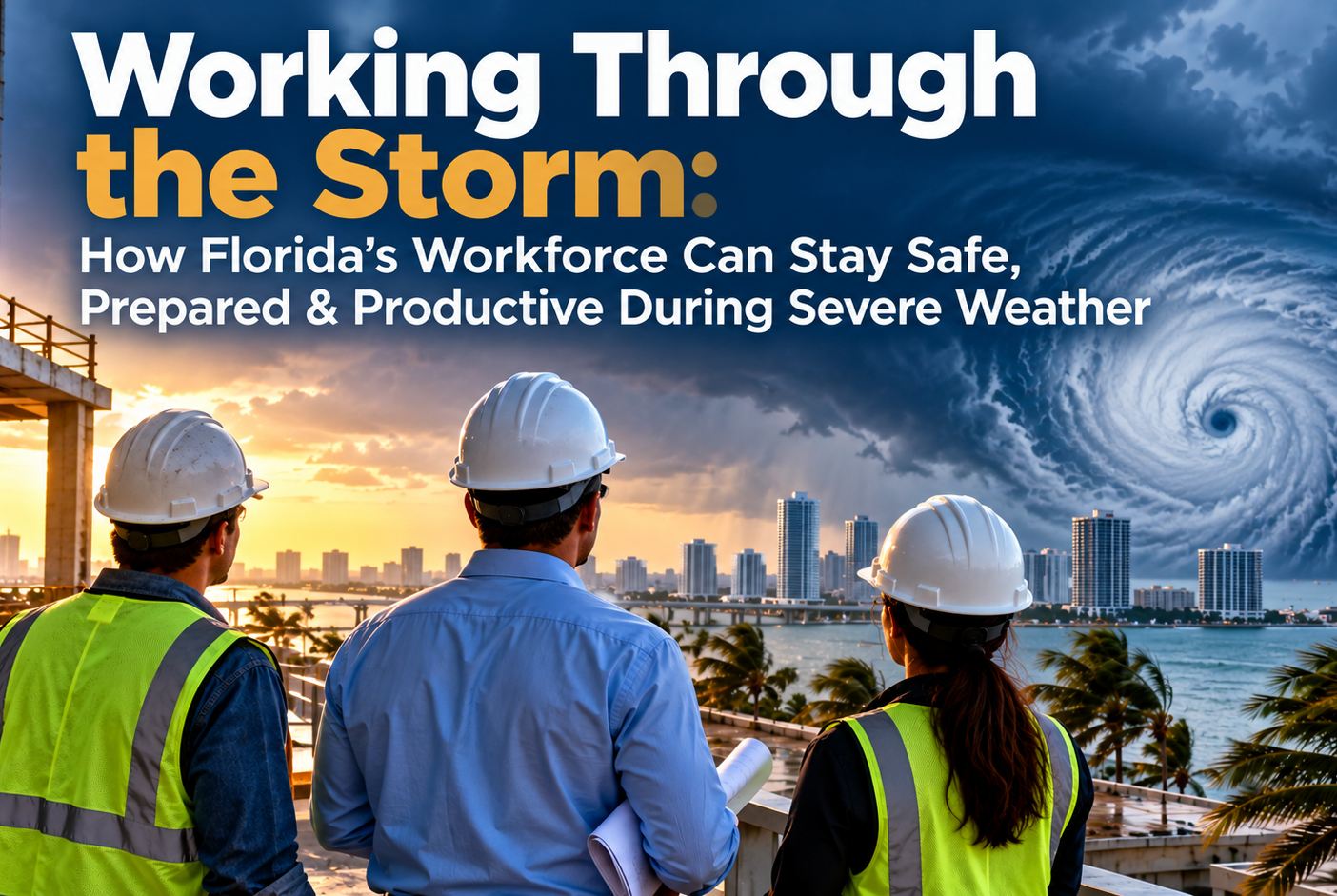
When severe weather threatens Florida, employers face an urgent challenge: protecting their employees while minimizing disruption to their businesses. For construction companies, engineering firms, manufacturers, and other businesses that rely on skilled professionals, a hurricane can quickly turn a normal workweek into a major operational crisis.
Construction projects may come to a standstill. Manufacturing facilities may lose power. Employees may be unable to reach their workplaces, and critical deadlines can suddenly become difficult to meet.
Even after the storm passes, the challenges often continue. Damaged facilities, transportation disruptions, employee absences, and unexpected staffing shortages can prevent businesses from returning to normal operations.
The key to managing severe weather is preparing your workforce before the storm, prioritizing safety while conditions are dangerous, and having a realistic plan to restore operations afterward.
For Florida employers, protecting employees and protecting business continuity are closely connected.
Preparing Your Workforce Before Severe Weather Strikes
Effective storm preparedness starts well before a hurricane warning is issued. Employers who establish clear procedures and communicate expectations early are better positioned to protect their teams and reduce unnecessary disruptions.
Every Florida business should maintain an emergency response plan that addresses workplace closures, employee communication, evacuation procedures, and operational recovery. Employees should know who makes decisions about closures, how they will receive updates, and what steps they should take when dangerous weather approaches.
For construction and manufacturing employers, preparation also involves protecting physical worksites. Equipment must be secured, hazardous materials properly stored, and vulnerable structures evaluated before conditions deteriorate. Engineering and architecture firms should consider how project files, design systems, and communication platforms will remain accessible if offices temporarily close.
Employee communication is equally important. Workers may need time to secure their homes, prepare their families, or evacuate. Employers who provide clear guidance and reasonable flexibility can reduce confusion while maintaining stronger relationships with their teams.
Identify Critical Roles Before They Become Critical Vacancies
One of the most valuable steps employers can take is identifying the positions their operations cannot function without.
A construction company may depend on an experienced superintendent to coordinate subcontractors and oversee jobsite safety. A manufacturing facility may require a maintenance engineer to restart equipment after a power outage. An engineering firm may need a project manager to keep essential client deliverables moving.
If one of these professionals becomes unavailable for an extended period, the impact can extend far beyond an individual absence.
Cross-training qualified employees, documenting essential procedures, and developing contingency staffing plans can help businesses avoid becoming overly dependent on a single individual.
For specialized technical positions that are particularly difficult to fill, establishing a relationship with a recruiting partner before an emergency can also support long-term workforce preparedness.
During the Storm: Safety Must Always Come First
When severe weather arrives, employers may feel pressure to maintain production, meet construction deadlines, or fulfill customer commitments. However, employee safety must remain the overriding priority.
High winds, lightning, flooding, and damaged electrical infrastructure can create dangerous conditions across Florida workplaces. Construction sites are especially vulnerable because of elevated work areas, cranes, scaffolding, temporary structures, and exposed equipment.
Manufacturing facilities face different but equally serious risks, including electrical failures, machinery shutdowns, flooding, and damaged ventilation systems.
Employers should follow official weather alerts, evacuation instructions, applicable workplace safety requirements, and established emergency procedures when deciding whether operations can safely continue.
No production deadline or project milestone is worth placing employees in unnecessary danger.
Maintaining Essential Operations Without Putting Employees at Risk
For some businesses, remote work can provide a practical way to maintain essential functions during weather-related closures.
Engineering design, project scheduling, estimating, administrative responsibilities, and certain client communications may continue remotely when employees have safe conditions and reliable connectivity.
However, remote work should not become an expectation for employees dealing with evacuations, power outages, property damage, or family emergencies.
Employers should communicate clearly about operational expectations while recognizing that productivity during a severe weather event may look very different from a normal workday.
In many cases, the most productive decision is to temporarily suspend operations, protect employees and equipment, and prepare for a safe recovery.
After the Storm: Getting Your Business Back Up and Running
For many Florida businesses, the most difficult operational challenges begin after the storm has passed.
Even when a facility appears undamaged, employees may be displaced, roads may remain impassable, and utilities may not be fully restored. Construction sites can contain hidden hazards, while manufacturing equipment may require inspection before operations can safely resume.
The first priority should be confirming employee safety and determining whether workers can reasonably return.
Some employees may need additional time to address damage to their homes, transportation problems, school closures, or family responsibilities. Offering flexibility where possible can help employers retain valuable team members while supporting their recovery.
Businesses must also evaluate the condition of their facilities and equipment. Qualified personnel should assess potential structural damage, electrical hazards, flooding, and other storm-related risks before affected work resumes.
Once workplace conditions are safe, management can begin prioritizing projects, restoring production, and determining whether the existing workforce has the capacity to meet operational demands.
When a Staffing Shortage Becomes a Business Continuity Problem
A business may have the equipment, materials, and customer demand necessary to resume operations but still lack the technical personnel required to move forward.
Consider a construction company trying to restart several projects after a hurricane. Subcontractors are ready, equipment is available, and customers are requesting revised completion dates. However, the company does not have enough experienced superintendents to oversee the work.
Without qualified leadership, projects may remain delayed even though other resources are available.
Manufacturers can encounter similar problems when maintenance engineers, production supervisors, or quality professionals are unavailable during recovery. A single unfilled technical position can affect an entire production line or delay the return to normal capacity.
For engineering and architecture firms, shortages of project engineers, designers, or experienced managers can create additional backlogs when client deadlines have already been disrupted.
The cost of a critical vacancy is not limited to the position itself. It can affect project delivery, production output, customer relationships, and revenue.
That makes workforce planning an essential part of storm recovery.
How Florida Employers Can Address Unexpected Staffing Shortages
When severe weather creates workforce gaps, employers should first determine whether the situation is temporary or whether additional hiring is genuinely necessary.
Some challenges can be managed through flexible scheduling, qualified internal reassignment, cross-training, or adjustments to project priorities. These approaches can be particularly effective when existing employees are expected to return after a short disruption.
However, not every position can be covered internally.
Engineering, construction, architecture, and manufacturing roles frequently require specific technical qualifications, relevant industry experience, and the ability to manage complex responsibilities. Assigning these duties to employees without the appropriate expertise can introduce additional operational and safety risks.
When a company needs a specialized professional to restore production, manage a delayed project, or support increased workloads, external recruiting may become an important part of the recovery strategy.
Why Specialized Recruiting Matters During Operational Recovery
Hiring a technical professional can be challenging under normal circumstances. Following a major weather event, the process may become more complicated as employers balance staffing needs with repairs, employee support, customer commitments, and operational recovery.
General job advertisements may attract applicants, but identifying professionals with the right technical background can require a more focused approach.
DAVRON specializes in recruiting engineering, architecture, construction, and manufacturing professionals. This industry-specific focus allows DAVRON to support employers seeking candidates for roles where relevant experience and technical qualifications are essential.
For example, a construction company facing a shortage of experienced project managers may need candidates who understand complex schedules, subcontractor coordination, and jobsite responsibilities. A manufacturer searching for a reliability engineer may need someone familiar with industrial equipment, preventive maintenance, and production environments.
Working with a specialized recruiting firm can help employers focus their search on the qualifications that matter most while internal leadership continues managing recovery efforts.
Although no recruiter can guarantee immediate availability or eliminate weather-related hiring challenges, engaging a specialized partner early can help employers establish a more targeted recruiting strategy.
Building a More Resilient Workforce Before the Next Storm
Hurricane preparedness should not end when the weather clears.
Every major disruption provides an opportunity for employers to evaluate what worked, where communication broke down, and which operational vulnerabilities need attention.
Businesses should review how quickly employees received updates, whether emergency procedures were effective, and how long it took to resume essential functions.
They should also examine whether staffing limitations contributed to delays.
Were critical responsibilities concentrated among too few employees? Did the company have qualified backup personnel? Were certain technical positions especially difficult to cover?
Answering these questions can help management make better decisions about cross-training, succession planning, hiring priorities, and long-term workforce development.
For businesses operating in Florida’s construction, engineering, architecture, and manufacturing industries, workforce resilience often depends on having experienced professionals available when operational demands change unexpectedly.
Developing a recruiting strategy before the next disruption can help employers prepare for both anticipated growth and unforeseen staffing needs.
Florida Employer Severe Weather Preparedness: A Quick Checklist
While every organization has different operational requirements, employers should evaluate three essential areas of preparedness.
Before the storm: Confirm emergency procedures, communicate with employees, secure facilities and equipment, identify critical roles, and establish staffing contingency plans.
During the storm: Monitor official weather guidance, suspend unsafe activities, maintain appropriate communication, and allow employees to prioritize their personal safety and families.
After the storm: Confirm employee well-being, inspect workplaces for hazards, prioritize operational recovery, evaluate staffing capacity, and address critical technical hiring needs when necessary.
These steps provide a practical foundation for protecting employees while helping businesses return to normal operations as safely and efficiently as possible.
How DAVRON Supports Florida Employers With Critical Technical Hiring Needs
When severe weather disrupts operations, business leaders often find themselves managing several urgent responsibilities simultaneously.
Construction executives may be coordinating delayed projects. Manufacturing managers may be working to restore production. Engineering firms may be reorganizing client deliverables, while HR teams focus on employee communication and workforce availability.
Adding a difficult technical search to those responsibilities can create additional pressure.
DAVRON works with employers seeking specialized professionals across engineering, architecture, construction, and manufacturing.
Whether a business needs a mechanical engineer, construction superintendent, manufacturing engineer, maintenance manager, project architect, or another hard-to-fill technical professional, DAVRON provides recruiting support aligned with the requirements of these industries.
By partnering with recruiters who understand specialized technical positions, employers can pursue qualified candidates without diverting all their attention from immediate operational priorities.
Severe weather may be unpredictable, but employers can prepare for the workforce challenges that often follow.
Frequently Asked Questions About Severe Weather and Workforce Preparedness
How should Florida employers prepare employees for hurricane season?
Florida employers should maintain clear emergency response plans, establish reliable communication systems, identify essential personnel, and prepare for potential closures or evacuations. Businesses should also evaluate which operations can continue remotely and how critical staffing responsibilities will be covered if employees become temporarily unavailable.
When should construction companies stop working because of severe weather?
Construction companies should suspend work when conditions create unacceptable safety risks or when required by applicable safety regulations or official emergency instructions. Lightning, dangerous winds, flooding, and unstable structures can make construction activities unsafe. Employers should rely on established safety procedures and site-specific assessments rather than project deadlines when making these decisions.
How can manufacturing businesses reduce staffing disruptions after a hurricane?
Manufacturers can improve workforce resilience by cross-training qualified employees, documenting critical procedures, maintaining emergency communication systems, and identifying backup personnel for essential roles. When a prolonged staffing gap cannot be resolved internally, specialized recruiting support may help the company find qualified technical professionals.
What should employers do when essential employees cannot return to work?
Employers should first determine whether the absence is temporary and whether flexible scheduling, available leave, or internal coverage can address the situation. If a critical position remains uncovered or a sustained staffing shortage develops, management may need to consider additional hiring or specialized recruiting assistance.
Can businesses remain productive during severe weather without compromising safety?
Yes, but productivity must be approached realistically. Some employees may be able to perform administrative, engineering, design, or coordination work remotely when conditions are safe. Other operations may need to stop entirely. Protecting employees, equipment, and essential business information can be more valuable than attempting to maintain normal production during dangerous conditions.
When should an employer contact a specialized recruiter after a storm?
Employers should consider contacting a specialized recruiter when a critical technical position becomes vacant, existing staffing capacity cannot support recovery needs, or an important project requires additional qualified personnel. Starting the recruiting conversation early can help employers clarify their needs and establish a focused hiring strategy.
Protecting Your People Is the First Step Toward Protecting Your Business
Florida employers cannot control when hurricanes, tropical storms, or severe weather events will occur. They can, however, control how thoroughly they prepare their workforce and how effectively they respond when operations are disrupted.
Clear emergency procedures, consistent communication, responsible shutdown decisions, and realistic recovery plans all contribute to a safer and more resilient organization.
For construction, engineering, architecture, and manufacturing businesses, workforce preparedness also means recognizing the importance of specialized technical talent.
When critical positions are left unfilled, the effects can extend across entire projects, production lines, and business operations.
By preparing for these challenges before they become emergencies, employers can protect their employees, reduce unnecessary disruptions, and position their businesses for a stronger recovery.
And when unexpected technical hiring needs arise, DAVRON is available to help employers find the specialized professionals they need to move forward.
Ready to hire engineering, architecture, construction, or manufacturing professionals?
DAVRON specializes in delivering high-quality candidates in these industries.