
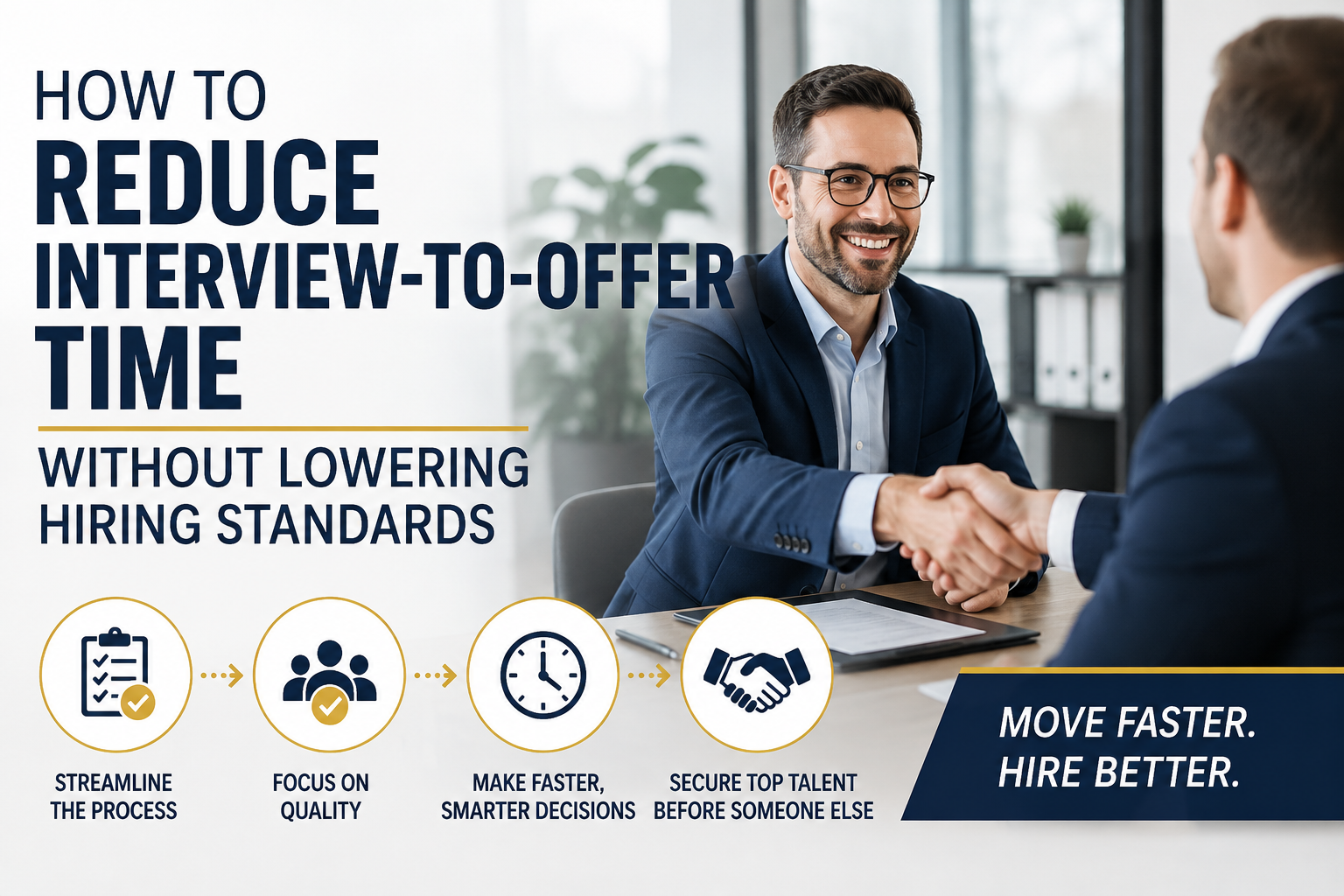
The longer your hiring process takes, the more likely you are to lose highly qualified candidates. Engineering, architecture, construction, and manufacturing professionals are often evaluating multiple opportunities simultaneously, and companies that require several weeks to move from interview to offer frequently watch their preferred candidates accept positions elsewhere.
Reducing interview-to-offer time doesn’t mean lowering your standards. In fact, the opposite is true. The fastest hiring organizations are usually the most organized. They know exactly what they’re looking for, have a structured evaluation process, and eliminate unnecessary delays that add little value. By improving efficiency rather than cutting corners, employers can hire exceptional talent while protecting project schedules, productivity, and business growth.
Why Hiring Timelines Continue to Grow
Many employers assume talent shortages are the primary reason positions remain open. While finding experienced technical professionals can certainly be challenging, internal hiring processes are often responsible for much of the delay.
As organizations add more interview rounds, involve additional stakeholders, or postpone hiring decisions until every possible option has been evaluated, the process becomes increasingly difficult to manage. Scheduling conflicts between managers, unclear hiring criteria, and slow approval processes all extend the timeline without necessarily improving hiring quality.
Unfortunately, candidates interpret these delays differently. Rather than seeing a thorough evaluation process, they often see uncertainty or a lack of urgency. The longer the process continues, the more likely they are to pursue other opportunities.
The Business Cost of Slow Hiring
Every vacant technical position has consequences beyond recruiting.
When engineering, construction, architecture, or manufacturing roles remain open, projects slow down, existing employees absorb additional responsibilities, and productivity declines. Managers spend valuable time covering gaps instead of focusing on strategic initiatives, while customers and project deadlines may ultimately be affected.
Perhaps the greatest cost, however, is losing exceptional candidates simply because another employer moved faster. A delayed offer often means restarting the hiring process from the beginning, adding weeks or months before the position is finally filled.
Build a Faster Process Before You Start Interviewing
Many hiring delays originate long before candidates are interviewed. Successful organizations define exactly what they’re looking for before recruiting begins, ensuring everyone involved understands the technical qualifications, experience, and personal attributes that truly matter.
This preparation eliminates lengthy discussions after interviews because each interviewer is evaluating candidates against the same expectations. Instead of debating what makes someone qualified, hiring teams can focus on identifying who best meets the predetermined criteria.
Preparing interview schedules in advance also reduces unnecessary downtime. Rather than waiting several days between interviews while calendars are coordinated, employers can move qualified candidates through the process efficiently and maintain momentum.
Reduce Complexity Without Sacrificing Evaluation Quality
A longer hiring process does not automatically produce better hiring decisions.
Many organizations involve numerous interviewers whose questions overlap significantly, creating additional scheduling challenges while providing little new information. Limiting interviews to essential decision-makers allows employers to gather meaningful feedback without extending the process unnecessarily.
Standardized interview questions and evaluation scorecards further improve consistency. When every interviewer measures candidates using the same framework, comparing finalists becomes faster, more objective, and less dependent on personal opinions.
Make Decisions While Momentum Is Still High
One of the simplest ways to shorten interview-to-offer time is to make hiring decisions quickly after interviews conclude.
Instead of waiting until everyone has time for another meeting later in the week, successful employers collect interviewer feedback immediately and schedule decision discussions within 24 hours. This allows offers to be extended while candidate interest remains high and before competing employers have an opportunity to act.
Preparing compensation approvals before selecting a finalist also removes one of the most common administrative bottlenecks. When salary ranges, budgets, and approvals have already been established, employers can move directly from selecting a candidate to extending an offer.
Keep Candidates Engaged Throughout the Process
Communication is often overlooked, yet it plays a significant role in reducing hiring time.
Candidates who receive regular updates remain engaged and are less likely to accept competing opportunities simply because they haven’t heard from your organization. Even a brief email confirming next steps demonstrates professionalism and reassures candidates that the hiring process is moving forward.
Consistent communication also reinforces your company’s interest, creating a stronger candidate experience without adding complexity to the hiring process.
How Specialized Recruiting Helps Employers Hire Faster
One of the most effective ways to reduce interview-to-offer time is to improve the quality of candidates entering the process.
Rather than spending weeks reviewing applications from individuals who only partially meet the job requirements, employers can work with a specialized recruiting firm that understands both the technical demands of the role and the industry itself.
DAVRON specializes in recruiting professionals within engineering, architecture, construction, and manufacturing. Because our recruiters focus exclusively on these industries, we understand the experience employers need and can identify qualified candidates more efficiently than a general recruiting approach.
Beyond sourcing talent, specialized recruiters help maintain momentum by coordinating interviews, managing candidate communication, and ensuring both employers and candidates remain engaged throughout the hiring process. The result is a shorter timeline built on better preparation—not lower standards.
Signs Your Hiring Process May Be Too Slow
While every organization is different, several warning signs often indicate that the hiring process has become unnecessarily complex.
- Candidates regularly withdraw before receiving an offer.
- Interview scheduling stretches over several weeks.
- Hiring managers struggle to reach consensus.
- Approval processes delay offers after final interviews.
- Competitors consistently hire candidates first.
If these situations occur frequently, the hiring process itself may be preventing you from securing the talent you need.
Frequently Asked Questions
How long should the interview-to-offer process take?
While timelines vary by role, many employers aim to complete interviews and extend an offer within one to two weeks after identifying qualified candidates. For highly competitive technical positions, moving even faster can improve offer acceptance rates.
Does hiring faster reduce hiring quality?
Not when the process is well designed. Faster hiring comes from clear evaluation criteria, efficient scheduling, and decisive leadership—not from lowering expectations.
How many interviews are usually necessary?
Most engineering, architecture, construction, and manufacturing positions can be effectively evaluated in two or three structured interviews. Additional rounds often add time without significantly improving hiring decisions.
How can specialized recruiters accelerate technical hiring?
Specialized recruiters reduce hiring timelines by presenting pre-qualified candidates, coordinating interviews, maintaining candidate engagement, and helping employers make informed decisions more efficiently.
Hiring quickly and hiring well are not competing goals. Organizations that define expectations early, streamline interview processes, communicate consistently, and make timely decisions are often the same organizations that consistently attract and secure top technical talent.
When internal resources are stretched or hiring critical technical professionals becomes increasingly difficult, partnering with a specialized recruiting firm can further reduce hiring timelines without compromising quality. For employers in engineering, architecture, construction, and manufacturing, a focused recruiting strategy often makes the difference between losing great candidates and hiring them before the competition.
Ready to hire engineering, architecture, construction, or manufacturing professionals?
DAVRON specializes in delivering high-quality candidates in these industries.