
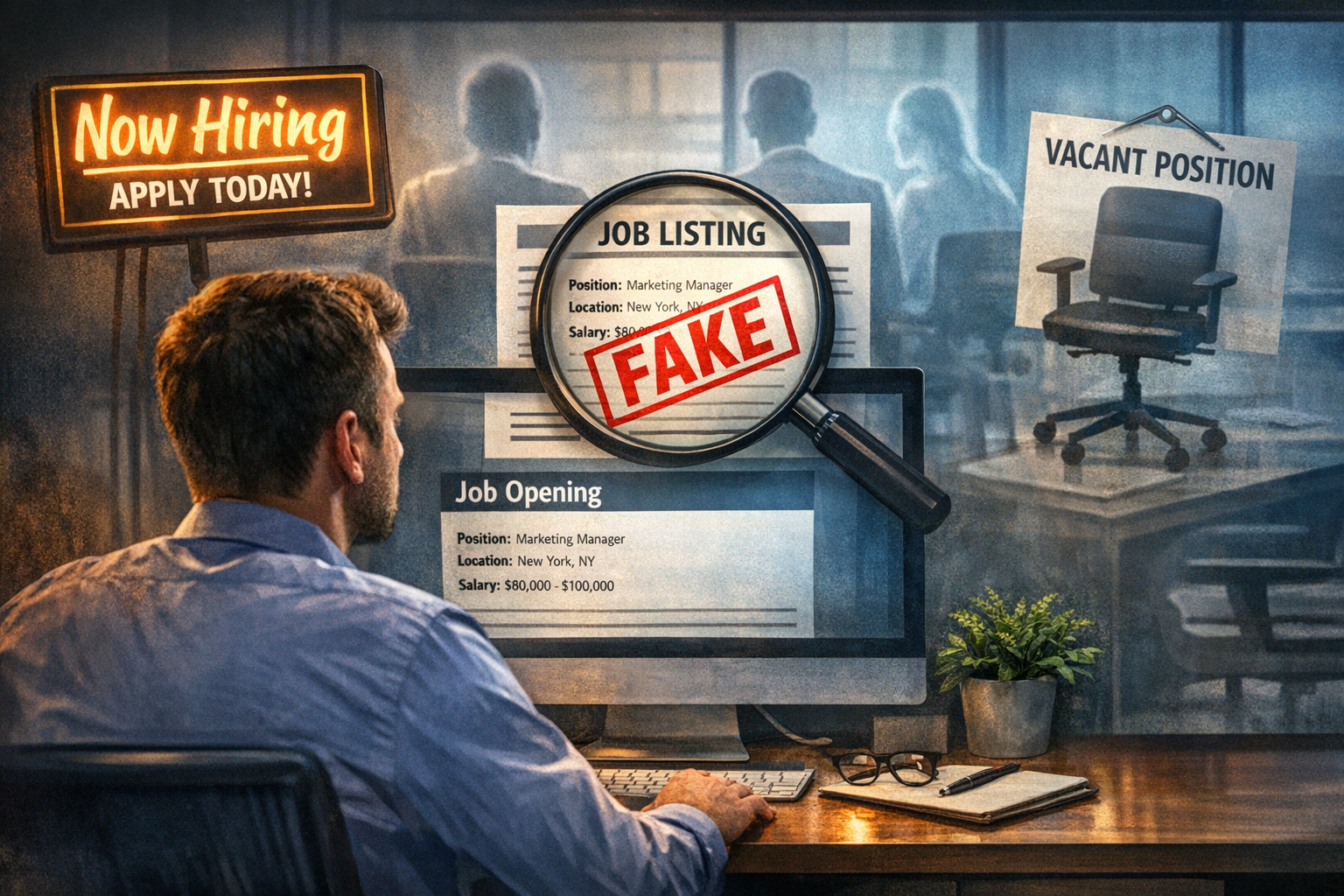
Job seekers are spending more time than ever applying online, yet many say the market feels strangely hollow. One reason is the rise of “ghost jobs”: listings that stay live even when employers are not actively hiring, have already filled the role, or never intended to hire in the first place. Recent reporting and survey data suggest this is not a fringe annoyance—it’s widespread and growing.
Why “ghost jobs” matter more than ever
For job seekers, ghost listings create a brutal mismatch between effort and outcome. Applicants may spend hours tailoring résumés, writing cover letters, and completing assessments for roles that were never truly available. That distorts how people read the labor market: a flood of postings can make hiring look strong on paper while candidates experience silence, repeated rejections, or endless interview loops.
What counts as a ghost job?
Not every stale or slow-moving posting is outright fake. Some listings are for real roles that companies pause, delay, or leave open longer than normal. Others are more clearly misleading:
Roles posted to build a future candidate pipeline
Listings meant to signal company growth
Jobs required for compliance but not actively hiring
Positions already filled but still advertised
Why companies post jobs they do not plan to fill
1. To appear healthy and growing
A steady stream of openings can make a company look ambitious, expanding, and financially secure.
2. To build a bench of candidates
Some employers want a pool of résumés ready in case a budget opens up or a key employee leaves.
3. To calm internal pressure
Posting roles can reassure overworked employees that help is “on the way”—even if it isn’t.
4. To make workers feel replaceable
Some employers admit ghost listings are used to subtly reinforce job insecurity among staff.
5. Because hiring processes stall
Budget freezes, shifting priorities, and slow approvals often leave listings active long after hiring has stopped.
How ghost jobs warp the market
The biggest damage is trust. When job boards are cluttered with low-intent or fake roles, candidates cannot easily tell which openings are real. That leads to:
Wasted time and energy
Increased job search burnout
Reduced trust in employers
A misleading perception of job market strength
It also contributes to what many are calling a “phantom job market”—where openings exist statistically, but real hiring lags behind.
How job seekers can protect themselves
Look for patterns that signal a job may not be active:
Listings reposted repeatedly over long periods
Jobs not found on the company’s official website
Vague descriptions or extremely broad requirements
Slow or inconsistent recruiter communication
To improve your odds, prioritize:
Networking and referrals
Direct outreach to hiring managers
Recently posted roles (within 1–2 weeks)
Are platforms doing anything about it?
Job platforms like LinkedIn are increasing verification efforts for recruiters and companies. While this helps reduce scams, it doesn’t fully eliminate ghost listings tied to internal hiring practices.
The bigger takeaway
Ghost jobs are not just an annoyance—they are reshaping how people experience the job market. In a slower hiring environment, they create a widening gap between perception and reality. The postings may be real, but too often, the opportunities are not.
FAQ
Are ghost jobs illegal?
Not usually. They often fall into a gray area of misleading—but not unlawful—hiring practices.
How can I tell if a job is fake?
Check posting age, company website listings, and communication responsiveness.
Should I avoid job boards entirely?
No—but supplement them with networking and direct outreach for better results.
Do all long-open jobs mean ghost jobs?
No. Some roles are legitimately hard to fill or delayed—but many are not actively hiring.
Sources
The Wall Street Journal — “Ghost Jobs” reporting (Published 2025)
Resume Builder — “3 in 10 Companies Currently Have Fake Job Posting Listed” (2024)
Clarify Capital — “Job Seekers Beware of Ghost Jobs” Survey (2024)
SHRM — “Ghost Jobs: Fake Job Ads Phenomenon” (2024)
CBS News — “Fake Job Listings Explained” (2024)
ABC News — Ghost job coverage (June 2024)
The Independent — “Ghost job postings and employer motives” (January 2025)
The Verge — LinkedIn recruiter verification update (2025)
U.S. Bureau of Labor Statistics — JOLTS Report (Published March 13, 2026)