
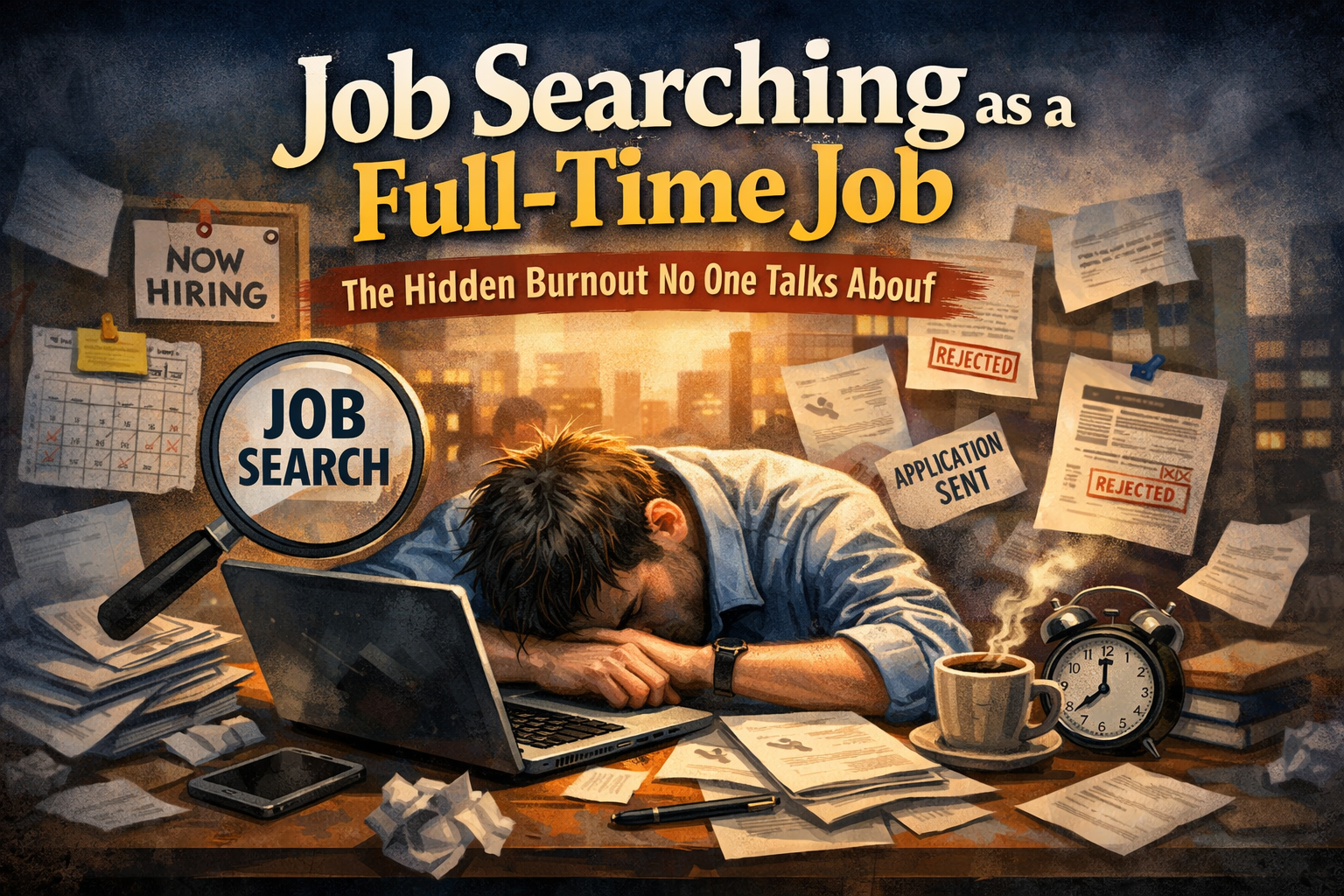
In today’s competitive job market, job searching has quietly evolved into a full-time job of its own. Between tailoring resumes, writing cover letters, networking, and navigating endless application portals, many candidates are spending 30–40 hours per week just trying to get hired.
But there’s a growing issue that isn’t talked about enough: job search burnout.
While employers often focus on productivity and performance, job seekers are facing a different kind of pressure—one filled with uncertainty, rejection, and emotional fatigue. If you’ve ever felt exhausted before even landing a job, you’re not alone.
Why Job Searching Feels Like a Full-Time Job
1. The Time Commitment Is Real
Modern job searching isn’t just “submit and wait.” It often includes:
Customizing resumes for each role
Writing targeted cover letters
Completing lengthy online applications
Preparing for multiple interview rounds
Following up and networking
According to a 2024 LinkedIn Workforce Report (Published: May 2024), job seekers spend an average of 10–20 hours per week actively applying, with many exceeding that during peak search periods.
2. The Emotional Toll of Constant Rejection
Unlike traditional work stress, job searching comes with:
Ghosting from employers
Automated rejection emails
Long waiting periods with no feedback
This creates a cycle of hope → effort → silence → disappointment, which can be mentally draining over time.
3. Lack of Structure Leads to Overworking
Without a clear schedule, many candidates fall into the trap of:
Applying late into the night
Constantly checking email or job boards
Feeling guilty when not “being productive”
Ironically, the absence of structure can lead to overworking, similar to burnout in traditional jobs.
The Hidden Signs of Job Search Burnout
Burnout doesn’t always look obvious. Here are subtle warning signs:
Decreased motivation to apply for roles
Feeling overwhelmed by job listings
Increased anxiety before checking email
Difficulty personalizing applications
Cynicism about employers or opportunities
If left unchecked, this burnout can impact interview performance and confidence—making the job search even harder.
Why This Matters to Employers
Companies often overlook the candidate experience, but it directly impacts hiring success.
A 2025 Glassdoor Hiring Trends Report (Published: January 2025) highlights that poor communication and long hiring processes are top reasons candidates disengage.
For employers, this means:
Losing top talent due to slow processes
Damaging employer brand reputation
Increasing time-to-hire
How to Manage Job Search Burnout Effectively
1. Treat It Like a Job—With Boundaries
Set structured hours:
Example: 9 AM – 2 PM for applications and networking
Evenings reserved for rest
This prevents overexertion and improves focus.
2. Focus on Quality Over Quantity
Instead of applying to 50 jobs per week:
Target 10–15 highly relevant roles
Customize each application strategically
This increases response rates and reduces wasted effort.
3. Build a Weekly Routine
Create a balanced schedule:
Applications: 2–3 days
Networking: 1–2 days
Skill building: 1 day
Rest/reset: At least 1 day
4. Track Progress (Not Just Results)
Celebrate actions within your control:
Applications submitted
Connections made
Interviews secured
This helps maintain momentum even when results are delayed.
5. Take Intentional Breaks
Burnout thrives on constant pressure. Step away regularly:
Exercise
Socialize
Engage in hobbies
Stepping back often leads to better clarity and performance.
The Role of Recruiters in Reducing Burnout
Working with specialized recruiters—like DAVRON—can significantly reduce job search fatigue by:
Matching candidates with aligned opportunities
Streamlining the application process
Providing direct feedback and communication
Instead of navigating the process alone, candidates gain an advocate who helps cut through the noise.
FAQ: Job Search Burnout
How long should I spend job searching each day?
Aim for 4–6 focused hours with clear breaks. More isn’t always better.
Is it normal to feel exhausted during a job search?
Yes. The process is emotionally demanding and often unpredictable.
How can I stay motivated after rejection?
Focus on controllable actions, not outcomes. Track effort, not just success.
Should I apply to as many jobs as possible?
No. Targeted applications are far more effective than mass applying.
Can recruiters really help reduce burnout?
Absolutely. They streamline the process and provide direct access to opportunities.