
Introduction: The “Free Food” Strategy That Isn’t Really Free
Few promotions in the fast-food industry feel as irresistible as buy-one-get-one-free (BOGO) deals. To customers, it looks like restaurants are simply giving away food. But behind the scenes, these promotions are carefully engineered strategies designed to drive traffic, increase spending, and build long-term loyalty.
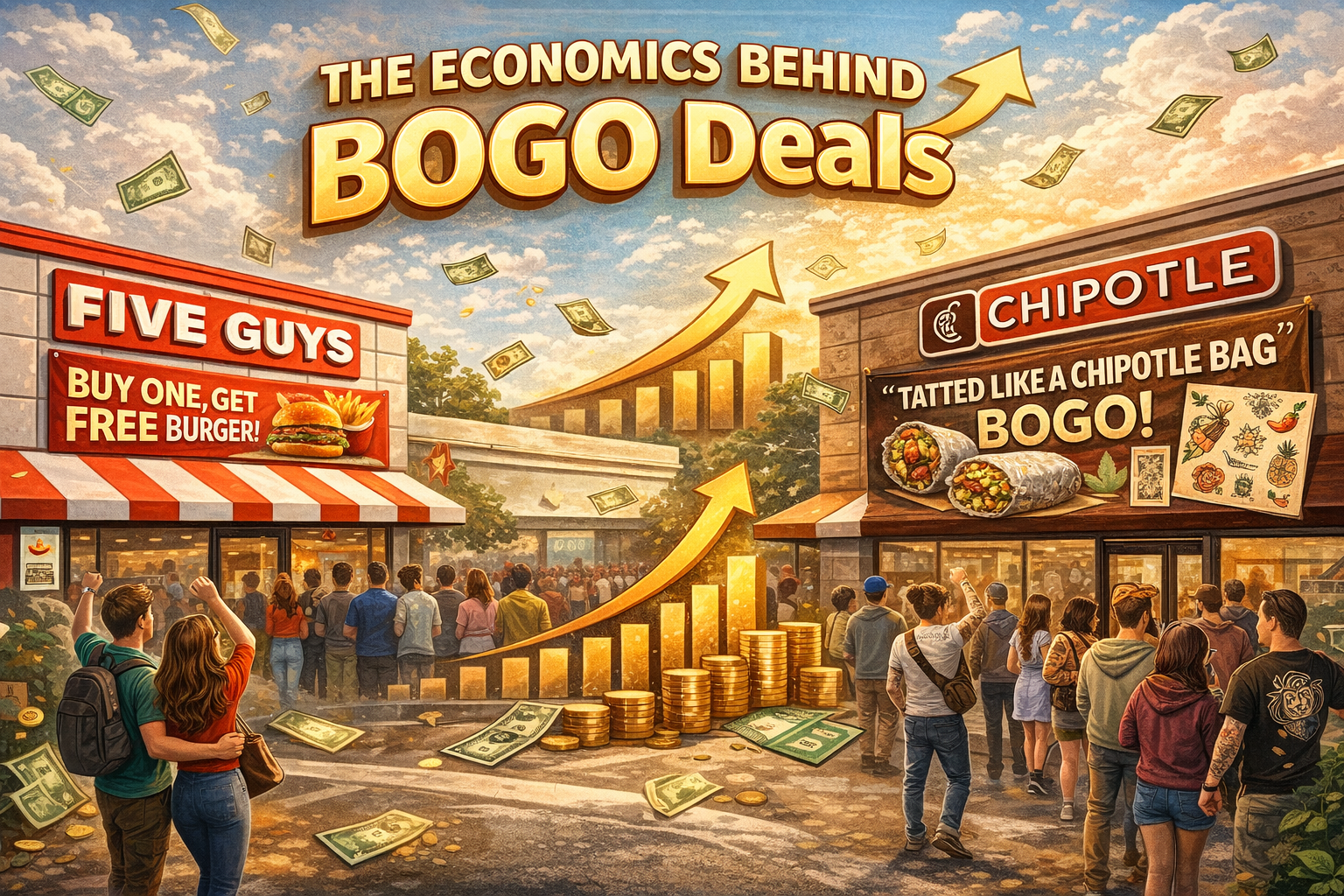
At a time when fast-food prices have risen sharply and consumers are becoming more price-sensitive, major chains are leaning on BOGO promotions to keep customers coming through the door. From Five Guys’ anniversary burger giveaway to Carl’s Jr.’s celebrity-driven burger campaign and Chipotle’s viral tattoo-themed promotion, the tactic is appearing across the industry.
The surprising truth: even when restaurants give away a free item, the promotion can still increase profits.
Why BOGO Deals Actually Make Financial Sense
At first glance, giving away food seems like a bad business model. But restaurant economics tell a different story.
In many quick-service restaurants, ingredients typically account for only about 25–35% of a menu item’s price. Labor, rent, marketing, and other overhead make up the rest.
So, when a restaurant sells a $12 meal:
- The food itself may cost only $3–$4
- The rest of the price covers operational costs and profit margin
That means offering a second item for free doesn’t necessarily eliminate profit — especially if the promotion brings in more customers or increases total spending per visit.
The Data: BOGO Promotions Can Multiply Sales
Industry data shows just how powerful these deals can be.
According to the Paytronix 2024 Loyalty Report, restaurant promotions such as buy-one-get-one-free deals can increase transaction volume by two to four times during the promotional window, particularly when paired with loyalty apps or digital ordering.
Even when one item is free, customers frequently add extra purchases such as:
- drinks
- sides
- desserts
- premium toppings
The result is often higher overall order values, meaning the restaurant can still profit from the promotion.
Past Examples: When BOGO Deals Created Massive Demand
Five Guys’ 40th Anniversary BOGO Burger Event
In early 2026, Five Guys celebrated its 40th anniversary with a buy-one-get-one-free burger promotion that triggered huge crowds across the country.
Demand was so intense that some locations reportedly struggled to keep up with orders. The company later brought the deal back weeks later as a “40th After Party” BOGO promotion, extending the marketing buzz.
For a brand that rarely offers discounts, the promotion demonstrated how a limited BOGO event can generate major spikes in traffic and media attention.
Carl’s Jr.’s Famous Star BOGO Campaign
Carl’s Jr. launched a buy-one-get-one-for-$1 Famous Star burger promotion as part of a marketing campaign featuring Paris Hilton.
The promotion was distributed through the chain’s loyalty program and digital channels, combining celebrity marketing with a value-driven deal.
The campaign illustrates a growing trend: restaurants using BOGO promotions not just for sales, but as attention-grabbing marketing moments.
McDonald’s “Buy One, Add One for $1” Value Strategy
McDonald’s has incorporated BOGO-style deals into its long-term pricing structure through its “Buy One, Add One for $1” platform, which allows customers to purchase one item and add another for a dollar.
Rather than running as a short promotion, the deal functions as an ongoing value offer designed to maintain affordability perceptions while menu prices increase.
This approach shows how BOGO tactics can evolve from temporary promotions into permanent pricing strategies.
Current and Future Examples: Where BOGO Is Heading
Chipotle’s Viral “Tatted Like a Chipotle Bag” Promotion
Chipotle has leaned into creative BOGO promotions, including its viral Friday-the-13th “Tatted Like a Chipotle Bag” event.
During the promotion, customers with tattoos can receive a free entrée when purchasing another, but only during a limited one-hour window.
The short timeframe creates urgency and social media buzz, turning the deal into an event rather than a simple discount.
Holiday and Event-Driven BOGO Campaigns
Fast-food chains are increasingly using BOGO promotions around holidays and cultural moments when group dining increases.
These promotions often appear during:
- New Year’s celebrations
- pop-culture promotions
- sports events
- special brand anniversaries
By aligning the deal with events, restaurants encourage customers to order for groups instead of individuals, increasing total order size.
The Rise of App-Exclusive BOGO Deals
Perhaps the biggest shift in fast-food promotions is the move toward app-exclusive BOGO offers.
Many chains now require customers to redeem deals through their mobile apps or loyalty programs. This strategy allows restaurants to:
- track purchasing behavior
- collect customer data
- send personalized offers
- encourage repeat visits
In many cases, the long-term value of the customer data collected is more valuable than the free meal itself.
Why the Strategy Works So Well
BOGO promotions tap into several powerful consumer psychology triggers:
- “Free” Feels More Valuable Than a Discount
Customers react more strongly to a free item than to a percentage discount—even if the math is identical. - Customers Spend More Per Visit
Many customers add drinks, sides, or desserts, raising the total transaction value. - Deals Encourage Social Dining
BOGO naturally encourages customers to bring friends or order for family members.
These factors combine to make BOGO promotions one of the most effective traffic-driving tools in the restaurant industry.
The Bottom Line
Buy-one-get-one-free deals may look like restaurants are giving away food, but in reality they are carefully engineered economic strategies.
By increasing customer traffic, boosting order sizes, and building loyalty program engagement, BOGO promotions often produce higher total revenue even when one item is free.
As fast-food prices rise and competition intensifies, expect restaurants to continue experimenting with flash deals, app-exclusive promotions, and viral BOGO campaigns designed to bring customers back again and again.
FAQ
Why do restaurants run BOGO promotions?
BOGO deals increase traffic, boost order sizes, and attract new customers.
Do restaurants lose money on free items?
Not necessarily. Because ingredient costs are relatively low, restaurants can still profit from increased order volume and add-on purchases.
Why are many BOGO deals available only through apps?
Restaurants use app-based promotions to collect customer data and encourage repeat visits through loyalty programs.