
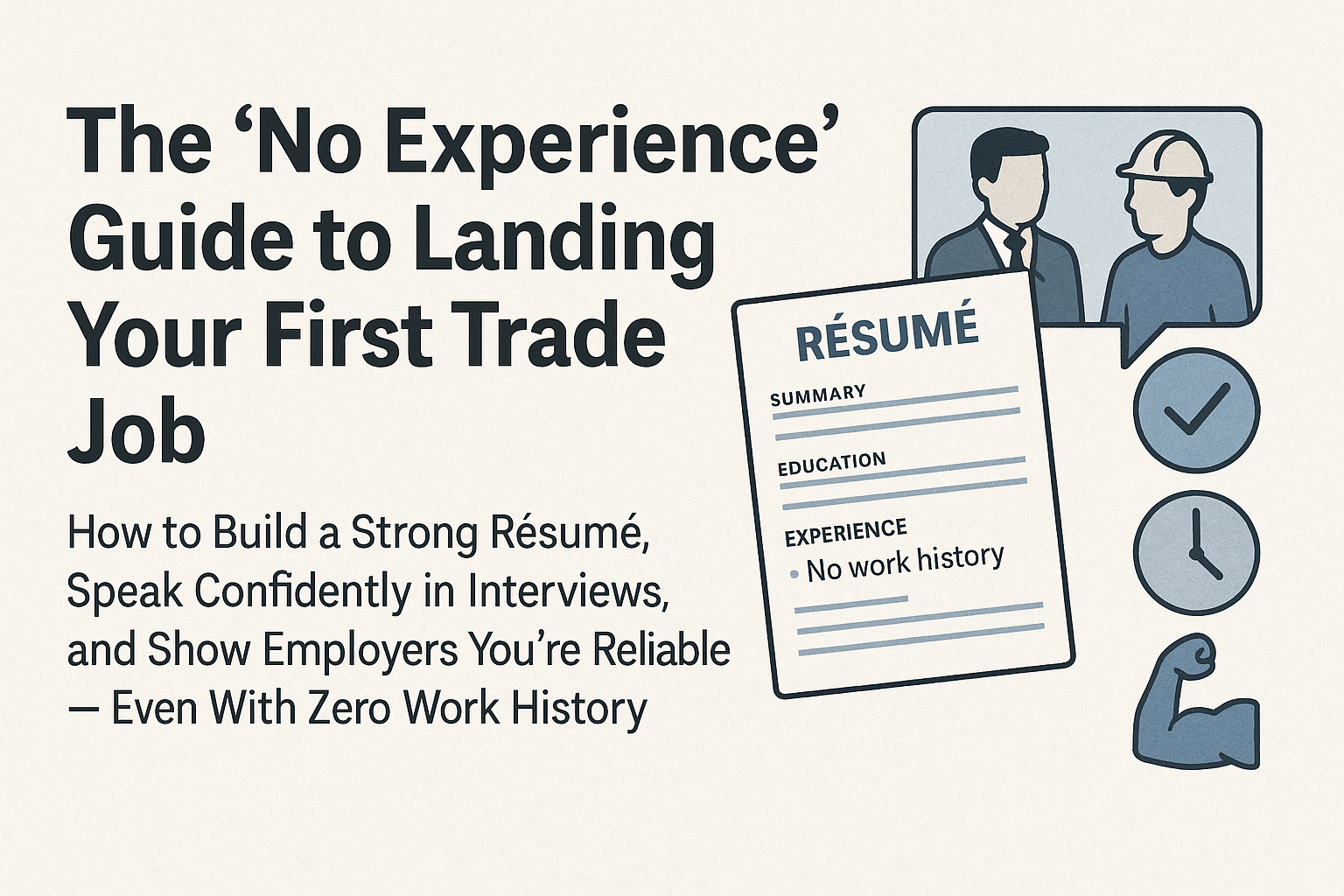
Breaking into the skilled trades without previous job experience is more achievable today than ever. Employers across construction, HVAC, electrical, plumbing, and manufacturing are struggling to fill roles, and many are open to training the right entry-level candidates. What they really want isn’t years of experience — it’s reliability, attitude, and willingness to learn.
This guide gives you everything you need to land your first trade job: how to build a résumé with no work history, what to say in interviews, and the reliability signals employers pay attention to from day one.
Why Trade Careers Are Great for First-Time Job Seekers
Skilled trades offer benefits that many entry-level jobs in other industries don’t:
- High starting pay without a college degree
- Paid training and apprenticeships
- Opportunities for rapid advancement
- Job security due to critical labor shortages
For someone with no experience, the trades offer a clear, achievable career path — especially if you know how to present yourself effectively.
How to Write a ‘No Experience’ Résumé That Still Gets Interviews
You don’t need past job titles to create a compelling trade résumé. Instead, focus on skills, reliability, and hands-on ability — the exact traits employers value.
1. Create a Strong Summary Statement
Replace experience with intent. Something like:
“Motivated entry-level candidate seeking a career in electrical or general construction. Known for strong work ethic, punctuality, and eagerness to learn hands-on skills.”
This immediately shows employers what you offer.
2. Highlight Transferable Skills
Even if you’ve never worked before, you still have relevant abilities:
- Basic mechanical or technical skills
- Tool familiarity from school, auto work, or home projects
- Physical stamina, attention to detail, problem-solving
Use short bullet points under a “Skills” section. Trades employers scan résumés quickly — clear and direct always wins.
3. Include Any Hands-On or Team Experience
Don’t overlook:
- School shop classes
- Volunteering
- Sports teams (signals discipline and teamwork)
- Auto repair or home projects
- Certifications like OSHA 10
Anything that shows effort, responsibility, or physical ability belongs on your résumé.
4. Add a Section for Reliability Indicators
This is powerful for candidates with no history. Examples include:
- “Perfect attendance in high school senior year”
- “Completed all assignments consistently on time”
- “Volunteered 50 hours in community projects”
These details tell employers you’ll show up — their #1 concern.
Interview Tips: What to Say When You Have No Experience
If your résumé gets you in the door, the interview is your chance to shine. Here’s how to speak confidently without exaggerating your background.
1. Emphasize Work Ethic Over Experience
Employers prefer honest beginners over “experienced” workers with bad habits.
Say things like:
- “I’m eager to learn and take instruction seriously.”
- “I show up early and ready to work.”
- “I’m looking for a long-term career, not just a quick job.”
2. Give Examples of Responsibility
Instead of previous jobs, mention times you followed through on commitments:
- Caring for siblings
- Maintaining a car
- Helping with home repairs
- Completing a long-term school project
Anything demonstrating dependability is useful.
3. Ask Smart Questions
Prepare at least two questions such as:
- “What does success look like for a new hire in this role?”
- “How soon do entry-level employees start learning more advanced tasks?”
This signals maturity and genuine interest.
4. Be Ready to Discuss Safety
Safety awareness is a big deal in skilled trades. Mention times you used protective equipment, followed instructions, or helped prevent accidents — even outside a job.
Reliability Signals Employers Look For in First-Time Workers
Even if you’ve never held a job, hiring managers pay close attention to signs you’ll be a strong team member.
Top reliability traits employers notice:
- Punctuality — show up early to the interview.
- Communication — answer calls, reply to emails, confirm appointment times.
- Presentation — clean clothes, simple grooming, boots if you have them.
- Attitude — respectful, attentive, willing to learn.
- Consistency — no last-minute cancellations or excuses.
In the trades, reliability matters more than almost anything else.
What You Can Do Right Now to Increase Your Chances
A few quick actions can dramatically improve your odds:
- Get your OSHA 10 certification (often under $30).
- Practice using basic tools: tape measure, drill, levels, wrenches.
- Brush up on simple math: fractions, measurements, angles.
- Build a one-page résumé and print a few copies.
- Reach out to local contractors, union halls, or trade schools.
Frequently Asked Questions
Q: Can I get hired in the trades with no experience at all?
Yes. Most entry-level trade roles are designed for beginners and include on-the-job training.
Q: Do I need certifications to start?
No, but OSHA 10 or CPR/first aid make you more competitive.
Q: What should I wear to a trade job interview?
Clean work pants or jeans, boots if you have them, and a plain shirt. You don’t need a suit.
Q: How do I explain gaps or having no work history?
Focus on your readiness to learn, your reliability, and any hands-on experience from school or home.