
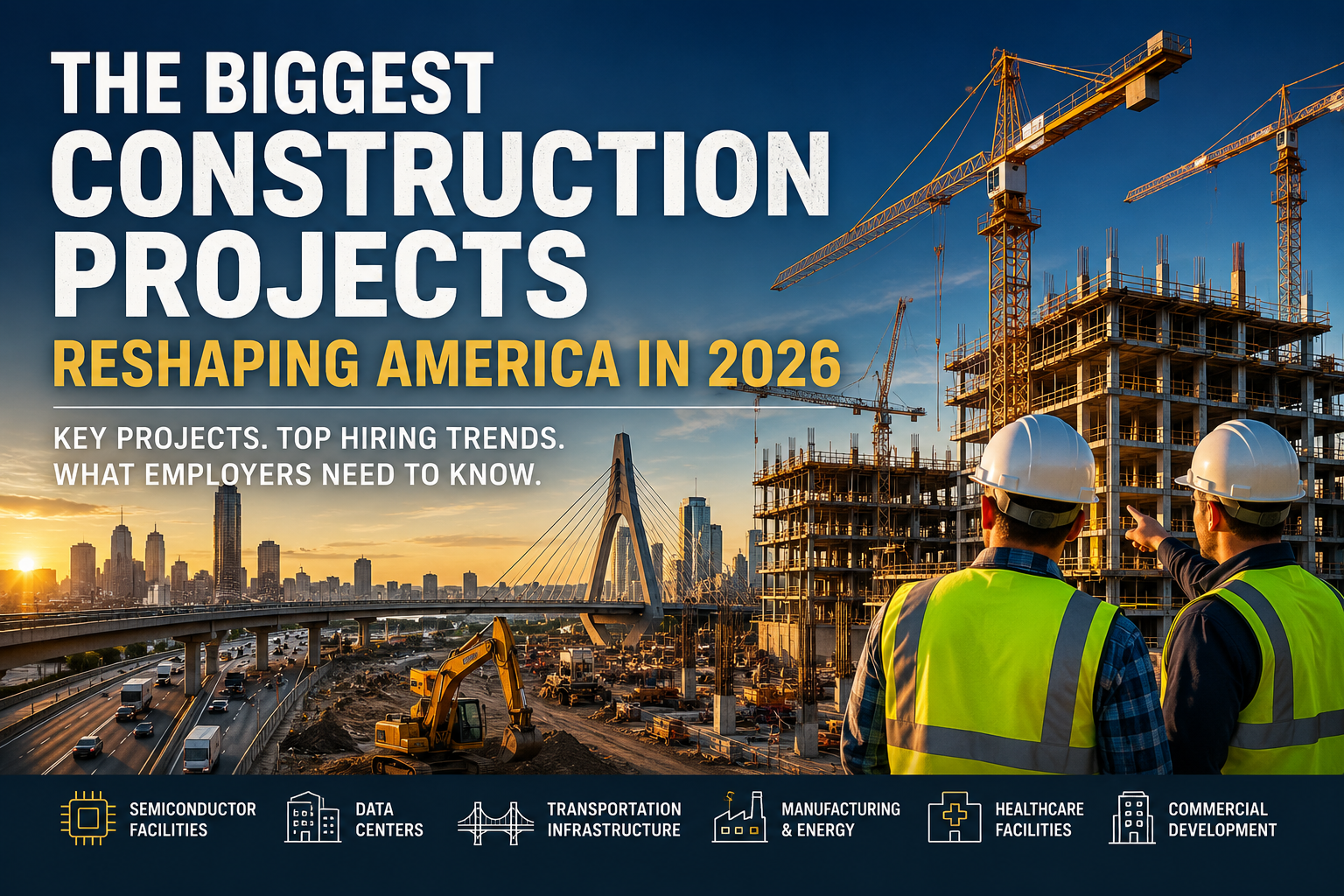
America’s construction industry is experiencing one of its most significant investment booms in decades. Massive infrastructure improvements, semiconductor manufacturing plants, AI-driven data centers, energy facilities, airports, and advanced manufacturing campuses are transforming communities while creating enormous demand for skilled construction and engineering professionals. For employers, these projects represent both opportunity and challenge. As billions of dollars flow into new developments, competition for experienced talent is becoming one of the biggest risks to keeping projects on schedule and within budget.
Companies that wait until construction is underway to begin recruiting often find themselves competing against multiple employers for the same limited pool of qualified professionals. Whether you’re expanding operations, managing a public infrastructure project, or supporting private development, understanding where these investments are occurring can help you prepare for an increasingly competitive hiring landscape.
Mega Projects Driving Demand Across the Country
Several sectors are responsible for reshaping America’s construction market in 2026, each bringing its own hiring demands and technical challenges.
Semiconductor Manufacturing
The continued expansion of domestic semiconductor manufacturing remains one of the largest drivers of construction activity. New fabrication plants require years of planning and construction, along with exceptionally high standards for precision and quality. These facilities depend on experienced project managers, mechanical and electrical engineers, structural engineers, BIM specialists, and construction superintendents who understand complex industrial environments. Because many of these professionals already have specialized experience, employers often find themselves competing aggressively for a relatively small talent pool.
AI Data Centers
The rapid growth of artificial intelligence and cloud computing has fueled an unprecedented wave of hyperscale data center construction. Projects across states such as Texas, Virginia, Arizona, Ohio, and Georgia continue to generate demand for professionals with expertise in mission-critical facilities, power distribution, commissioning, HVAC systems, and electrical infrastructure. These projects frequently operate under aggressive schedules, making experienced leadership especially valuable.
Transportation Infrastructure
Federal infrastructure funding continues to modernize highways, bridges, transit systems, rail networks, ports, and airports throughout the United States. These projects require close coordination between engineers, contractors, government agencies, and construction managers while maintaining strict safety and regulatory standards. As more transportation projects move into active construction, experienced civil engineers, estimators, schedulers, and project managers remain in exceptionally high demand.
Advanced Manufacturing and Energy
Investment in electric vehicle production, battery manufacturing, aerospace facilities, pharmaceutical plants, and energy infrastructure continues to expand nationwide. These projects often combine complex industrial construction with advanced manufacturing processes, requiring multidisciplinary teams capable of coordinating sophisticated building systems. Employers seeking professionals with both construction and manufacturing experience frequently discover that qualified candidates receive multiple competing offers.
Healthcare and Commercial Development
Healthcare systems continue expanding hospitals, research facilities, and specialty treatment centers while major metropolitan areas invest in mixed-use developments that combine residential, office, retail, and hospitality space. Although these projects differ significantly in purpose, both require experienced professionals who can manage large teams, coordinate multiple disciplines, and keep complex schedules on track.
The Growing Competition for Construction Talent
These large-scale projects are competing for many of the same professionals. Construction project managers, superintendents, civil engineers, structural engineers, mechanical engineers, electrical engineers, MEP engineers, estimators, BIM managers, schedulers, safety managers, and quality control professionals are among the most sought-after roles in today’s market.
As demand continues to grow, employers are experiencing longer hiring timelines, rising salary expectations, increased counteroffers, and fewer qualified candidates actively seeking new opportunities. Even organizations with strong internal recruiting teams are finding it more difficult to secure experienced professionals before competitors extend offers.
Regional Labor Shortages Are Becoming More Pronounced
Construction hiring challenges are especially noticeable in regions where multiple mega projects are underway simultaneously. Areas attracting semiconductor manufacturing, large-scale industrial development, energy investments, or significant infrastructure funding often experience labor shortages that extend well beyond individual projects.
This increased competition affects every employer in the region—not just those building billion-dollar facilities. Smaller contractors, engineering firms, and specialty subcontractors frequently compete against national organizations with larger recruiting budgets and relocation packages. As a result, many companies are expanding their searches beyond local markets or working with specialized recruiting firms to reach passive candidates who are not actively applying for jobs.
How Employers Can Stay Ahead
Successful employers recognize that recruiting has become a strategic business function rather than a reactive process. Building relationships with qualified candidates before positions become urgent, streamlining interview processes, and offering competitive compensation packages can significantly improve hiring outcomes.
Equally important is partnering with recruiters who understand the technical nature of construction hiring. Filling a superintendent position for a hospital expansion or hiring a project engineer for a semiconductor facility requires far more than matching keywords on a résumé. It demands industry knowledge, established networks, and an understanding of the experience needed to succeed on highly specialized projects.
Why Specialized Recruiting Makes a Difference
As America’s largest construction projects continue reshaping the country, competition for technical talent will likely remain intense. Employers that can identify and engage qualified professionals quickly will be better positioned to keep projects moving, avoid costly delays, and maintain a competitive advantage.
DAVRON specializes in recruiting professionals for the engineering, architecture, construction, and manufacturing industries. Rather than serving every market, DAVRON focuses exclusively on technical hiring, giving employers access to recruiters who understand complex project environments, hard-to-fill positions, and the urgency of securing experienced talent before opportunities are lost.
Whether you’re staffing a transportation project, manufacturing expansion, healthcare facility, industrial plant, or commercial development, having a specialized recruiting partner can help you reduce hiring delays and connect with professionals capable of delivering successful projects.
Ready to hire engineering, architecture, construction, or manufacturing professionals?
DAVRON specializes in delivering high-quality candidates in these industries.