
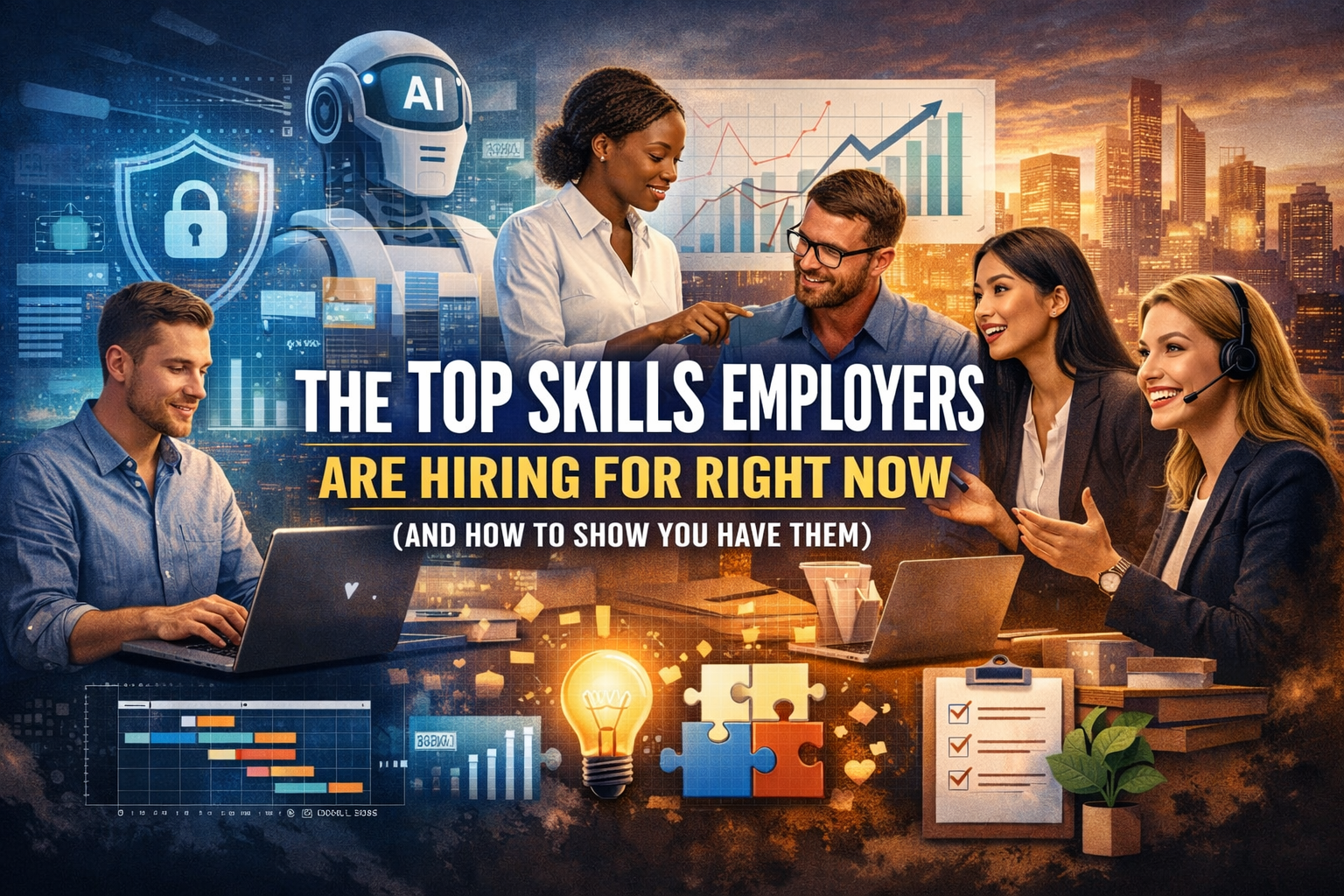
The hiring landscape has shifted dramatically. Employers are no longer focused solely on degrees or job titles—they’re hiring for skills. From AI literacy to communication and adaptability, today’s most in-demand skills reflect how work is actually getting done.
For job seekers, this is good news. It means you can stand out—even in a competitive market—by clearly showing what you can do, not just where you’ve worked.
Below are the top skills employers are hiring for right now and practical ways to prove you have them.
AI Literacy & Data Skills
Artificial intelligence is now embedded across industries—from HR and finance to marketing and engineering. Employers want candidates who can work with AI tools, not fear them.
Employers are looking for:
Comfort using AI-powered tools
Basic data analysis and interpretation
Understanding how AI improves efficiency
How to show it:
List AI tools you’ve used (e.g., ChatGPT, Copilot, analytics platforms)
Quantify results: “Used AI reporting tools to cut analysis time by 25%”
Add certifications or coursework in AI or data fundamentals
Communication Skills (Written & Verbal)
Strong communication remains one of the most in-demand skills across all roles. Employers value professionals who can explain ideas clearly, collaborate effectively, and communicate with clients or stakeholders.
How to show it:
Highlight presentations, reports, or client communications you created
Use metrics: “Improved client response rates by 35% through clearer messaging”
Ensure your resume itself is concise, well-structured, and error-free
Critical Thinking & Problem Solving
As automation handles routine work, employers increasingly rely on humans to solve complex problems and make judgment calls.
How to show it:
Use real examples where you identified a problem and led a solution
Apply the STAR method (Situation, Task, Action, Result) in interviews
Show impact with numbers whenever possible
Adaptability & Willingness to Learn
Workplaces are evolving quickly. Employers want people who can learn new tools, adapt to change, and stay productive during transitions.
How to show it:
List recent certifications, courses, or skill upgrades
Mention times you adapted to new systems, roles, or work environments
Highlight cross-functional experience
Project Management & Organization
Even non-managerial roles increasingly require planning, prioritization, and coordination.
How to show it:
Mention projects you managed or contributed to
Include tools you use (Asana, Trello, Jira, Microsoft Project)
Add results: “Delivered project two weeks ahead of schedule”
Cybersecurity Awareness
With rising cyber threats, employers expect all employees—not just IT staff—to understand digital safety basics.
How to show it:
Include cybersecurity or compliance training
Mention best practices you followed or helped implement
Highlight experience working with secure systems or sensitive data
Emotional Intelligence & Leadership
Teamwork, empathy, and leadership skills are becoming major differentiators in hiring decisions.
How to show it:
Share examples of mentoring, conflict resolution, or team leadership
Include leadership training or management experience
Reference positive feedback or performance recognition
How to Show Employers You Have These Skills
On Your Resume
Tailor your resume using keywords from the job description
Focus on results, not responsibilities
Use numbers to demonstrate impact
On LinkedIn
Add skill-focused bullet points under each role
Share posts or articles related to your expertise
Request recommendations that mention specific skills
In Interviews
Prepare concrete examples for each key skill
Bring work samples or a portfolio if possible
Ask thoughtful questions that show curiosity and strategic thinking
Employers are hiring for skills, not just experience. The most in-demand skills right now include AI literacy, communication, problem-solving, adaptability, and leadership. To stand out, you must demonstrate these skills with real examples and measurable results on your resume, LinkedIn, and in interviews.
FAQs
What are the most important skills employers are hiring for right now?
AI literacy, communication, critical thinking, adaptability, and project management consistently rank at the top.
Do soft skills really matter as much as technical skills?
Yes. In many roles, soft skills are the deciding factor between equally qualified candidates.
How can I prove skills if I don’t have much experience?
Use internships, projects, certifications, volunteer work, and coursework to demonstrate skills with tangible outcomes.