
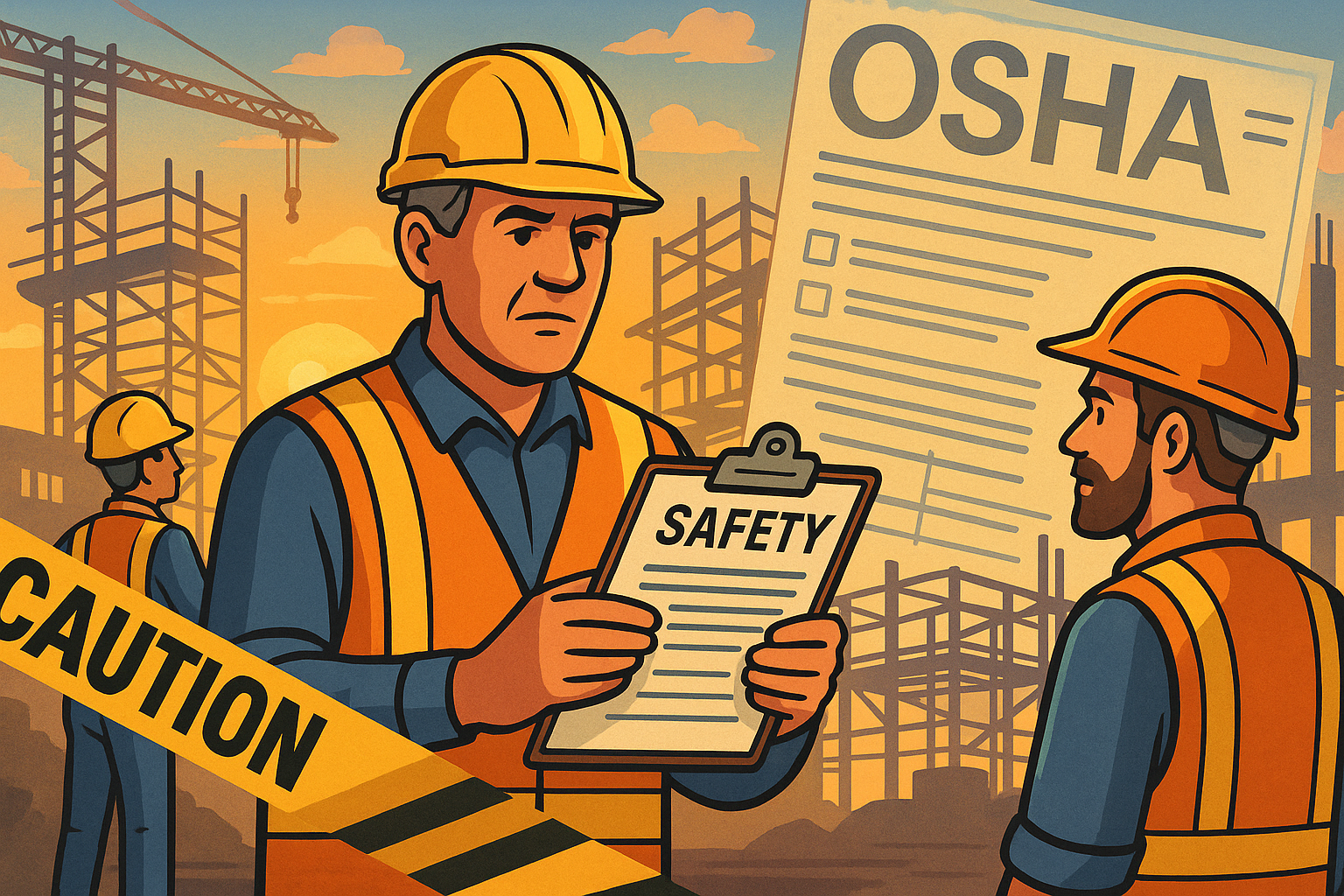
The U.S. construction industry is entering a moment of uncertainty as the Labor Department signals a sweeping push to roll back several workplace safety requirements. Although the proposal is framed as an effort to reduce regulatory burdens, many in the construction sector worry that these shifts could create downstream effects that reshape insurance underwriting, bid strategies, and jobsite liability. For general contractors and subcontractors already navigating razor-thin margins, the question becomes increasingly urgent: If OSHA steps back, who steps up to keep jobsites safe—and who absorbs the risk when things go wrong?
A New Phase of Deregulation
The current proposals under consideration by the Labor Department aim to trim or eliminate select reporting requirements, adjust certain enforcement procedures, and scale back targeted inspections across industries. While the rulemaking process is ongoing, the direction is unmistakable: the federal government intends to lighten oversight and shift more discretion to employers.
Supporters argue the changes will remove bottlenecks, speed up project delivery, and reduce compliance costs. However, construction—historically one of the most dangerous sectors and the source of nearly one-fifth of all workplace fatalities—may feel these changes more acutely than others. Safety experts caution that weakening federal standards could lead to uneven practices and greater exposure, especially for contractors who rely on OSHA requirements as their baseline safety framework.
Safety Implications: More Freedom, More Responsibility
If federal oversight diminishes, contractors will increasingly determine their own safety programs. While many large firms already exceed OSHA standards, smaller contractors may struggle to maintain consistency without clear regulatory guidance. The result could be a patchwork of safety practices across jobsites, creating new risks for general contractors who remain responsible for overall site conditions.
In the absence of strong federal benchmarks, companies will likely need to strengthen their internal audits, keep more detailed safety documentation, and update hazard protocols regularly to demonstrate due diligence. Strong safety cultures may become a competitive advantage, especially when projects involve multiple subcontractors with varying levels of safety sophistication.
Insurance Markets Brace for Change
Insurers rely heavily on standardized OSHA data to evaluate risk across contractors. With potential rollbacks that reduce reporting and oversight, carriers may face greater uncertainty when underwriting construction policies. Many in the industry expect insurers to respond by tightening their requirements, increasing scrutiny of contractor safety histories, and demanding more extensive documentation.
Premiums could rise for firms unable to demonstrate strong safety performance, while companies with disciplined programs may gain an edge. Experience Modification Rates (EMRs), already a central metric in risk assessment, may become even more influential as insurers seek reliable indicators in a less regulated environment. Claims investigations are also expected to intensify as carriers look for assurance that contractors are internally meeting standards once enforced by OSHA.
Impact on Bids and Contract Terms
Regardless of federal deregulation, project owners are unlikely to loosen their expectations. In fact, many companies are already preparing to strengthen contractual language to protect themselves from liability if federal oversight decreases. Owners may introduce more stringent prequalification requirements, request third-party safety audits, or mandate comprehensive incident reporting far beyond what OSHA currently requires.
For contractors, this could mean adjusting bid strategies to account for additional compliance costs. While the regulatory burden may shrink at the federal level, the practical requirements imposed by owners could expand. The industry may shift from government-driven rules to contract-driven standards—potentially stricter, more varied, and customized to each project.
Liability: The Rules May Change, but the Risk Doesn’t
It is a common misconception that fewer government regulations translate to reduced legal exposure. In reality, courts assess liability based on whether a contractor acted reasonably under the circumstances, not simply whether a specific OSHA rule was violated. In a deregulated environment, determining what is “reasonable” becomes more complex, drawing on industry norms, expert testimony, and internal documentation.
This may heighten risk in worker injury cases, disputes between contractors and owners, and conflicts involving subcontractor indemnification. Without clear regulatory benchmarks, attorneys expect negligence claims to become more nuanced and potentially more contentious. Companies that maintain rigorous safety practices and thorough documentation will be better positioned to defend against claims—even in a reduced-regulation landscape.
Preparing for What Comes Next
Construction leaders do not need to wait for the final rulemaking to strengthen their defenses. Investing in robust training programs, updating in-house safety procedures, and maintaining meticulous records will mitigate risk regardless of the federal direction. Reviewing insurance coverage, including exclusions and potential premium impacts, can help firms anticipate financial shifts. Contractors should also prepare for more demanding owner requirements and factor those expectations into upcoming bids.
Ultimately, deregulation is not a signal to relax safety efforts. If anything, it increases the importance of internal discipline. Companies that treat this moment as an opportunity to distinguish themselves through strong safety performance—not simply to reduce compliance obligations—will be the ones best positioned to thrive.
The Labor Department’s proposed OSHA rollbacks could shift more responsibility and risk onto contractors. Reduced oversight may lead to stricter insurance requirements, more demanding contract language from owners, and heightened liability exposure. Strengthened internal safety programs, thorough documentation, and proactive risk management will be essential as the industry adapts.
FAQs
Will fewer OSHA rules mean fewer inspections?
Probably, but inspections will continue—especially after incidents. Reduced oversight increases employers’ responsibility to maintain safe conditions.
Could my insurance premiums rise?
Yes. Carriers may tighten underwriting and demand more proof of strong safety programs as regulatory data becomes less reliable.
Will owners add stricter safety requirements?
Very likely. Owners will protect themselves through more comprehensive prequalification, documentation, and audit requirements.
Does deregulation reduce legal liability?
No. Courts rely on industry standards and reasonable practices, not solely on OSHA mandates.