
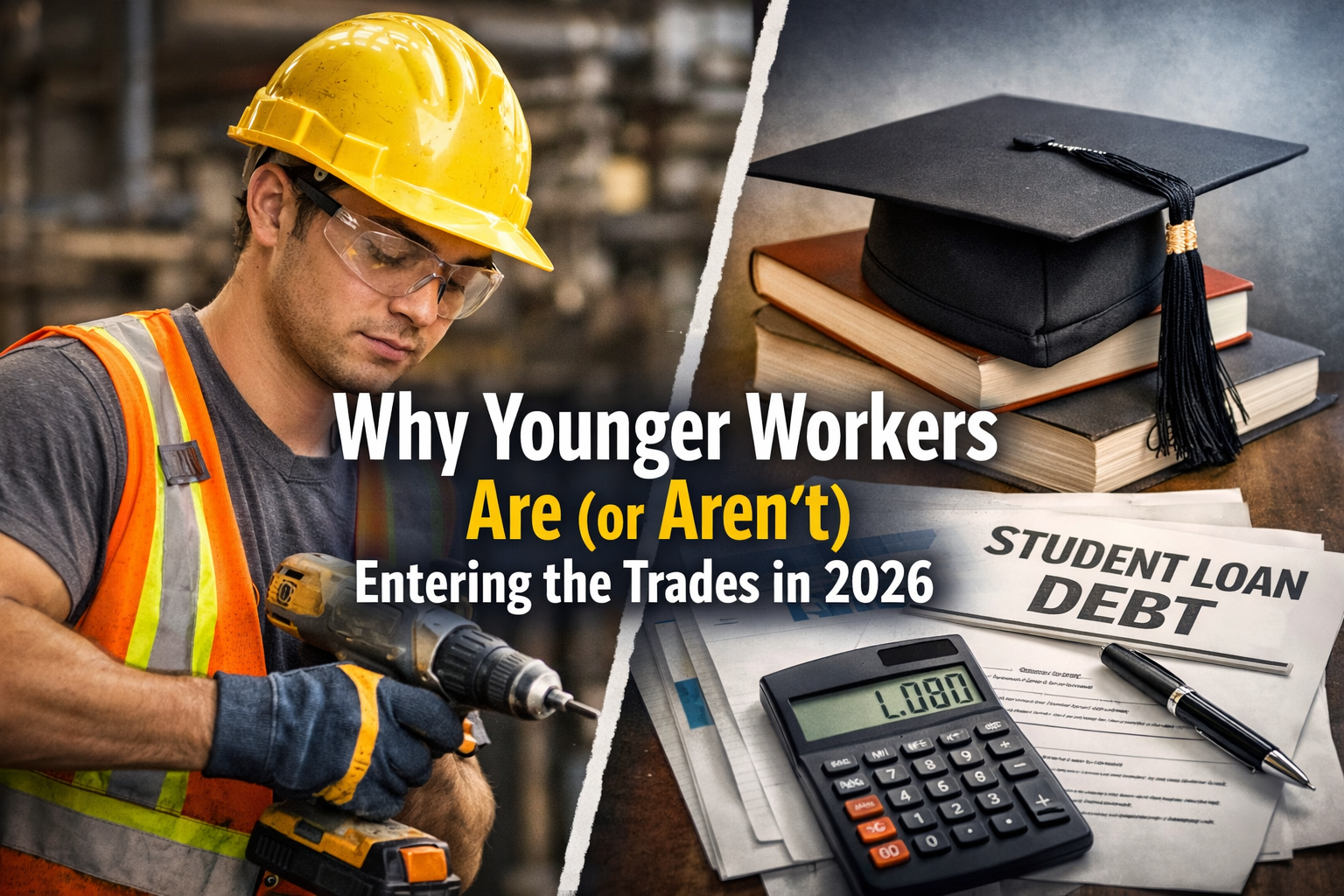
As construction firms, manufacturers, and infrastructure projects face growing labor shortages, one question dominates workforce conversations: why aren’t more younger workers entering the skilled trades — and why are some starting to reconsider?
The answer isn’t simple. Cultural stigma, college-first messaging, and changing career expectations have long pushed younger generations away from hands-on careers. Yet rising wages, mounting student debt, and concerns about AI disruption are quietly pulling Gen Z and younger millennials back toward trade work.
Here’s a closer look at what’s really driving this generational divide — and what it means for the future of the workforce.
Why Many Younger Workers Aren’t Entering the Trades
1. The College-First Mindset Still Dominates
For decades, high schools and families promoted four-year college degrees as the safest path to success. Vocational education was often sidelined, leaving many students unaware of trade careers or viewing them as a backup option rather than a primary goal.
As a result, students graduate with little exposure to apprenticeships, union programs, or technical certifications — even when those paths offer faster employment and strong earning potential.
2. Persistent Stigma Around Trade Jobs
Despite strong wages and job security, skilled trades are still perceived by some young people as physically demanding, lower status, or lacking advancement. Surveys show many Gen Z workers believe trade careers carry social stigma compared to white-collar roles, even when pay is comparable or higher.
This perception gap remains one of the biggest barriers to entry.
3. Competing Career Narratives
Technology, social media, and remote work have reshaped how young people imagine success. Careers in tech, content creation, and startups are often marketed as flexible, creative, and high-growth — even when job security is uncertain.
Trades, by contrast, struggle with visibility in a digital-first culture.
4. Physical Demands and Safety Concerns
Some younger workers — and their parents — worry about injury risks or long-term physical strain associated with construction, manufacturing, and maintenance roles. While safety standards have improved significantly, outdated perceptions continue to deter interest.
Why Younger Workers Are Entering the Trades
1. Rising Wages and Unmatched Demand
As older tradespeople retire faster than replacements enter the workforce, demand is outpacing supply. Employers are responding with higher wages, signing bonuses, and improved benefits — especially for electricians, plumbers, welders, and HVAC technicians.
In many regions, experienced tradespeople now earn as much as or more than college-educated professionals.
2. Avoiding Student Loan Debt
With college tuition continuing to climb, younger workers are rethinking the return on investment of four-year degrees. Apprenticeships and technical programs offer a compelling alternative: earn while you learn, minimal debt, and faster entry into stable careers.
For many Gen Z workers, financial independence matters more than job titles.
3. Hands-On, Purpose-Driven Work
Younger generations increasingly value tangible impact. Trade careers offer visible results — building, fixing, and maintaining the physical world — which appeals to workers who want practical skills and clear outcomes.
4. AI and Automation Anxiety
Concerns about artificial intelligence replacing office jobs are reshaping career planning. While AI affects nearly every industry, skilled trades are widely seen as more resistant to automation, offering long-term job security.
This perception is pushing some younger workers away from desk jobs and toward essential, hands-on roles.
5. Better Outreach and Modern Apprenticeships
Schools, unions, and employers are improving how they present trade careers — highlighting technology use, career progression, and leadership opportunities. Social media campaigns and employer partnerships are slowly changing the narrative.
Not All Trades Are Equal
Interest among younger workers varies by specialty. Roles with:
Clear career ladders
Strong wages
Visible skills and certifications
tend to attract more candidates. Electrical, HVAC, plumbing, and welding programs see higher engagement than less visible industrial roles, suggesting modern branding and transparency matter.
What This Means for Employers and the Economy
Labor shortages will intensify unless youth engagement improves
Early exposure to trades in high school is critical
Employers who invest in training, safety, and career development will win younger talent
The trades aren’t disappearing — but they are at a crossroads.
FAQ: Younger Workers and Skilled Trades
Are skilled trades growing or shrinking?
Demand is growing, but the workforce is aging faster than new workers are entering.
Do trades really pay well?
Yes. Many skilled trades offer six-figure earning potential with experience.
Why don’t schools promote trades more?
Decades of college-focused education policy reduced vocational visibility.
Are trades safe careers long-term?
With infrastructure investment and AI limitations, trades are considered among the most stable career paths.