
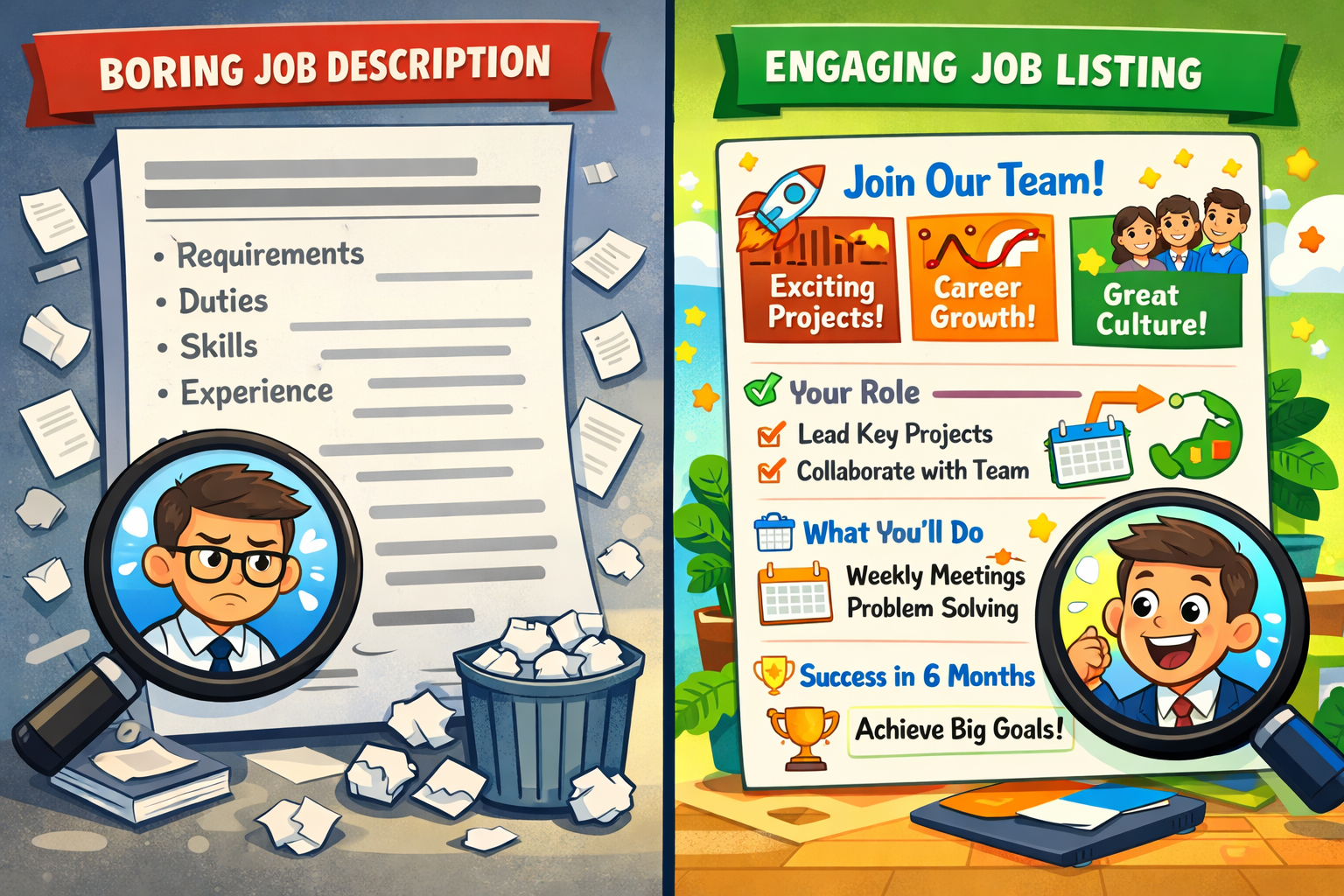
Despite record investments in recruiting tools and employer branding, many companies still struggle to attract qualified candidates. One of the biggest—and most overlooked—reasons is the job description itself.
Too often, job postings read like legal documents: long lists of demands, vague responsibilities, and generic company statements that fail to explain what the job is actually like. In today’s competitive hiring market, candidates don’t just want a job description—they want a job experience preview.
This article breaks down why traditional job listings fail and offers practical, real-world examples of how to write clear, engaging, and effective job descriptions that truly work.
Why Most Job Descriptions Fail to Attract Qualified Candidates
Many job postings are written for internal approval rather than candidate engagement. As a result, they often suffer from the same common problems:
- Overloaded with requirements and buzzwords
- Vague descriptions of day-to-day responsibilities
- No clear explanation of impact or growth
- Generic language copied from old templates
Qualified candidates skim these listings and move on, while unqualified applicants apply anyway—creating more noise, not better results.
A strong job description should filter in the right candidates while filtering out the wrong ones.
Shift the Mindset: From Listing Tasks to Showing the Experience
The most effective job postings answer one simple question:
“What will my life actually look like in this role?”
Instead of listing every possible task, successful job descriptions focus on:
- How the role fits into the team
- What a typical week looks like
- What success looks like after 6–12 months
- Why the role matters to the company
This transforms a job description into a story candidates can see themselves in.
Before and After: What Effective Job Descriptions Look Like
❌ Traditional Job Description (What Not to Do)
Responsibilities include managing projects, coordinating with stakeholders, preparing reports, and ensuring deadlines are met.
Requirements:
– Bachelor’s degree required
– 5+ years of experience
– Strong communication skills
– Ability to multitask in a fast-paced environment
This tells candidates very little—and excites almost no one.
✅ Improved Job Description (What Works)
In this role, you’ll manage 3–5 active projects at a time, working closely with engineering and operations teams to keep schedules on track.
A typical week includes leading project check-ins, removing roadblocks for your team, and presenting progress updates to leadership. Within your first six months, you’ll take ownership of at least one high-impact initiative from kickoff to completion.
This version is clearer, more specific, and far more engaging—without being longer.
Write for Clarity, Not Perfection
Many hiring managers hesitate to simplify job descriptions, fearing they’ll miss “important details.” In reality, clarity attracts better candidates.
Strong job descriptions use:
- Plain language instead of corporate jargon
- Short paragraphs instead of long blocks of text
- Specific examples instead of generic claims
Candidates don’t need perfection—they need honesty and clarity.
Make Requirements Realistic and Purposeful
One of the fastest ways to lose qualified applicants is an unrealistic requirements list.
Ask yourself:
- Is this requirement truly essential on day one?
- Could this skill be learned on the job?
- Are we listing “nice-to-haves” as “must-haves”?
Effective job listings clearly separate required qualifications from preferred skills, making the role feel attainable rather than intimidating.
Job Descriptions Are Your First Employee Experience
Before an interview, before a recruiter call, before an offer—your job description is the first real interaction a candidate has with your company.
When written well, it sets expectations, builds trust, and attracts candidates who are aligned with the role and culture. When written poorly, it drives the best talent away.
Key Takeaways
- Most job descriptions fail because they focus on tasks, not experience
- Candidates want to understand what the role actually feels like
- Clear, specific language outperforms long lists and buzzwords
- Job descriptions should attract the right candidates—not everyone
FAQ
Why are job descriptions so important in hiring?
They are often the first touchpoint between a company and a candidate and heavily influence who applies.
Should job descriptions be shorter or longer?
Neither—job descriptions should be clear and specific, regardless of length.
How can job descriptions reduce unqualified applicants?
By clearly explaining responsibilities, expectations, and success metrics upfront.
Do job descriptions impact employer branding?
Yes. They shape how candidates perceive your culture, clarity, and professionalism.