
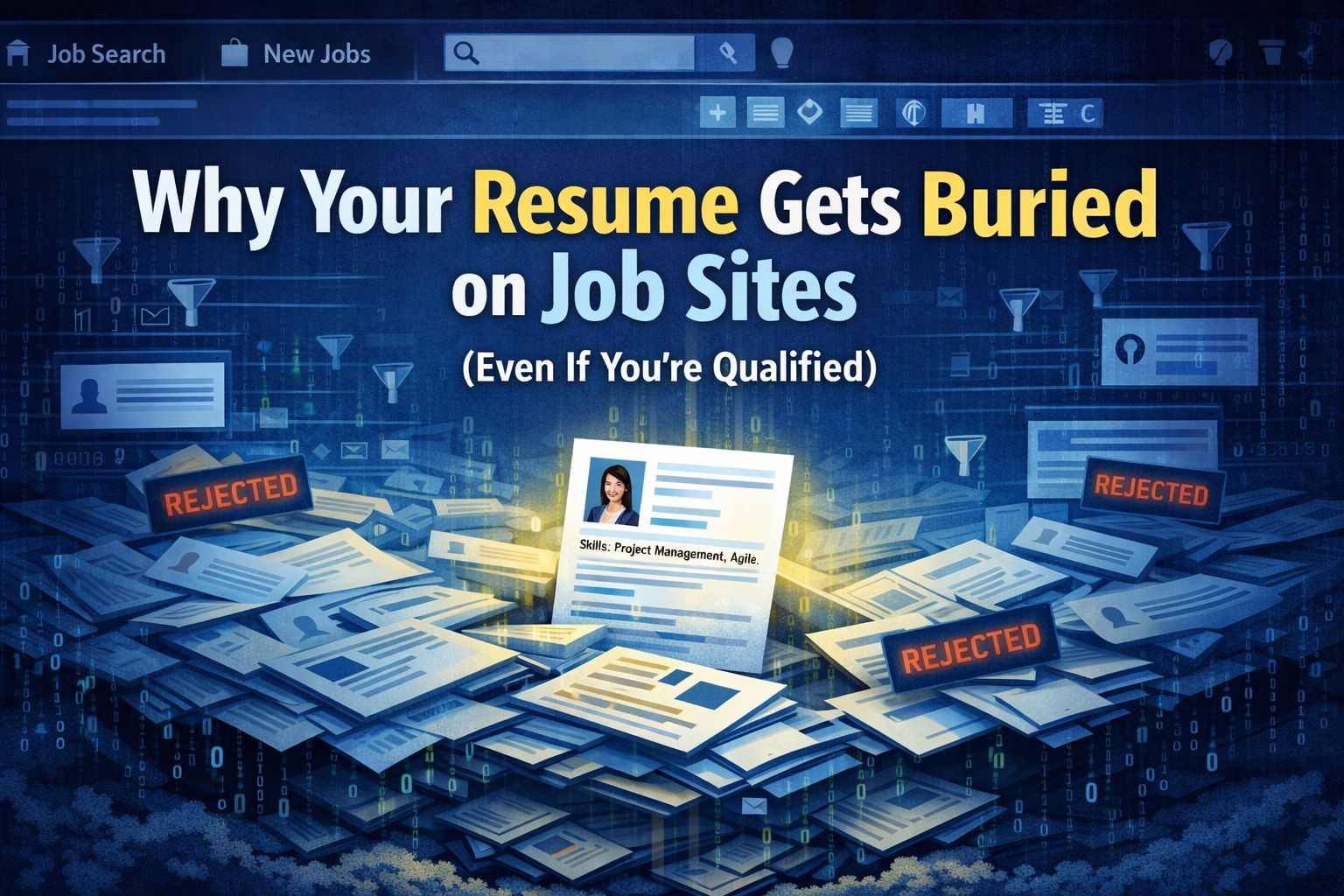
Your resume may never reach a recruiter because of applicant tracking systems (ATS), keyword mismatches, overcrowded job boards, timing issues, and employer filtering habits. Fixing formatting, keywords, and strategy can dramatically improve your visibility.
The Silent Rejection Problem
You meet the qualifications. You tailor your resume. You apply early.
And still—nothing.
No email. No interview. Not even a rejection.
If this sounds familiar, you’re not alone. Millions of job seekers are qualified for roles they apply to, yet their resumes never make it past job sites or recruiter dashboards. The reason? Your resume isn’t being “rejected”—it’s being buried.
Here’s what’s really happening behind the scenes—and how to fix it.
1. Applicant Tracking Systems (ATS) Are the First Gatekeepers
Most medium-to-large employers use Applicant Tracking Systems (ATS) to manage applications. These systems automatically scan resumes before a human ever sees them.
Common ATS mistakes:
Missing role-specific keywords
Using graphics, tables, or columns
Uploading PDFs with unreadable formatting
Generic job titles instead of industry-standard ones
According to Jobscan (updated 2024), over 98% of Fortune 500 companies use ATS software, and up to 75% of resumes are rejected before human review.
Why this matters:
If your resume doesn’t “match” the job description closely enough, it may never be surfaced to recruiters—no matter how qualified you are.
2. You’re Competing With Hundreds (or Thousands) of Applicants
Popular job boards like Indeed, LinkedIn, and Glassdoor create massive applicant pools.
Recent data from LinkedIn’s 2024 Workforce Report shows:
Corporate roles often receive 200–500 applicants within 24–48 hours
Recruiters typically review only the first 10–20% of submissions
Translation:
Applying “eventually” is often the same as not applying at all.
3. Keyword Mismatch Is Killing Your Visibility
Recruiters don’t search manually through resumes—they search by keywords.
If the job posting says:
“project management, Agile, stakeholder communication”
…but your resume says:
“led initiatives, team coordination, cross-functional work”
You may be invisible—even though the experience is equivalent.
ATS and recruiters favor exact phrasing, not inferred meaning.
4. Formatting Issues Can Break Your Resume
Even well-written resumes can fail due to technical formatting problems.
High-risk elements:
Two-column layouts
Icons and logos
Text boxes
Fancy fonts
Headers/footers with key info
ATS systems may:
Read sections out of order
Ignore critical experience
Drop entire chunks of text
Best practice:
Use a clean, single-column resume with standard headings like Experience, Skills, Education.
5. Recruiters Use Filters You Never See
Recruiters often apply invisible filters such as:
Location radius
Years of experience
Degree requirements
Job title matches
Employment gaps
Even one mismatched filter can remove your resume from search results automatically.
This is why many candidates are “qualified” but never contacted.
6. Timing Works Against You
Most recruiters prioritize resumes submitted:
Within the first 24–72 hours
Before internal candidates are reviewed
Before referrals fill the pipeline
Once enough viable candidates are found, remaining resumes may never be opened at all.
How to Stop Your Resume From Getting Buried
Here’s what actually works:
Tailor keywords directly from each job description
Use ATS-friendly formatting (simple, clean, no graphics)
Apply early—ideally within 24 hours
Match job titles to industry standards
Focus on measurable results and specific skills
Pair applications with networking or referrals
Frequently Asked Questions
Is my resume bad if I’m not getting interviews?
Not necessarily. Many strong resumes fail due to ATS filters, keyword issues, or timing—not qualifications.
Should I apply to jobs on job boards at all?
Yes—but don’t rely on them alone. Direct applications, referrals, and recruiter outreach significantly increase visibility.
Do PDFs really hurt my chances?
Sometimes. Word documents (.docx) are generally safer unless the employer explicitly requests a PDF.
Your resume isn’t failing because you’re unqualified—it’s failing because modern hiring systems are designed to filter aggressively.
Understanding how job sites, ATS software, and recruiters actually work gives you a major advantage. With the right strategy, formatting, and timing, you can move your resume from buried to seen.