
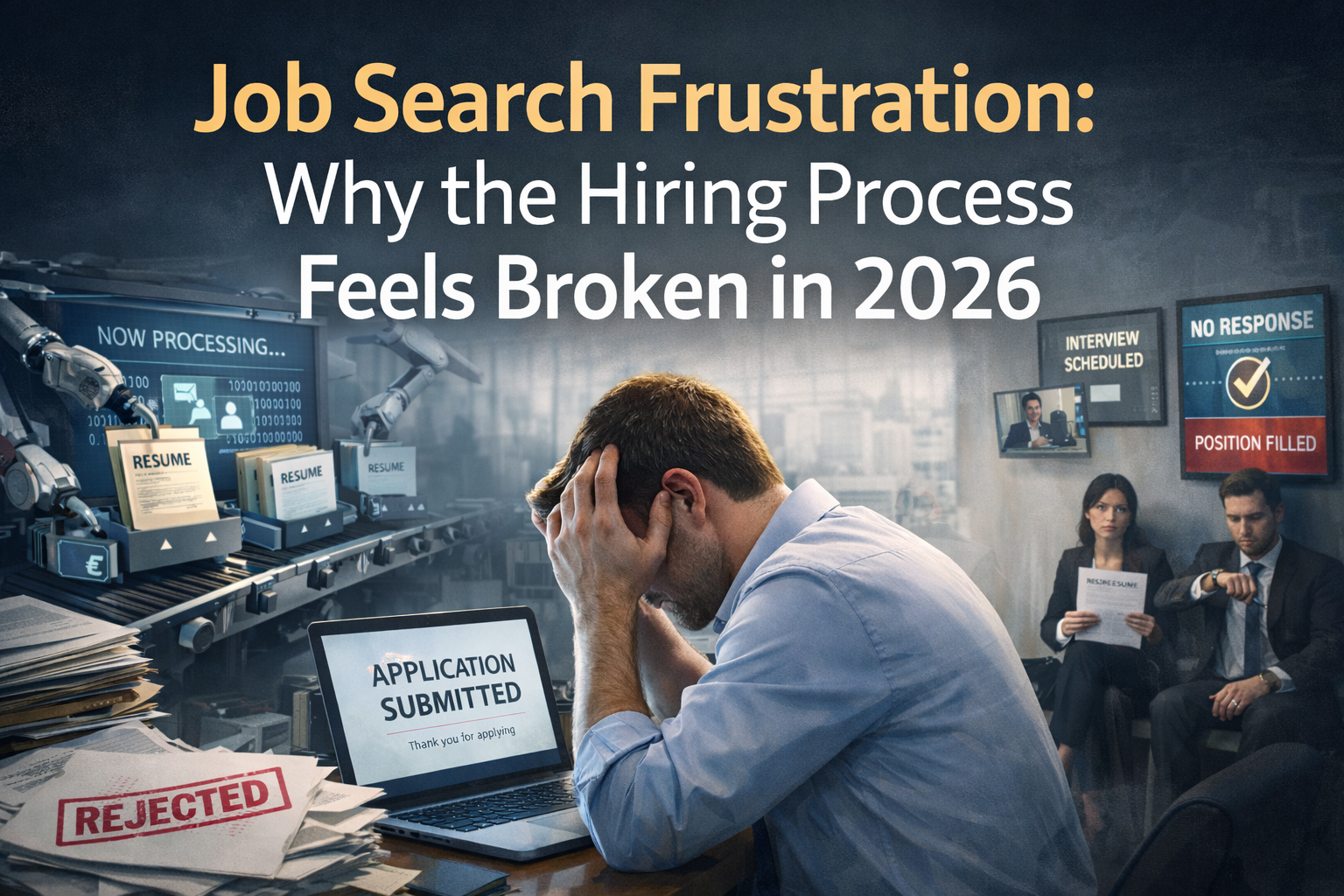
The modern job hunt is supposed to be easier than ever. With thousands of job boards, AI-powered resume tools, and one-click applications, candidates should theoretically have a smoother path to employment.
Yet for many job seekers, the experience feels worse than ever.
Applicants routinely submit hundreds of applications without hearing back, interview processes stretch across months, and automated systems often reject qualified candidates before a human ever sees their resume. The result? A growing perception that the hiring process itself is broken.
Behind this frustration are three major forces reshaping recruitment: massive application volume, heavy automation, and a declining candidate experience.
The Explosion of Job Applications
One of the biggest shifts in hiring is the sheer volume of applications companies now receive.
According to LinkedIn’s Global Talent Trends Report, the average corporate job posting receives 250+ applications, with some popular roles attracting thousands within days.
Easy online applications are a major reason. Platforms like LinkedIn and Indeed allow candidates to apply with a single click, dramatically lowering the barrier to entry.
While convenient for applicants, this creates major problems for hiring teams:
Recruiters must sift through overwhelming volumes of resumes
Qualified candidates get buried among unqualified ones
Hiring timelines stretch longer
Ironically, the easier it becomes to apply, the harder it becomes to stand out.
Automation Is Filtering Candidates Before Humans Ever See Them
To handle the flood of applications, companies increasingly rely on Applicant Tracking Systems (ATS) and AI screening tools.
These systems automatically filter resumes based on keywords, experience levels, and formatting.
Estimates suggest over 98% of Fortune 500 companies now use ATS software to manage hiring.
For employers, automation saves time. But for job seekers, it introduces new frustrations:
Qualified candidates can be rejected due to missing keywords
Resume formatting can break parsing systems
Algorithms may prioritize rigid criteria over potential
In some cases, candidates never know they were filtered out by software.
This has led to a strange dynamic where job seekers are now writing resumes for algorithms first—and humans second.
The Rise of “Ghosting” in Hiring
Another major complaint among candidates is the lack of communication.
Applicants often experience:
No response after submitting applications
Silence after interviews
Delayed hiring timelines lasting months
According to a survey from Indeed’s Hiring Lab, 77% of job seekers say they have been ghosted by employers during the hiring process.
This breakdown in communication can damage both sides:
Candidates feel disrespected and frustrated
Employers harm their employer brand
Future applicants may avoid the company
In an era where employer reputation spreads quickly online, poor candidate experience can become a serious recruiting liability.
Hiring Has Become More Risk-Averse
Another hidden factor is how companies approach hiring decisions today.
Many organizations are increasingly cautious due to:
Economic uncertainty
Budget pressures
High turnover costs
As a result, hiring processes have grown longer and more complex, often involving five or more interview rounds.
While companies hope this reduces hiring mistakes, it can also slow decision-making and drive candidates away.
Highly skilled professionals frequently accept other offers while waiting through lengthy processes.
The Human Cost of a Broken Hiring System
The consequences of this system extend beyond inconvenience.
Job search burnout has become increasingly common. Candidates describe the process as emotionally exhausting:
Constant rejection
Lack of feedback
Endless applications with little progress
Some job seekers even report feeling like the process is more about gaming algorithms than showcasing real talent.
How Hiring Could Improve
While the current system has flaws, many experts believe improvements are possible.
Key changes could include:
1. Smarter use of automation
AI tools should assist recruiters—not fully replace human evaluation.
2. Better communication with candidates
Automated updates and clearer timelines can dramatically improve candidate experience.
3. Fewer but more meaningful interviews
Streamlined hiring processes help companies avoid losing top talent.
4. More transparent job postings
Clear salary ranges, expectations, and timelines help candidates make informed decisions.
Companies that prioritize these improvements may gain a competitive advantage in attracting talent.
The Bottom Line
The hiring process isn’t intentionally broken—but it has struggled to keep up with the digital age.
The rise of easy applications, automated screening, and risk-averse hiring practices has created a system that often frustrates both employers and job seekers.
Organizations that focus on better communication, smarter technology use, and streamlined hiring may ultimately stand out in an increasingly competitive talent market.
FAQ
Why do job applications receive so many applicants today?
Online job boards and one-click applications make it easy for candidates to apply quickly, dramatically increasing application volume.
What is an Applicant Tracking System (ATS)?
An ATS is software used by employers to filter, sort, and manage job applications automatically.
Why do companies ghost candidates?
Often due to high application volume, internal hiring delays, or poor recruiting processes.
Are automated hiring tools bad?
Not necessarily. They help manage large applicant pools but can create problems if used too rigidly.
Sources
LinkedIn Talent Blog – Global Talent Trends Report (April 2024)
https://business.linkedin.com/talent-solutions/blogJobscan – 98% of Fortune 500 Companies Use ATS (Updated 2024)
https://www.jobscan.co/blog/ats-resume/Indeed Hiring Lab – Job Seeker Ghosting Survey (October 2023)
https://www.hiringlab.org