
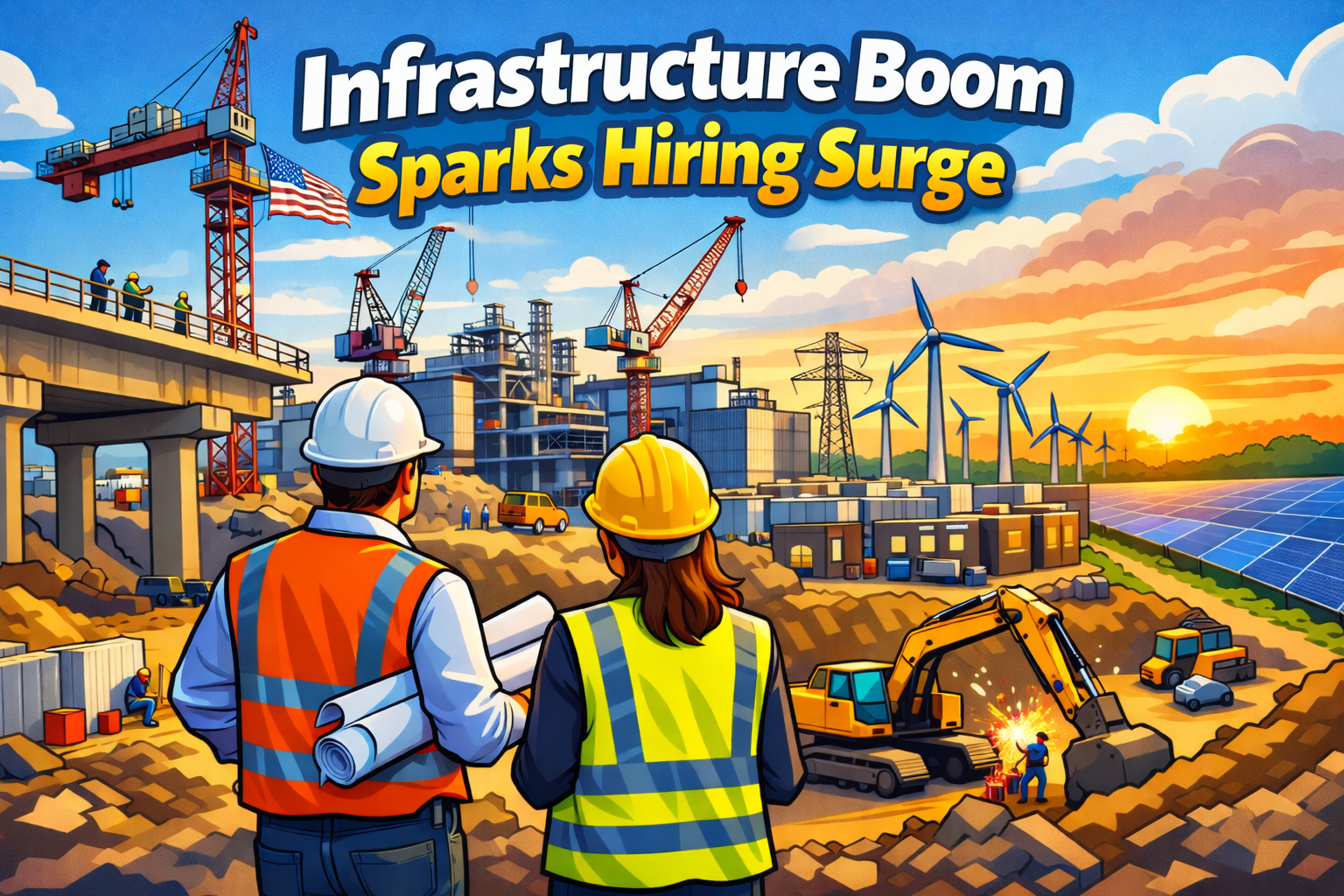
The United States is in the middle of one of the largest infrastructure and industrial build-outs in decades. From highways and bridges to semiconductor fabrication plants and renewable energy facilities, massive projects are reshaping the national construction landscape—and driving extraordinary demand for engineering and construction talent.
According to the U.S. Census Bureau, total U.S. construction spending surpassed $2.24 trillion, continuing a strong upward trajectory as federal investment, reshoring of manufacturing, and energy transition initiatives accelerate new projects across the country.
For engineers, project managers, and skilled trades professionals, this wave of development represents one of the most significant job opportunities in years.
A Historic Surge in Infrastructure Investment
Federal initiatives such as the Infrastructure Investment and Jobs Act, the CHIPS and Science Act, and renewable energy incentives from the Inflation Reduction Act have triggered massive funding for new construction.
These investments are targeting critical sectors including:
- Transportation infrastructure (roads, bridges, transit systems)
- Utilities and grid modernization
- Data centers and digital infrastructure
- Semiconductor manufacturing
- Renewable energy generation and storage
Together, these initiatives are reshaping the U.S. construction pipeline and creating long-term demand for technical professionals who can design, build, and manage complex projects.
The Associated General Contractors of America reports that infrastructure spending and manufacturing facility construction are among the fastest-growing construction sectors in the country.
Data Centers and Semiconductor Plants Are Driving Industrial Growth
One of the biggest drivers of new construction demand is the rapid expansion of data centers and semiconductor manufacturing facilities.
Tech companies are building hyperscale data centers nationwide to support cloud computing, artificial intelligence, and digital services. Meanwhile, semiconductor giants are constructing new fabrication plants across the U.S. to reduce reliance on overseas chip production.
Major projects include:
- Intel’s $20+ billion semiconductor complex in Ohio
- TSMC’s multi-billion-dollar fabrication plants in Arizona
- Large-scale data center campuses expanding across Texas, Virginia, and the Midwest
These advanced facilities require highly specialized engineering and construction expertise, significantly increasing demand for electrical, structural, and industrial engineers.
Renewable Energy Projects Are Expanding Rapidly
Another major component of the infrastructure boom is the surge in renewable energy construction.
Wind farms, solar installations, battery storage facilities, and grid upgrades are being deployed across the country as utilities and corporations pursue clean energy goals.
The U.S. Energy Information Administration (EIA) reports that renewable capacity additions—particularly solar and wind—are expected to continue rising significantly through the late 2020s.
These projects require a wide range of engineering talent, from electrical system design to structural engineering for turbine and solar installations.
Housing and Commercial Development Are Driving Local Infrastructure Expansion
While federal megaprojects often grab headlines, another major driver of infrastructure demand is the rapid expansion of housing developments and commercial construction across growing regions of the United States.
Population growth and business expansion in areas such as Texas, Florida, Arizona, Tennessee, and the Carolinas are fueling large-scale residential communities, logistics hubs, retail centers, and office developments.
According to the U.S. Census Bureau, the South continues to lead the nation in population growth, with states like Florida and Texas adding hundreds of thousands of new residents annually.
This surge in population and development creates a cascading effect: new housing and commercial projects require expanded transportation infrastructure, utilities, and public works to support growing communities.
As a result, municipalities and state agencies are accelerating projects such as:
- New highway interchanges and road expansions
- Bridge construction and replacements
- Water and wastewater system upgrades
- Power grid expansion and substations
- Public transit infrastructure
These supporting infrastructure projects significantly increase demand for civil engineers, transportation planners, structural engineers, and construction project managers.
The Jobs Benefiting Most from the Infrastructure Boom
As project pipelines grow, employers are actively competing for professionals who can deliver large-scale infrastructure and industrial developments.
Some of the most in-demand roles include:
Civil Engineers
Civil engineers are essential for transportation infrastructure, utilities, and site development for new facilities.
Electrical Engineers
Power systems, renewable energy installations, and data centers are creating massive demand for electrical design expertise.
Construction Project Managers
Complex projects require experienced leaders to coordinate contractors, budgets, schedules, and safety requirements.
Structural Engineers
Industrial facilities, bridges, and renewable energy structures require advanced structural design capabilities.
BIM Specialists
Building Information Modeling (BIM) professionals are increasingly critical for coordinating large, multidisciplinary construction projects.
According to the U.S. Bureau of Labor Statistics, employment for civil engineers alone is projected to grow steadily through the decade as infrastructure projects expand nationwide.
A Long-Term Talent Shortage Is Emerging
While the construction pipeline continues to expand, many companies are facing a serious talent shortage.
Several factors are contributing to the gap:
- Retirement of experienced engineering professionals
- Fewer graduates entering construction and civil engineering fields
- Rapid expansion of projects across multiple sectors simultaneously
As a result, employers are increasingly partnering with specialized recruiting firms to find qualified engineers and project managers capable of leading large-scale infrastructure initiatives.
What This Means for Engineering Careers
For professionals in engineering, construction management, and skilled trades, the infrastructure surge represents a major career opportunity.
Workers with expertise in areas such as industrial construction, power systems, structural design, and project management are particularly well-positioned to benefit from the growing demand.
Companies that can attract and retain these professionals will be better equipped to deliver the massive wave of projects now underway across the United States.
FAQ
Why is infrastructure construction growing so quickly in the U.S.?
Major federal legislation, including the Infrastructure Investment and Jobs Act and the CHIPS and Science Act, has allocated billions of dollars toward rebuilding transportation networks, expanding domestic manufacturing, and supporting clean energy projects.
What industries are driving the most construction demand?
Key sectors include infrastructure, semiconductor manufacturing, data centers, renewable energy facilities, and utility upgrades.
Which engineering jobs are most in demand?
Civil engineers, electrical engineers, structural engineers, construction project managers, and BIM specialists are among the most sought-after professionals.
Is the construction boom expected to continue?
Yes. Many large infrastructure and industrial projects are planned through the late 2020s, suggesting sustained demand for engineering and construction talent.