
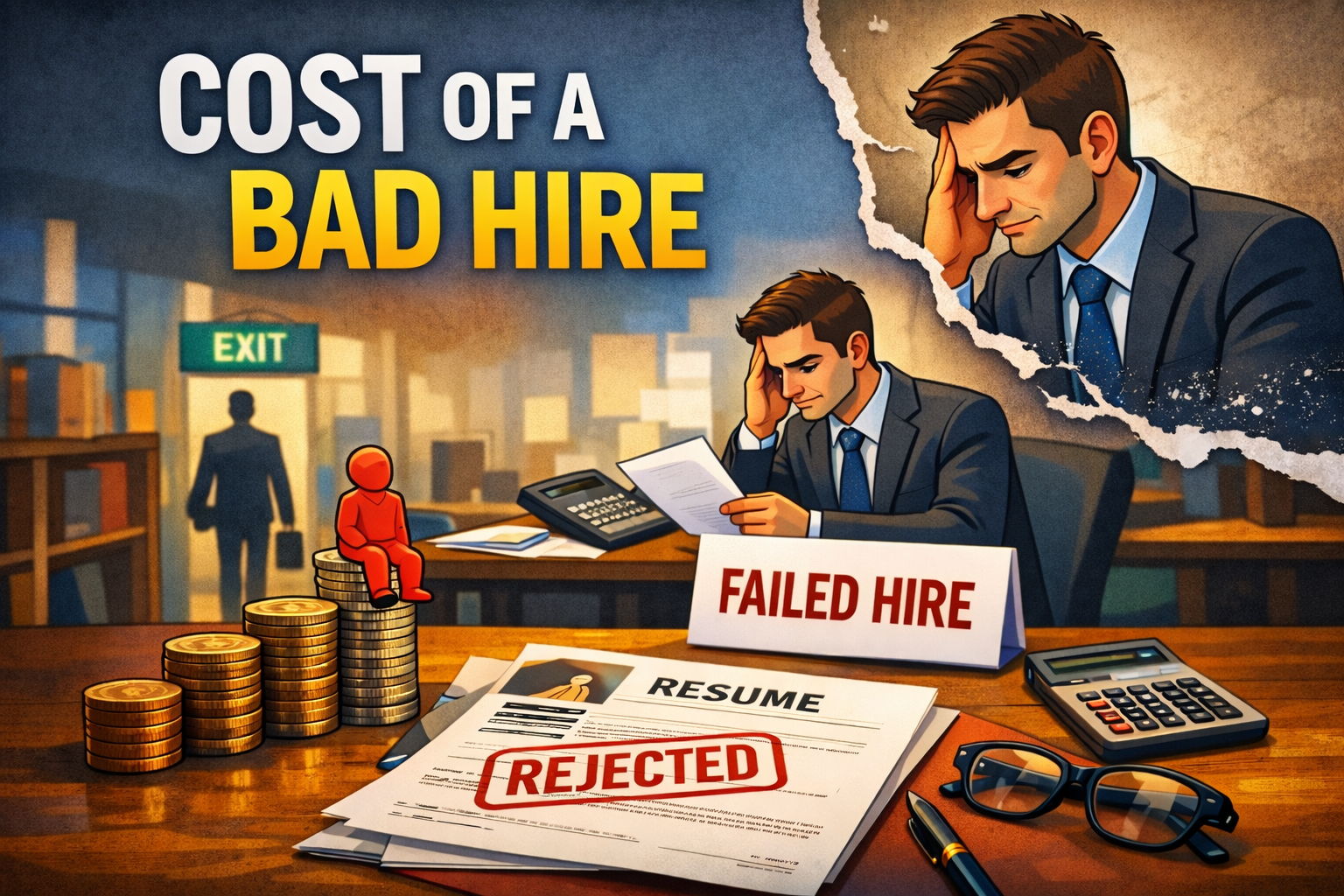
A bad hire doesn’t just cost money—it quietly erodes productivity, morale, and momentum across an entire organization. While many companies focus on filling open roles quickly, the long-term consequences of hiring the wrong person often far outweigh the short-term relief of getting a seat filled.
In a competitive labor market, understanding the true cost of a bad hire—and knowing how to prevent it—can be the difference between sustainable growth and constant turnover.
How Much Does a Bad Hire Really Cost?
Many business leaders underestimate the financial impact of a poor hiring decision. While estimates vary by role and industry, research consistently shows that a bad hire can cost 30% to 200% of the employee’s annual salary, and even more for leadership or highly specialized positions.
That’s because salary is only the beginning.
The Hidden Costs Most Companies Miss
1. Recruitment and Onboarding Expenses
Before a bad hire even starts, companies invest heavily in:
- Job advertising and recruitment fees
- Interview time from managers and teams
- Background checks and administrative processing
- Training and onboarding resources
When the hire fails, those costs must be repeated—often within months.
2. Lost Productivity
Underperforming employees slow everything down. Projects take longer, errors increase, and managers spend extra time correcting mistakes instead of focusing on strategy or growth. In collaborative environments, one poor performer can drag down an entire team’s output.
3. Management Time and Opportunity Cost
Every hour spent managing performance issues is an hour not spent improving operations, developing top talent, or serving clients. Over time, this distraction becomes one of the most expensive aspects of a bad hire.
4. Damage to Team Morale
Few things frustrate high performers more than being forced to compensate for a bad hire. Resentment builds, engagement drops, and top employees may begin looking elsewhere—turning one hiring mistake into multiple departures.
5. Customer and Reputation Impact
In client-facing roles, a bad hire can directly affect customer satisfaction. Missed deadlines, poor communication, or unprofessional behavior can strain relationships and harm a company’s reputation in ways that are difficult to undo.
Why Bad Hires Keep Happening
Despite best intentions, hiring mistakes are common—and often predictable.
Rushed Hiring Decisions
Pressure to fill a role quickly can lead to shortcuts in screening, interviewing, and evaluation. Speed replaces strategy, and red flags get ignored.
Overvaluing Resumes
Resumes show where someone has been—not how they perform. Without structured interviews or skill-based evaluations, companies may mistake experience for competence.
Ignoring Cultural Fit
Technical skills matter, but cultural misalignment is one of the leading causes of early turnover. Employees who don’t align with company values, communication styles, or expectations rarely succeed long-term.
How to Avoid the Cost of a Bad Hire
Define Success Before Posting the Job
Clear expectations reduce guesswork. Identify what success looks like at 30, 60, and 90 days before interviews begin.
Use Structured Interviews
Standardized questions and evaluation criteria improve consistency and reduce bias—leading to better hiring decisions.
Evaluate Skills and Behavior
Skills assessments, situational questions, and behavioral interviews provide insight into how candidates actually work, not just how they present themselves.
Don’t Skip Reference Checks
Speaking directly with former supervisors can reveal performance patterns that interviews won’t uncover.
Partner With Industry-Specific Recruiters
Specialized recruiting partners understand market conditions, candidate motivations, and role requirements—dramatically reducing hiring risk, especially for critical or hard-to-fill positions.
The Bottom Line
A bad hire costs far more than a paycheck. It affects productivity, people, culture, and customers. Companies that invest more time and strategy upfront in their hiring process consistently save money—and headaches—over the long term.
Hiring well isn’t just an HR function. It’s a business advantage.
FAQ
How long does it take to identify a bad hire?
Typically 3–6 months, after training and onboarding are complete.
Are bad leadership hires more expensive?
Yes. Leadership mistakes often result in higher turnover, poor strategy execution, and widespread team disruption.
Is investing in recruiting help worth it?
For specialized or high-impact roles, professional recruiters often reduce total hiring costs by improving quality and retention.