
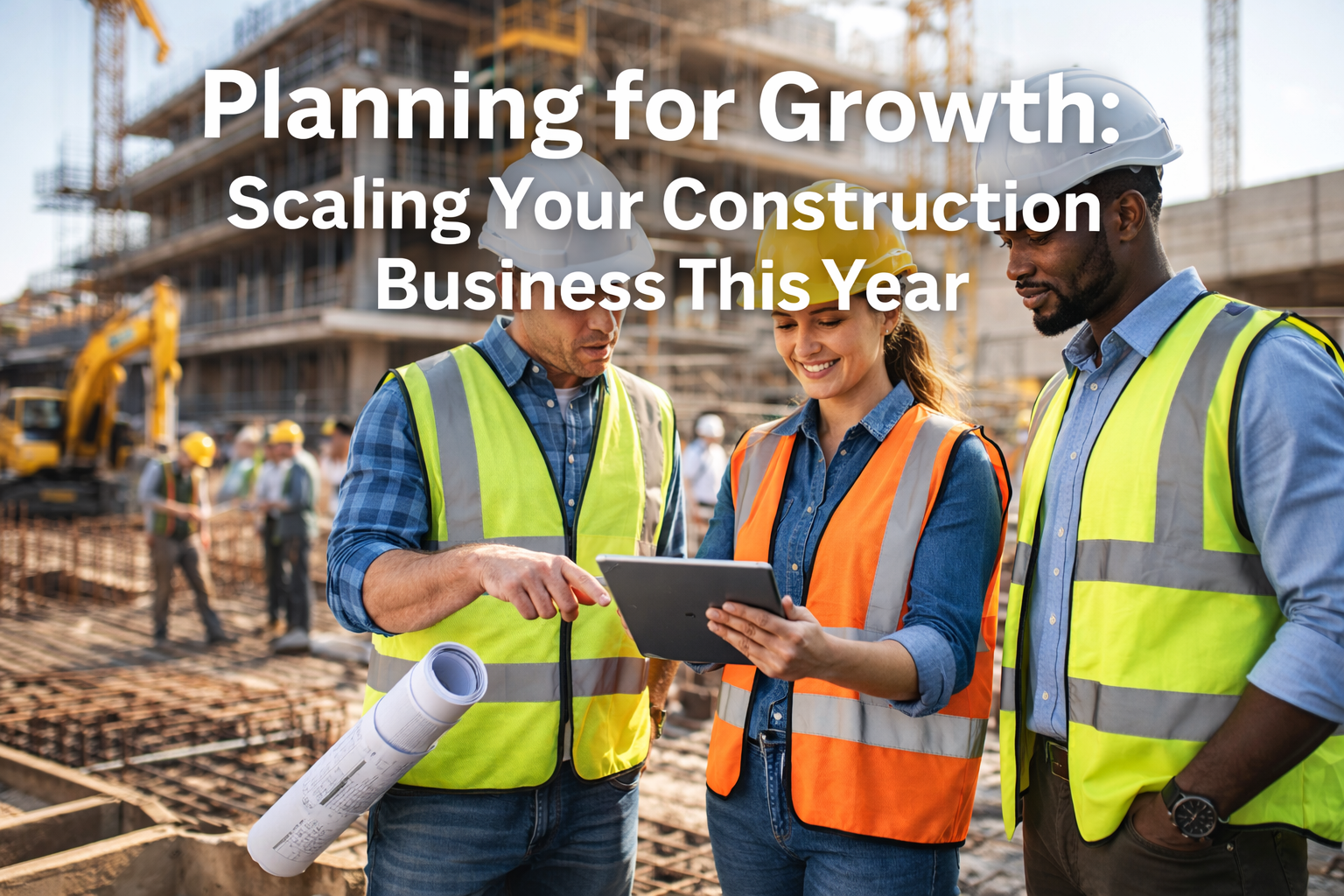
The construction industry continues to show strong demand, but growth isn’t guaranteed simply by winning more bids. Scaling a construction business requires deliberate planning, disciplined execution, and a clear understanding of how expansion impacts people, processes, and profitability. Companies that grow too quickly without a strategy often face cash flow challenges, labor shortages, and quality issues that can stall momentum.
This year presents an opportunity for construction leaders to take a more intentional approach to growth — one that prioritizes sustainability, efficiency, and long-term value rather than short-term volume.
Defining What Growth Really Means for Your Business
Before expanding, it’s critical to define what growth looks like for your specific operation. For some firms, growth means increasing revenue through larger projects. For others, it may involve entering new markets, improving margins, or stabilizing operations through repeat clients. Without a clear definition, growth efforts can become scattered and reactive.
Leadership teams should align on measurable goals, such as target revenue increases, project mix, geographic expansion, or staffing levels. A clear vision ensures that every operational decision supports the same objective rather than pulling the company in multiple directions.
Financial Planning as the Backbone of Scaling
Scaling a construction business without strong financial controls is one of the most common causes of failure. Growth introduces higher payroll expenses, increased material costs, and longer cash cycles, all of which place pressure on working capital. Companies that don’t plan for these realities often find themselves profitable on paper but struggling to meet obligations.
Effective financial planning includes realistic forecasting, disciplined budgeting, and proactive cash flow management. Establishing lines of credit before they are needed and working closely with financial professionals who understand construction accounting can provide stability as operations expand.
Operational Efficiency Enables Sustainable Expansion
As workloads increase, inefficiencies that once felt manageable quickly become bottlenecks. Scaling successfully means tightening processes before they break. Standardized workflows, clear communication channels, and consistent documentation allow teams to manage more projects without sacrificing accuracy or accountability.
Technology plays a critical role here. Digital project management platforms, estimating tools, and cloud-based documentation systems help teams stay aligned across job sites and offices. When used correctly, technology reduces errors, shortens project timelines, and frees leadership to focus on strategy rather than daily problem-solving.
Workforce Development Is a Growth Strategy, Not an Expense
Labor remains one of the construction industry’s biggest challenges, and growth only intensifies the pressure. Expanding companies must think beyond hiring and focus on developing the workforce they already have. Skilled, engaged employees are more productive, safer on the job, and more likely to stay long-term.
Training programs, mentorship opportunities, and clear advancement paths create loyalty while improving performance. Companies that invest in their people build institutional knowledge that can’t be easily replaced — a major competitive advantage when scaling operations.
Expanding Services Without Diluting Quality
Diversification can be a powerful growth lever, but only when executed thoughtfully. Adding new services, such as design-build capabilities, specialized trades, or long-term maintenance offerings, can increase revenue and reduce dependency on a single market segment. However, expansion should always align with existing expertise and operational capacity.
Attempting to offer too much too quickly can strain resources and damage reputation. Strategic growth prioritizes depth and excellence before breadth.
Reputation and Client Experience Drive Long-Term Growth
In construction, reputation is currency. As companies scale, maintaining consistent quality and communication becomes even more important. Clients who feel informed, respected, and confident in the process are more likely to provide repeat business and referrals.
Strong customer experience is built through transparency, responsiveness, and follow-through. Showcasing completed projects, sharing testimonials, and actively managing online presence reinforce credibility as the business grows.
Grow with Intention, Not Just Speed
Scaling a construction business is not about doing more — it’s about doing better at a larger scale. Companies that succeed in growth take the time to plan financially, invest in their workforce, streamline operations, and protect their reputation. Growth that’s intentional and well-managed leads to stability, resilience, and long-term success.
FAQ
How fast should a construction business scale?
Sustainable growth typically ranges between 10% and 25% annually, depending on market conditions, staffing capacity, and financial strength.
What is the biggest risk when scaling a construction company?
Cash flow strain and labor shortages are the most common risks, especially when growth outpaces internal systems.
Is technology necessary for small construction companies?
Yes. Even modest technology investments can significantly improve efficiency and support scalable operations.