
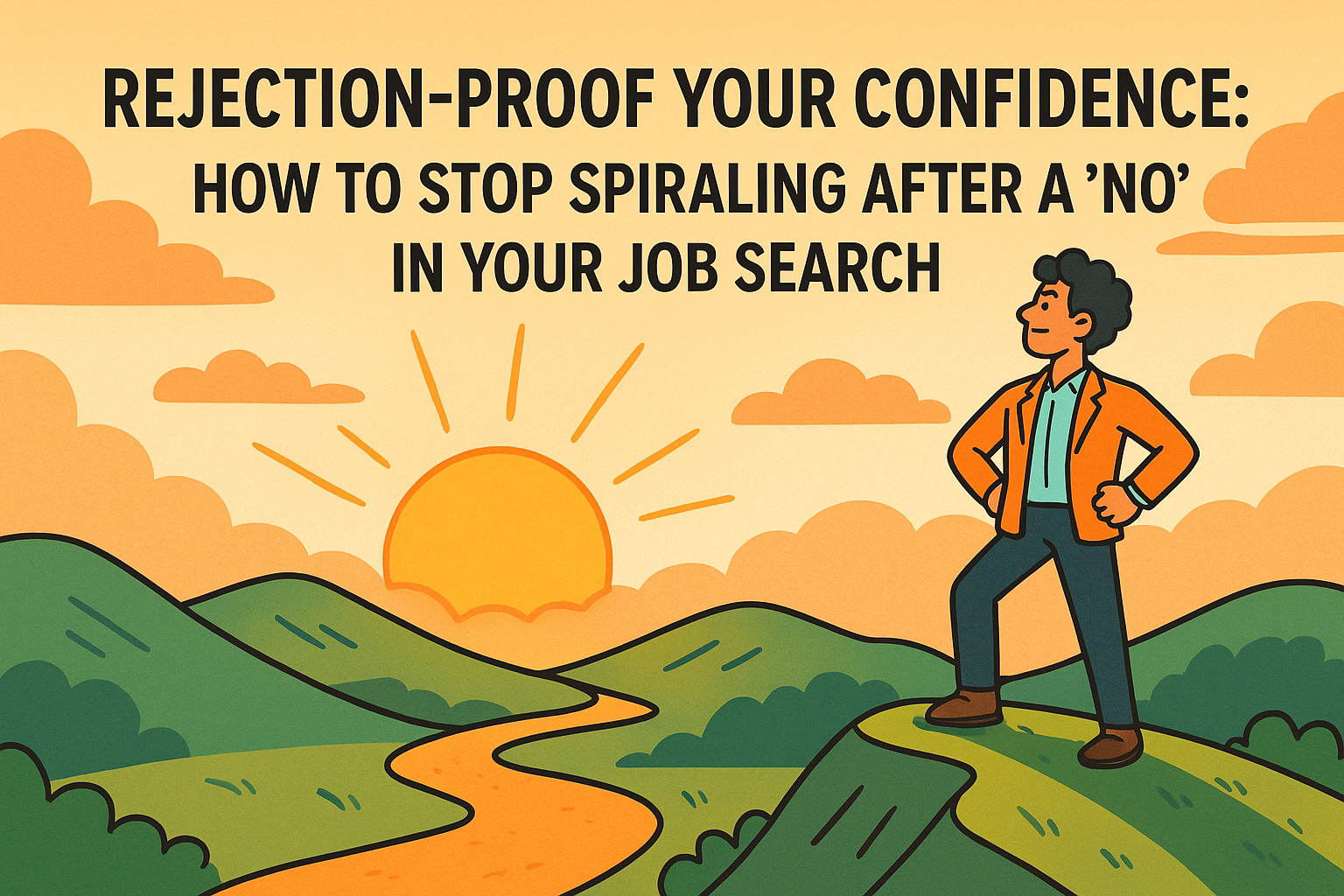
Rejection is the unpaid internship nobody signs up for but everyone experiences, especially during a job search. A single “We’ve decided to move forward with other candidates” can feel like a sudden blow to your confidence, even when you know logically that hiring decisions rarely reflect your full professional value. Still, one disappointing email can spill into self-doubt, overthinking, and stalled motivation. The key to staying in the game isn’t avoiding rejection—it’s learning how to emotionally recover from it. Resilience, not perfection, is what ultimately moves careers forward.
Why Rejection Hurts—But Doesn’t Define You
Even highly qualified, accomplished professionals get rejected, often for reasons completely outside their control: internal team dynamics, shifting budget priorities, timing, or simple preference for a candidate with slightly different experience. Yet rejection activates the same psychological circuitry associated with social pain, making it feel deeply personal even when it isn’t. The danger isn’t the rejection itself—it’s the spiral that can happen afterward if we interpret a single “no” as a referendum on our capabilities or future. Understanding this disconnect helps you interrupt the emotional freefall before it gathers momentum.
Separating Your Self-Worth from the Outcome
One of the most important skills during a job hunt is learning to detach your identity from the hiring process. A job outcome is not a moral ranking, nor is it a statement about your talent or potential. It’s simply a snapshot of fit—your skills, their needs, and timing. Reframing the situation can be powerful. Instead of thinking, “I was rejected,” try shifting to, “That role wasn’t the right match for me at this time.” Likewise, replacing the thought “I’m not good enough” with “I’m still finding the right environment where my strengths can shine” brings you much closer to the truth. You’re not trying to trick yourself—you’re grounding your mindset in a more accurate interpretation.
Tracking Wins to Stay Grounded
If your only definition of success is receiving an offer, you’re setting yourself up to feel like you’re losing nearly every day. Job searches are made up of hundreds of micro-steps, and acknowledging these smaller achievements helps you stay emotionally balanced. Whether you refined your résumé, scheduled an informational chat, improved an interview response, or simply applied to a role that excited you, each action is evidence of momentum. Ending the day by noting a few meaningful steps—no matter how small—keeps your attention on progress rather than perceived failure. Over time, these steady inputs build confidence, capability, and clarity.
Reframing Rejection as Information
Every rejection contains data—even if it arrives wrapped in disappointment. Instead of interpreting a “no” as the end of the story, try looking at it as feedback on your current trajectory. Maybe it reveals a skill worth strengthening, a type of company where you excel more naturally, or an interview moment you want to refine next time. Rejections help illuminate patterns in the roles that resonate with your experience and the ones that don’t. Asking yourself, “What can this teach me?” transforms a discouraging moment into a learning opportunity. Curiosity disrupts the negative narrative and guides you toward adjustments that lead to better outcomes.
Creating a Personal Recovery Ritual
Just like athletes cool down after intense training, job seekers benefit from a ritual that helps them emotionally reset after a setback. This ritual might be as simple as a quiet walk to clear your head, writing through your reaction in a journal, calling someone who grounds you, or doing something small that reaffirms your competence. The purpose isn’t to deny disappointment; it’s to give yourself a structured emotional exit so you don’t get stuck replaying the rejection in your mind. Recovery rituals help you process the moment, regain composure, and reenter the job hunt with a clearer perspective.
Remembering That Rejection Is a Filter
At its core, rejection narrows your path toward roles that truly fit you. You don’t need every employer to say yes—you need the right one. Many professionals ultimately land in positions far better than the ones that rejected them, and they later recognize that the “no’s” were directional rather than destructive. Staying in the process long enough to reach that fit is the real challenge, and resilience is what carries you through. Every rejection removes an option that wasn’t meant for you and brings you closer to the one that is.
Rejection during a job search might feel personal, but it’s far more often a matter of timing, fit, or shifting priorities than a reflection of your worth. Maintaining confidence requires separating identity from outcomes, focusing on daily progress rather than final results, learning from each setback, and creating rituals that help you reset emotionally. Ultimately, resilience—not avoidance of rejection—is what leads to the right opportunity.
FAQ
Why does job rejection feel so personal?
Rejection triggers the brain’s threat-response system, making even professional setbacks feel emotional. Recognizing the brain’s reaction helps you regain perspective.
Is it normal to get multiple rejections before landing a role?
Absolutely. Most candidates hear “no” many times before receiving one “yes.” It’s a normal part of the job search process, not an indication that something is wrong.
How can I maintain confidence during a long search?
By tracking small wins, reframing rejection as information, maintaining support systems, and giving yourself structured recovery time after setbacks.