
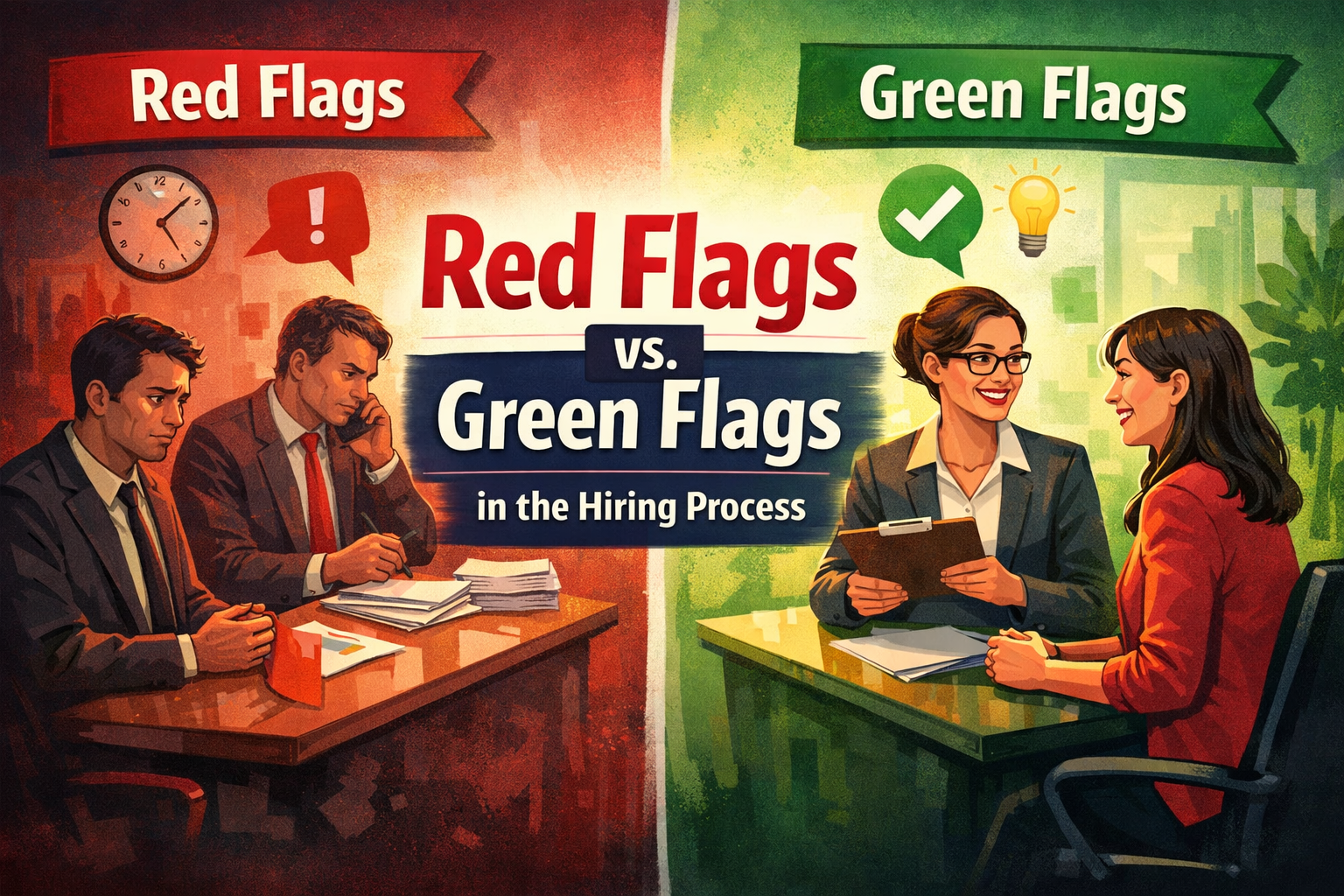
The hiring process reveals far more than just whether a candidate or company is qualified—it shows how both sides communicate, prioritize people, and make decisions. In today’s competitive job market, understanding red flags vs. green flags in the hiring process can help job seekers avoid toxic workplaces and help employers attract top talent.
From unclear job descriptions to transparent communication, the signals sent during hiring often predict what working together will really be like. Here’s how to spot the warning signs—and the positive indicators—before an offer is accepted.
Red Flags in the Hiring Process
Red flags don’t always mean you should immediately walk away, but they should prompt closer scrutiny.
1. Vague or Constantly Changing Job Descriptions
If responsibilities, salary ranges, or required skills keep shifting, it may signal internal disorganization or unrealistic expectations.
2. Poor Communication or Long Silences
Delayed responses, missed interviews, or unclear next steps suggest a lack of respect for candidates’ time—and often reflect internal culture issues.
3. Disrespectful or Unprepared Interviewers
Interviewers who show up late, haven’t reviewed your résumé, or interrupt frequently may indicate poor management practices.
4. Pressure to Accept Quickly
High-pressure tactics like “you must decide today” can be a sign of high turnover or deeper workplace problems.
5. Negative Talk About Former Employees
If interviewers criticize past employees or candidates, it’s a strong indicator of a blame-oriented culture.
Green Flags in the Hiring Process
Green flags suggest a healthy organization and a role worth serious consideration.
1. Clear, Transparent Job Information
Well-defined responsibilities, growth opportunities, and salary ranges show respect and professionalism.
2. Consistent and Timely Communication
Regular updates and clear timelines demonstrate strong internal processes and candidate-focused hiring.
3. Structured, Respectful Interviews
Interviewers who are prepared, ask relevant questions, and explain the role clearly signal strong leadership and organization.
4. Focus on Mutual Fit
Great employers care not only about skills, but also about whether the role aligns with your goals and values.
5. Openness About Challenges
Companies that honestly discuss challenges—and how they’re addressing them—often foster trust and long-term engagement.
Why These Hiring Signals Matter
Research consistently shows that early hiring experiences influence employee satisfaction and retention. According to LinkedIn’s Global Talent Trends report (2024), transparency and communication during hiring significantly improve offer acceptance rates and long-term retention (LinkedIn, published Jan. 2024).
FAQ: Red Flags vs. Green Flags in Hiring
Q: Should one red flag stop me from accepting a job?
A: Not always, but multiple red flags together are a strong warning sign.
Q: What’s the biggest green flag in hiring?
A: Transparent communication about expectations, compensation, and growth.
Q: Can employers spot red flags in candidates too?
A: Yes—poor communication, dishonesty, or lack of preparation are common candidate red flags.