
Introduction: Is Brick-and-Mortar Retail Really Dead?
For years, brick-and-mortar retail was written off as a casualty of Amazon, e-commerce, and changing consumer habits. But in 2024 and heading into 2025, a different story is emerging—one that’s playing out in shopping centers, downtown districts, and fast-growing suburbs across the country.
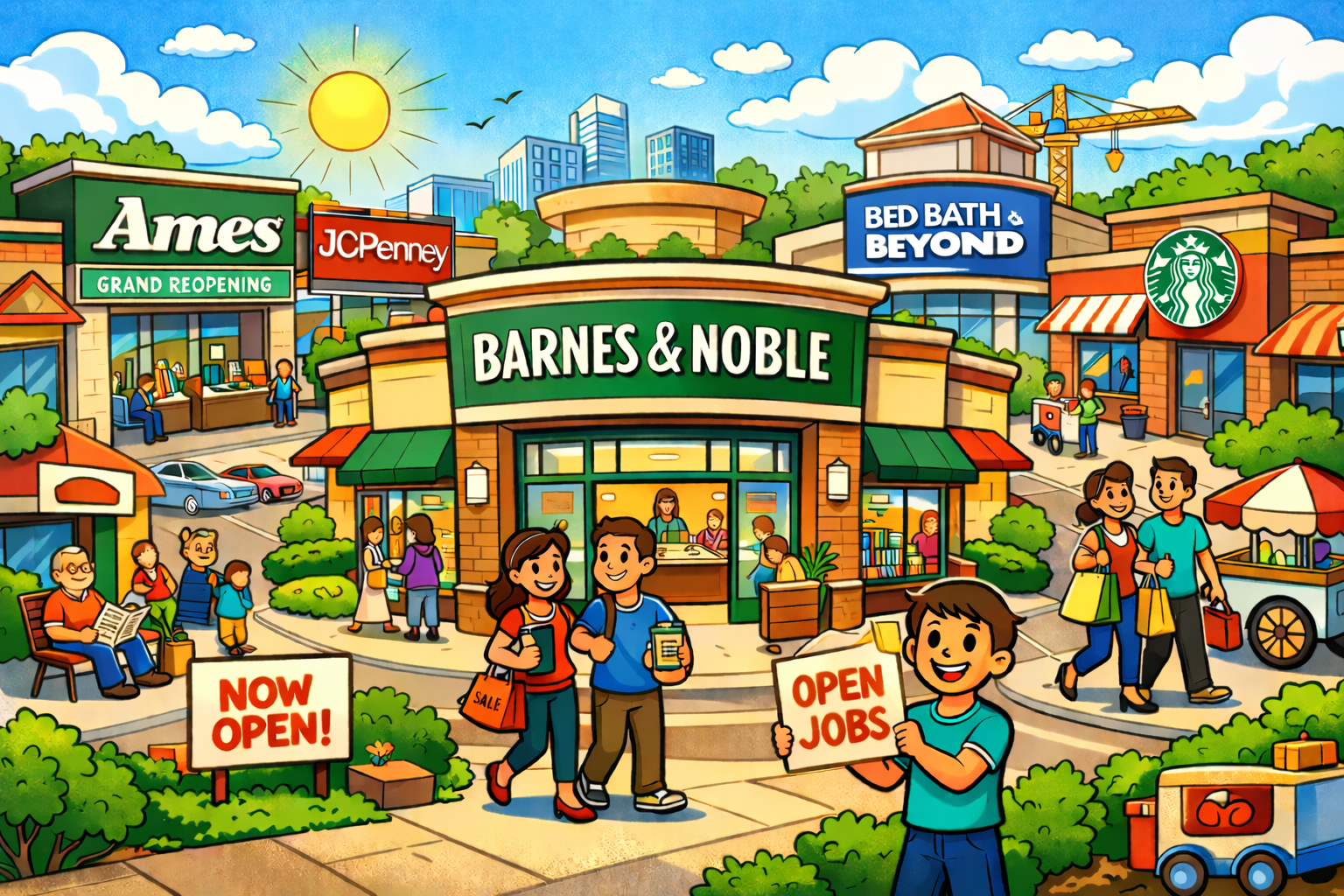
Barnes & Noble’s plan to open roughly 60 new stores nationwide has become one of the clearest signs that physical retail is far from finished. At the same time, familiar names like Ames Department Store, Bed Bath & Beyond, and other legacy chains are quietly reopening locations—often in regions experiencing population growth and economic expansion.
The big question now isn’t whether physical retail can survive, but where it’s thriving, why those locations matter, and what this means for the broader economy.
Barnes & Noble’s Expansion Is Targeting Growth Markets
A Brief Look at Barnes & Noble’s Comeback Strategy
After years of store closures and pressure from online competitors, Barnes & Noble has shifted toward smaller, community-focused stores that feel local rather than corporate. That strategy is reflected not only in how the stores look—but where they’re opening.
Where Barnes & Noble Is Opening New Stores
Recent and planned Barnes & Noble openings are heavily concentrated in high-growth regions, including:
- Texas (Dallas–Fort Worth, Austin suburbs, and Houston-area communities)
- Florida (Tampa, Orlando, Jacksonville, and South Florida suburbs)
- North Carolina (Raleigh-Durham and Charlotte metro areas)
- Arizona (Phoenix and surrounding suburbs)
- Tennessee (Nashville and Franklin)
These areas share common traits:
- Strong population growth
- Influx of young professionals and families
- New housing developments and mixed-use retail centers
Barnes & Noble has also reopened stores in previously vacated locations—including parts of California, New Jersey, and Illinois—where landlords and local demand made a return viable.
Other Chains Reopening and Expanding
Barnes & Noble’s growth isn’t happening in isolation. A growing number of legacy retail brands are re-entering the physical space—this time with leaner footprints and modern retail strategies.
Ames Department Stores, a former discount staple across the Northeast and Midwest, has confirmed plans to return to brick-and-mortar retail, with new locations targeted for 2026. The company expects to open roughly 35 stores by 2027, positioning them in suburban, value-driven markets. Unlike its earlier big-box model, the new Ames stores are expected to include in-store cafés, click-and-collect services, and stronger online integration, reflecting how even discount retail is evolving toward experience and convenience.
Meanwhile, Bed Bath & Beyond has quietly re-entered the physical retail conversation through smaller, curated store formats tied closely to its digital platform, focusing on higher-income suburban trade areas. JCPenney continues to invest selectively in malls that have successfully transitioned into lifestyle centers, particularly across the Midwest and Sun Belt. Even the Sears brand persists in limited specialty and licensed formats, underscoring the lasting value of well-known retail names.
Together, these moves point to a broader shift: physical retail isn’t being rebuilt at scale—but it is being reintroduced with precision, targeting markets where brand recognition, population growth, and omnichannel demand still align.
Food and Lifestyle Chains Are Expanding Even Faster
Retail Growth Isn’t Just About Shopping
The resurgence of physical retail is closely tied to food, convenience, and lifestyle brands that thrive on in-person visits.
Rapid expansion is happening across:
- Starbucks and Dunkin’ in the Southeast and Southwest
- Chipotle, Panera Bread, and CAVA in Texas, Florida, and Arizona
- Trader Joe’s and Aldi in fast-growing suburbs across the Carolinas, Georgia, and Colorado
- Target and Walmart Neighborhood Markets in urban infill locations and suburban growth corridors
These chains often open near bookstores, apparel retailers, and entertainment venues—creating retail clusters that drive sustained foot traffic.
Economic Impact: Why These Locations Matter
Local Jobs and Community Revitalization
Retail openings in growing regions:
- Create stable, local employment
- Increase tax revenue for cities and counties
- Revitalize underused retail centers
For example, suburban developments outside Austin, Raleigh, and Tampa have seen entire shopping districts rebound after securing anchor tenants like Barnes & Noble, grocery chains, or national restaurants.
Retail Real Estate Is Being Recycled, Not Abandoned
Rather than building entirely new malls, many retailers are:
- Moving into former big-box locations
- Downsizing footprints to reduce overhead
- Partnering with landlords on mixed-use developments
This trend is especially visible across the Sun Belt, where vacant retail space is being repurposed faster than in slower-growth regions.
The Omnichannel Model Is Driving Location Choices
Why Physical Stores Still Matter in a Digital World
Retailers are choosing locations that support:
- Buy-online-pickup-in-store (BOPIS)
- Same-day fulfillment
- Returns and customer service hubs
A Barnes & Noble in a fast-growing suburb of Phoenix or Dallas doesn’t just serve walk-in customers—it supports an entire regional online ecosystem.
Consumers, meanwhile, are returning to stores for:
- Immediate access to products
- Social and sensory experiences
- Community-driven environments
What the Future of Physical Retail Looks Like
Expect Smarter Expansion, Not Overbuilding
Industry experts expect:
- Continued retail growth in the South and Southwest
- Slower expansion in shrinking or stagnant metro areas
- More focus on flexible, experience-based store designs
Malls and Shopping Centers Will Keep Evolving
Successful malls now feature:
- Dining districts
- Fitness studios
- Medical offices
- Entertainment and coworking spaces
Retail is no longer the sole attraction—it’s part of a larger ecosystem.
Conclusion: Retail Isn’t Returning Everywhere—But It’s Thriving Where It Counts
The expansion of Barnes & Noble and the selective return of iconic chains show that physical retail is alive, evolving, and increasingly regional. Growth is strongest in states and cities with rising populations, strong job markets, and demand for in-person experiences.
While online shopping remains essential, the future of retail belongs to brands that understand where consumers are moving—and how they want to shop when they get there.
FAQ
Why are most new stores opening in the South and Southwest?
Population growth, lower costs, and strong consumer demand make these regions ideal for expansion.
Are traditional malls still viable?
Yes—especially those that have added dining, entertainment, and services beyond retail.
Will more bookstores open in the future?
If Barnes & Noble’s model succeeds, more experience-driven bookstores are likely.
Is this trend sustainable?
Retailers expanding cautiously and strategically are positioned for long-term success.