
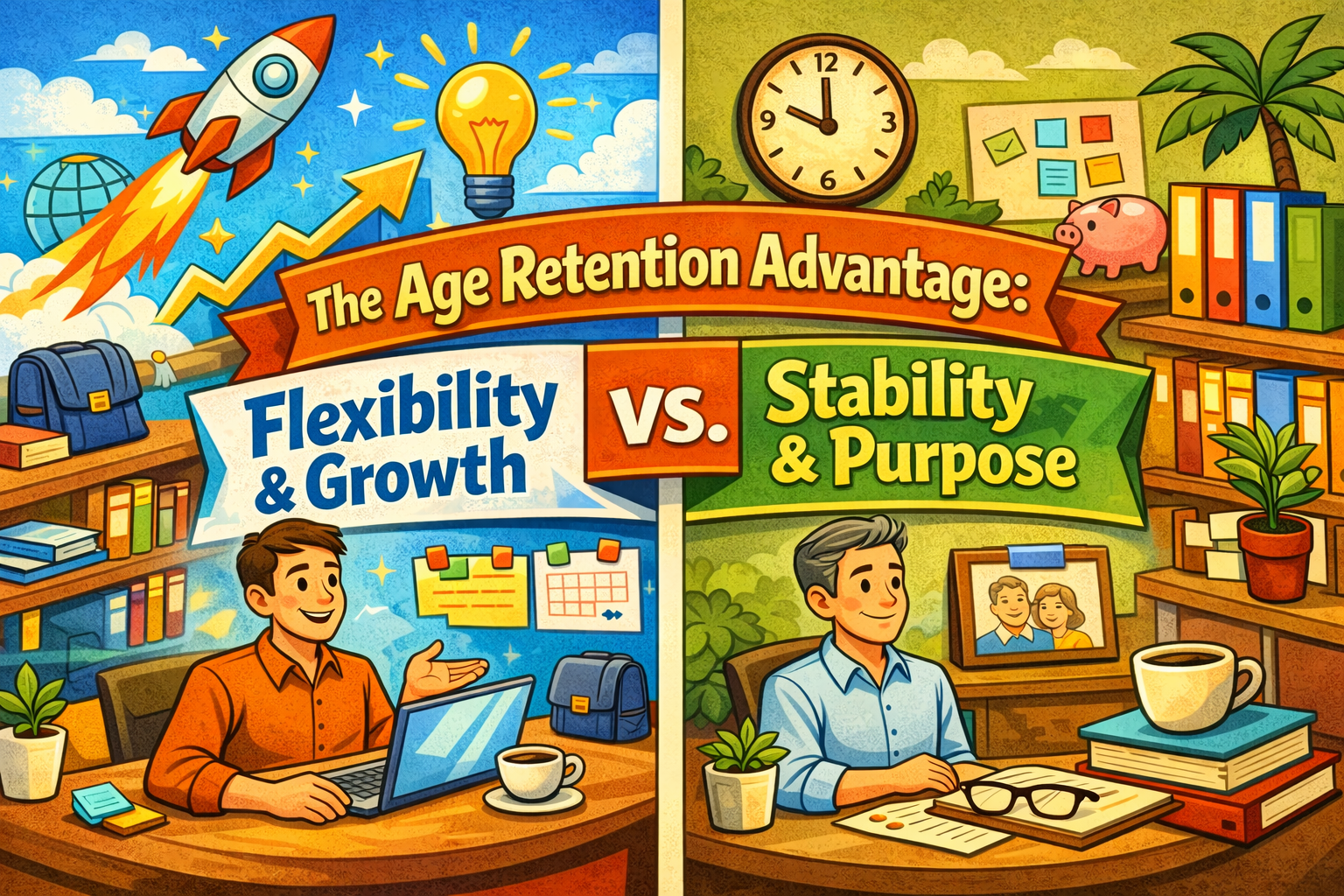
Introduction: The Retention Problem No One Is Framing Correctly
Employee retention remains one of the biggest challenges facing employers in 2026. Companies invest heavily in perks, pay increases, and flexible work arrangements—yet turnover persists, especially among younger workers.
But what if the issue isn’t just how companies retain talent—but who they’re trying to retain?
A growing body of workforce trends reveals a powerful, often overlooked truth: older workers may be the most reliable retention advantage companies have today. While younger employees bring energy and adaptability, older professionals offer something many organizations desperately need—stability, consistency, and long-term commitment.
Understanding the fundamental differences between these groups isn’t just insightful—it’s a strategic imperative.
Why Younger Workers Change Jobs More Frequently
Younger employees—particularly Gen Z and Millennials—are redefining what career growth looks like. Unlike previous generations, staying at one company for years is no longer the default.
1. Career Exploration Is the Norm
Early-career professionals are still discovering their strengths, interests, and long-term goals. Job-hopping is often seen as a feature, not a flaw—a way to gain diverse experience quickly.
Instead of climbing one ladder, younger workers are navigating a career jungle gym, moving laterally and vertically across roles and industries.
2. Wage Growth Through Mobility
Data consistently shows that switching jobs often leads to larger salary increases than staying put. Younger workers are highly aware of this and act accordingly.
As a result:
- Loyalty is often secondary to opportunity
- Compensation benchmarking is constant
- External offers are part of normal career progression
3. Remote Work and Flexibility Expectations
Younger professionals entered the workforce during (or after) the remote work boom. Flexibility isn’t a perk—it’s a baseline expectation.
If a company:
- Mandates full-time office work
- Limits schedule autonomy
- Lacks modern work policies
…it risks losing younger employees to more flexible competitors.
Why Older Workers Prioritize Stability and Meaning
In contrast, mid-career and late-career professionals bring a fundamentally different mindset to the workplace—one that aligns closely with long-term retention.
1. Stability Becomes a Priority
With more life responsibilities—mortgages, families, retirement planning—older workers tend to value predictability over constant change.
They are:
- Less likely to job-hop impulsively
- More focused on long-term fit
- More resilient during organizational changes
2. Purpose and Job Satisfaction Matter More
While compensation is still important, many experienced professionals prioritize:
- Meaningful work
- Respect and recognition
- A positive, low-drama environment
3. Work-Life Balance and Predictability
Older employees often seek roles that offer:
- Clear expectations
- Reasonable hours
- Stability in leadership and direction
Unlike younger workers chasing rapid advancement, they’re more likely to stay in roles that provide consistency and fulfillment.
The Real Opportunity: Leveraging Generational Strengths
Instead of viewing generational differences as a challenge, leading organizations are starting to see them as a strategic advantage.
Build a Balanced Workforce
A workforce skewed too heavily in either direction can create problems:
- Too young → high turnover, constant retraining
- Too experienced → slower adaptation, potential innovation gaps
The sweet spot? A blended workforce that balances agility with stability.
Design Dual Retention Strategies
One-size-fits-all retention strategies no longer work. Companies should consider:
For Younger Workers:
- Clear career progression paths
- Competitive, transparent compensation
- Flexible and remote-friendly policies
For Older Workers:
- Stability and role clarity
- Opportunities for mentorship and leadership
- Recognition of experience and contributions
Turn Experience Into a Retention Multiplier
Older workers don’t just stay longer—they often improve retention around them by:
- Mentoring younger employees
- Reducing onboarding strain
- Providing institutional knowledge
This creates a ripple effect that strengthens the entire organization.
Key Takeaways
- Younger workers are more mobile due to career exploration, wage growth opportunities, and flexibility expectations
- Older workers prioritize stability, meaning, and predictability—making them more likely to stay long-term
- Companies that ignore age diversity may be missing a critical retention advantage
- The most successful organizations tailor retention strategies to each group and leverage their strengths together
FAQ
Q: Are younger workers less loyal than older workers?
Not necessarily—they simply define loyalty differently. Many prioritize growth and opportunity over long-term tenure.
Q: Why are older workers a retention advantage?
They tend to stay longer, value stability, and contribute to organizational continuity and mentorship.
Q: How can companies retain both groups effectively?
By offering flexible, personalized strategies—career growth and mobility for younger workers, and stability and meaning for experienced professionals.
Q: Is job-hopping a negative trend?
Not inherently. It reflects evolving workforce expectations, but it does require employers to adapt retention strategies.