
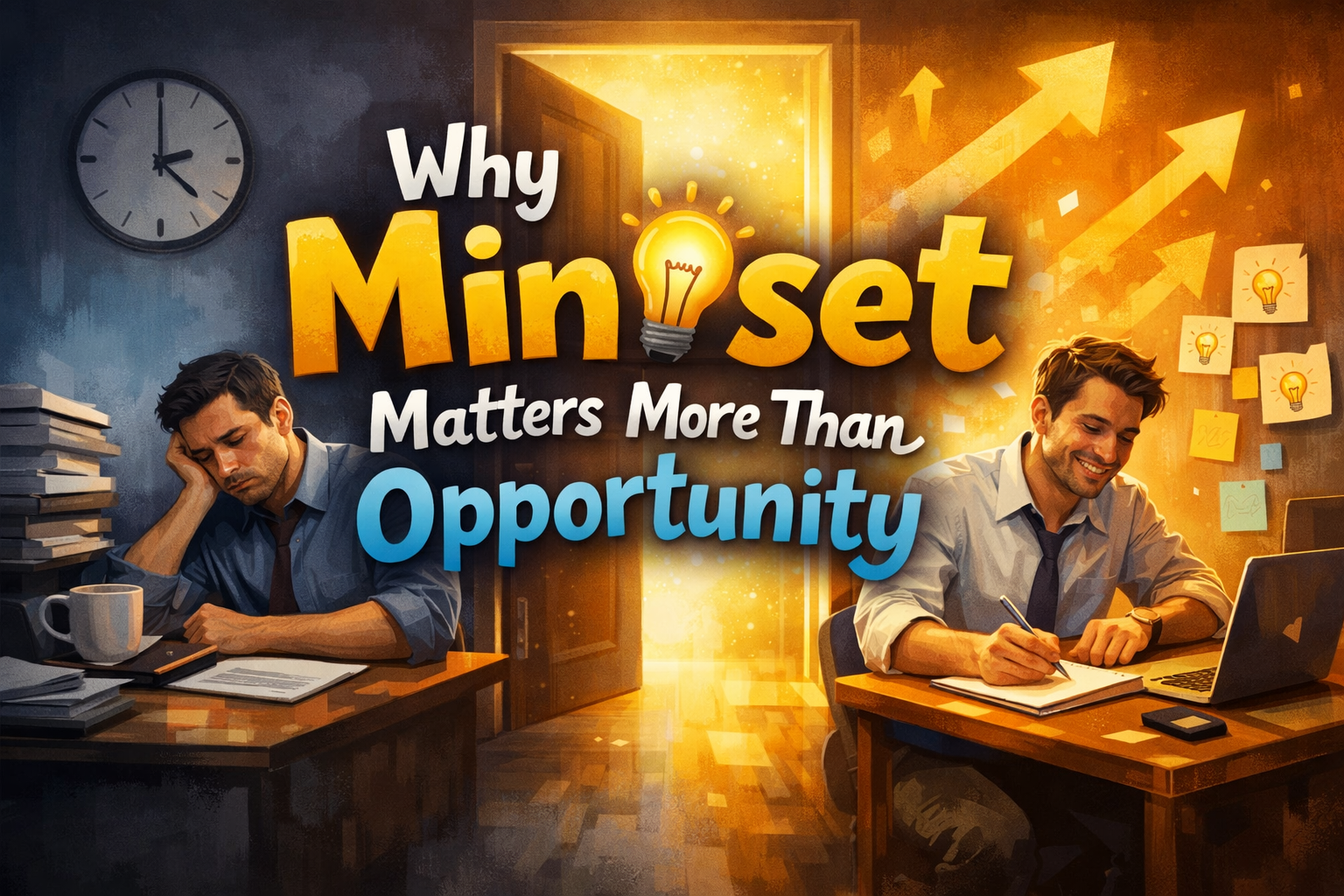
Same Job, Different Outcomes—Why It Happens
Give two people the exact same job, the same resources, and the same environment. Fast forward one year, and the results can look wildly different. One person has grown, innovated, and become indispensable. The other? They’ve simply maintained the status quo.
What separates these two outcomes isn’t luck, intelligence, or even the opportunity itself—it’s mindset.
In today’s competitive workforce, where access to opportunities is more equal than ever, success is increasingly defined by how individuals approach their roles, not just the roles themselves.
Opportunity Is Just the Starting Line
Opportunities are often viewed as the ultimate advantage. A new job, a promotion, or access to resources can feel like the key to success. But in reality, opportunity is just a doorway—not the journey itself.
Many professionals make the mistake of believing that landing the “right” role guarantees growth. In truth, it only creates the potential for growth.
What happens next depends entirely on the individual.
The Mindset Gap: “Get Through It” vs. “Grow Through It”
The biggest difference between high performers and average employees lies in how they think about their work.
- The “Get Through It” Mindset:
- Focuses on completing tasks
- Avoids extra effort
- Sees challenges as obstacles
- Measures success by survival
- The “Grow Through It” Mindset:
- Seeks improvement and mastery
- Looks for opportunities within challenges
- Takes initiative beyond expectations
- Measures success by progress
This internal dialogue—“How do I make the most of this?” vs. “How do I get through this?”—shapes every decision, action, and result.
Why Mindset Outweighs Circumstances
Research consistently shows that mindset plays a critical role in performance and career growth. A study published by Stanford psychologist Carol Dweck on growth mindset highlights how individuals who believe their abilities can develop tend to outperform those who see them as fixed.
Source: Dweck, C. (2006). Mindset: The New Psychology of Success.
Similarly, workplace engagement reports from Gallup (2024) show that employees who are proactive and engaged are significantly more productive and more likely to advance in their careers.
Source: Gallup State of the Global Workplace Report, 2024.
The takeaway is clear: external conditions matter far less than internal drive.
How Top Performers Transform the Same Opportunity
High achievers don’t wait for better conditions—they maximize what they already have. Here’s how they do it:
1. They Take Ownership
They treat their role like it’s their own business. Problems become personal missions to solve, not someone else’s responsibility.
2. They Stay Curious
Instead of doing the bare minimum, they ask:
- “How can this be improved?”
- “What am I missing?”
- “What can I learn from this?”
3. They Embrace Discomfort
Growth rarely happens in comfort zones. Top performers lean into challenges instead of avoiding them.
4. They Create Value Beyond the Job Description
They don’t just do the job—they redefine it.
The Hidden Cost of a Passive Approach
Choosing to “just get by” doesn’t just limit growth—it compounds over time.
After a year:
- Skills stagnate
- Opportunities shrink
- Confidence declines
Meanwhile, those who actively engage with their work build momentum that accelerates their careers.
Opportunity + Execution = Transformation
Opportunity alone is neutral—it doesn’t guarantee success or failure. It’s what you do with it that creates outcomes.
Think of opportunity as a door:
- Some people walk through and wait
- Others walk through and build something remarkable
The difference is execution driven by mindset.
FAQ
Why do some people succeed in the same job while others don’t?
It comes down to mindset, initiative, and how they approach challenges—not the job itself.
Is opportunity still important?
Yes, but it only creates potential. Execution determines results.
Can mindset really impact career growth?
Absolutely. Research shows that a growth mindset leads to higher performance and adaptability.
How can I shift my mindset at work?
Start by asking better questions, taking ownership, and focusing on learning rather than just completing tasks.