
Mechanical engineers play a critical role in designing and improving the machines, systems, and products that power modern industry. From manufacturing equipment and robotics to HVAC systems and consumer products, companies rely on mechanical engineers to transform ideas into functional, efficient solutions.
Yet hiring the right mechanical engineer can be challenging. Many employers struggle to identify the right specialization, evaluate technical skills, or move quickly enough to secure top candidates.
This guide explains how to hire a mechanical engineer, including salary expectations, certifications to look for, common hiring mistakes, and realistic hiring timelines.
What Does a Mechanical Engineer Do?
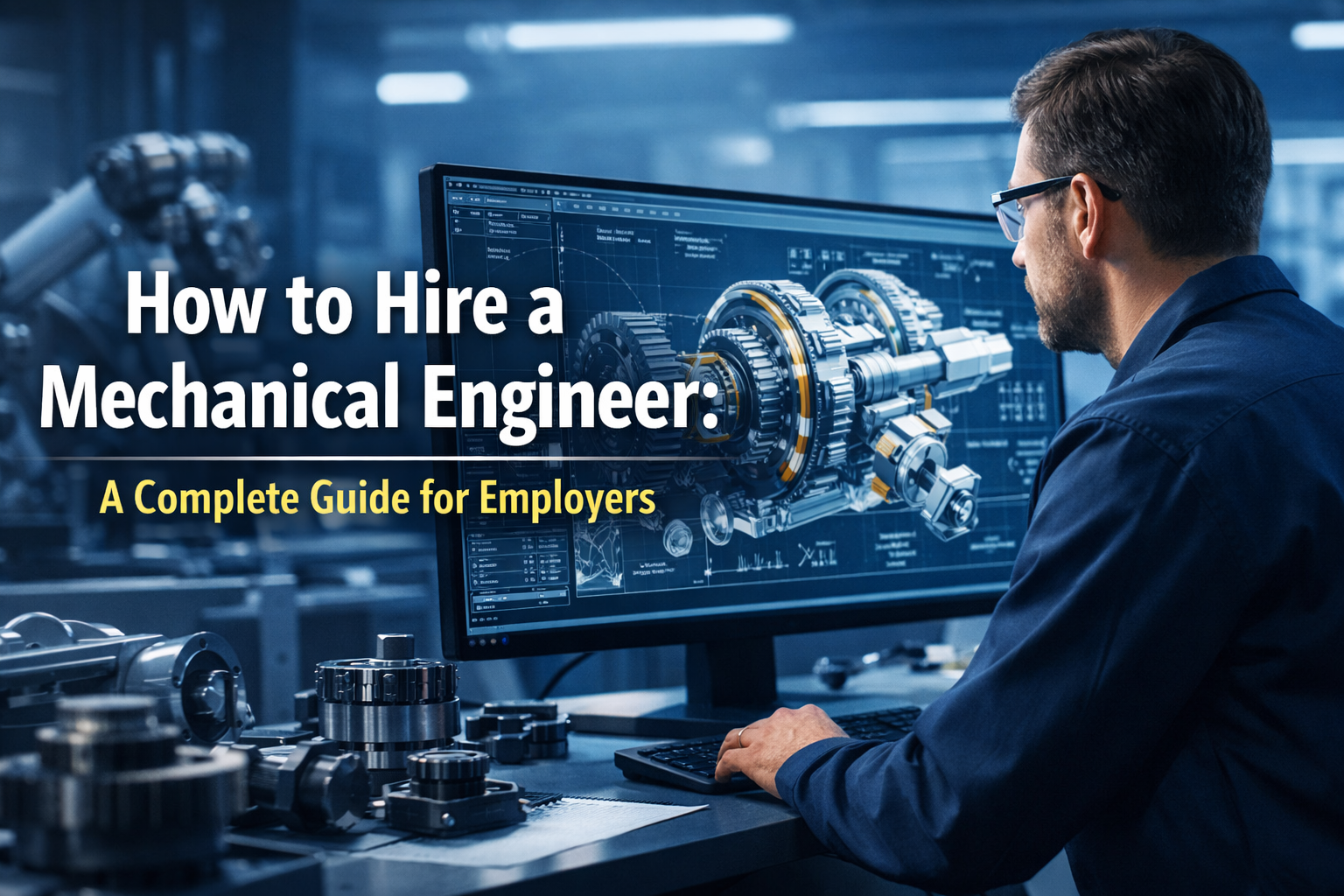
Mechanical engineers design, analyze, test, and improve mechanical systems. Their work often bridges design, analysis, and real-world production.
Typical responsibilities include:
Designing mechanical components and systems
Creating CAD models and technical drawings
Running simulations and engineering calculations
Testing prototypes and troubleshooting mechanical failures
Collaborating with manufacturing, electrical, and software teams
Mechanical engineers work across many industries, including manufacturing, aerospace, automotive, robotics, energy, HVAC, and medical device development. Because the field is broad, defining the specific specialization needed is an essential first step in the hiring process.
Mechanical Engineer Salary Expectations
Mechanical engineer salaries vary based on experience, specialization, and geographic location.
According to the U.S. Bureau of Labor Statistics, the median annual salary for mechanical engineers is about $99,510. Entry-level engineers typically earn between $65,000 and $80,000, while mid-level engineers with several years of experience commonly earn $80,000 to $105,000.
Senior engineers and specialists often earn $105,000 to $135,000 or more, particularly in industries such as aerospace, robotics, and advanced manufacturing. Lead or principal mechanical engineers may exceed $150,000 depending on the company and leadership responsibilities.
Competitive compensation packages may also include bonuses, profit sharing, relocation assistance, flexible schedules, and professional development support.
Required Certifications and Qualifications
Most mechanical engineering roles require a strong academic foundation along with specialized training.
Education
Most candidates hold a Bachelor’s degree in Mechanical Engineering or a closely related field. Some positions—especially those focused on advanced design, research, or robotics—may prefer candidates with a master’s degree.
Important Certifications
Professional Engineer (PE) License
The Professional Engineer license demonstrates advanced competency and is often required for engineers who sign off on public infrastructure or engineering projects.
Engineer in Training (EIT)
Engineers typically earn the EIT designation after passing the Fundamentals of Engineering (FE) exam, which is the first step toward becoming a licensed PE.
Additional Certifications
Depending on the role, employers may also value certifications such as:
Six Sigma (for manufacturing and process improvement)
ASME certifications related to mechanical systems and standards
Project Management Professional (PMP) for engineers moving into leadership roles
Skills to Look for When Hiring
Top mechanical engineers combine strong technical knowledge with real-world problem-solving ability.
Common technical skills include:
CAD software such as SolidWorks, AutoCAD, or CATIA
Finite element analysis (FEA) and engineering simulation
Thermodynamics and heat transfer analysis
Materials science and mechanical design
Prototyping, testing, and product development
Knowledge of manufacturing processes
Soft skills are also critical. Strong candidates typically demonstrate:
Analytical thinking
Clear communication
Collaboration with multidisciplinary teams
Project management and organizational skills
Common Hiring Mistakes Employers Make
Hiring mechanical engineers can be difficult, and employers often encounter avoidable challenges.
One of the most common issues is writing overly broad job descriptions. Mechanical engineering is a large discipline, and roles focused on product design require different experience than roles focused on HVAC systems or robotics.
Another mistake is ignoring industry experience. Engineers with experience in aerospace manufacturing, for example, may not immediately transition into medical device design without additional training.
Some companies also underestimate the importance of software expertise. CAD tools and simulation platforms are essential for modern engineering workflows.
Finally, slow hiring processes frequently cause employers to lose strong candidates. Skilled engineers often receive multiple offers, so companies that move quickly are more likely to secure top talent.
Typical Mechanical Engineer Hiring Timeline
Hiring a mechanical engineer generally takes longer than hiring for many other roles due to the specialized skill requirements.
The hiring process typically includes writing the job description, sourcing candidates, conducting initial interviews, performing technical evaluations, and negotiating an offer.
For many organizations, the full hiring process takes four to eight weeks from job posting to accepted offer. Companies with urgent project needs often shorten this timeline by working with specialized engineering recruiters.
Where to Find Mechanical Engineers
Employers recruit mechanical engineers through several channels, including:
Engineering job boards
Professional engineering organizations
University engineering programs
Industry conferences and networking events
However, many of the strongest candidates are passive job seekers—engineers who are currently employed and not actively applying for jobs. Reaching these professionals often requires industry connections and targeted outreach.
Why Companies Use Specialized Engineering Recruiters
Engineering recruitment requires deep knowledge of technical roles and access to professional networks.
Specialized recruiters can help employers:
Reach passive candidates who are not actively searching for jobs
Pre-screen technical qualifications
Reduce hiring timelines
Identify engineers with relevant industry experience
This approach is especially valuable when hiring senior engineers or filling highly specialized positions.
DAVRON already has access to these candidates.
FAQ
How long does it take to hire a mechanical engineer?
Most companies take four to eight weeks to complete the hiring process, depending on the role’s specialization and experience requirements.
Do mechanical engineers need a PE license?
Not always. However, it is often required for engineers working on public infrastructure projects or engineering consulting roles.
What software should mechanical engineers know?
Common tools include SolidWorks, AutoCAD, CATIA, MATLAB, and ANSYS.
What industries hire mechanical engineers?
Mechanical engineers are commonly employed in manufacturing, aerospace, automotive, robotics, energy, HVAC, and medical device industries.
Sources
U.S. Bureau of Labor Statistics. Mechanical Engineers Occupational Outlook Handbook. Published September 2024.
https://www.bls.gov/ooh/architecture-and-engineering/mechanical-engineers.htm
National Council of Examiners for Engineering and Surveying (NCEES). Engineering Licensure and FE/PE Exams.
https://ncees.org
American Society of Mechanical Engineers (ASME). Professional Standards and Certifications for Mechanical Engineers.
https://www.asme.org