
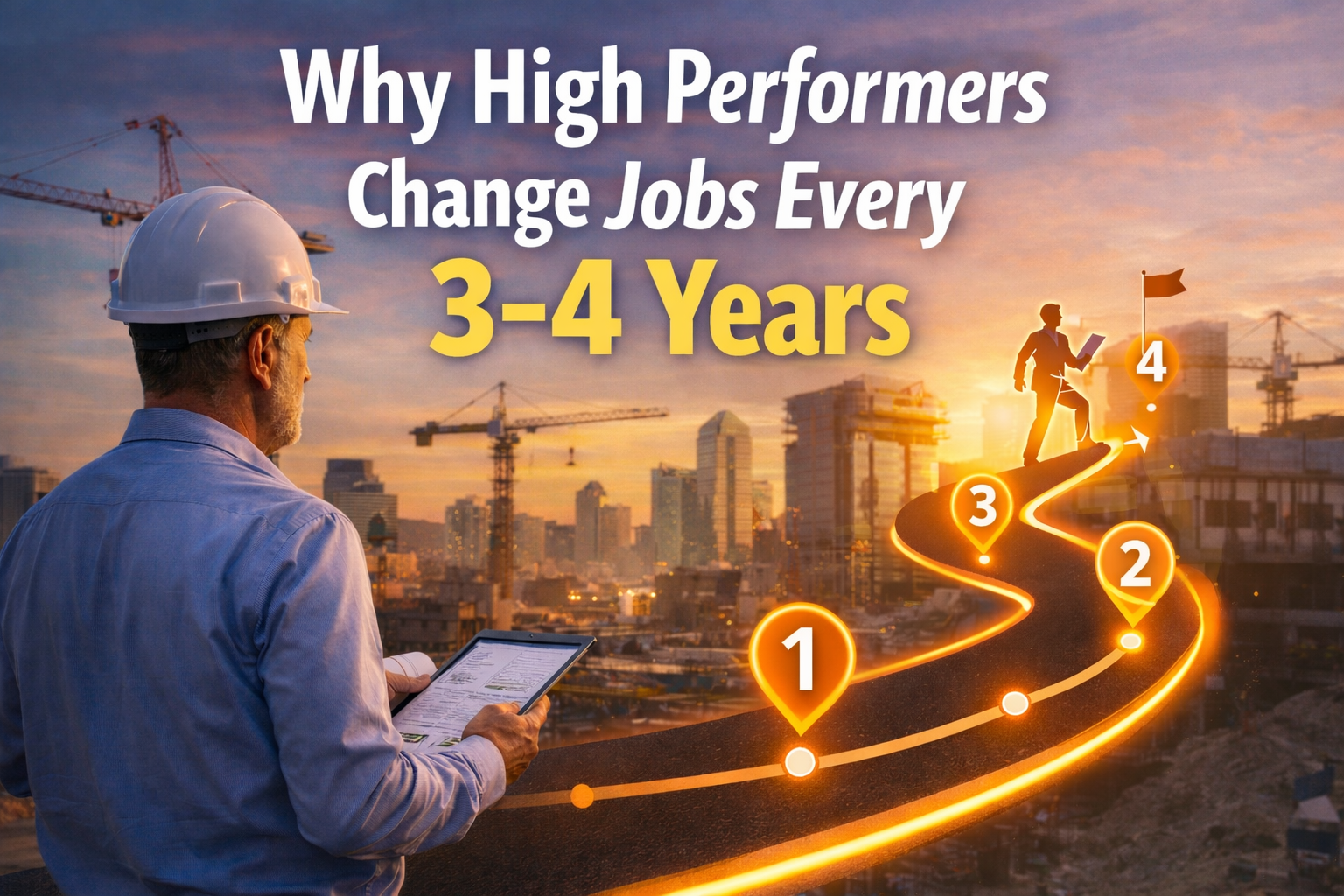
In today’s competitive market for engineering, architecture, manufacturing, and construction talent, one trend continues to puzzle employers: top performers rarely stay put for long.
While loyalty was once measured in decades, high achievers in technical industries now often change jobs every three to four years. Far from being a red flag, this pattern reflects deeper shifts in career strategy, compensation dynamics, innovation cycles, and leadership opportunity.
For firms struggling with retention—or professionals mapping out their next move—understanding this pattern is essential.
The 3–4 Year Career Cycle: What’s Really Happening?
In technical industries, high performers typically follow a predictable progression:
Year 1: Learn systems, earn credibility
Year 2: Deliver measurable impact
Year 3: Optimize processes and lead initiatives
Year 4: Hit growth ceiling or promotion bottleneck
Once growth slows, ambitious professionals look outward.
In sectors like civil engineering, mechanical design, project management, plant operations, and architecture, skill accumulation happens quickly. By year three or four, top contributors often outgrow their role—especially if leadership pathways are limited.
1. Compensation Growth Is Faster Through Strategic Moves
One of the strongest drivers is compensation acceleration.
Across engineering and construction markets, professionals often see:
- 8–15% salary increases through internal raises
- 15–25% increases through external offers
- Larger jumps when relocating or moving into leadership
In manufacturing and construction especially, demand for experienced project managers, design engineers, and operations leaders remains strong. High performers understand their market value—and the market rewards mobility.
Staying too long can result in compensation compression, where newer hires earn close to or more than long-tenured employees.
2. Innovation Cycles Move Quickly
Engineering and manufacturing environments evolve rapidly:
- Automation and robotics integration
- BIM advancements in architecture
- Sustainable materials and green building standards
- Smart infrastructure and digital twins
Top performers want exposure to cutting-edge systems. If their current employer is slow to adopt new technology or stagnant in project diversity, they seek firms that offer broader technical challenges.
High achievers are often growth-driven learners. When learning stops, job searching starts.
3. Leadership Bottlenecks in Flat Organizations
Many AEC and manufacturing companies operate with relatively flat management structures. Advancement may require someone above to leave or retire.
For ambitious professionals:
- Project Engineer → Senior Engineer → Project Manager → Director
- Designer → Senior Architect → Associate → Principal
If that next step isn’t available within 3–4 years, they explore firms where it is.
High performers are rarely content remaining individual contributors indefinitely—especially when they’ve demonstrated leadership capability.
4. Project-Based Industries Encourage Mobility
Construction and engineering are inherently project-based. When a major project ends:
- Teams dissolve
- Workloads shift
- Strategic priorities change
This natural reset point makes it easier for professionals to evaluate options. After completing a hospital build, manufacturing plant expansion, or infrastructure upgrade, many ask:
“What’s my next challenge?”
Sometimes the answer isn’t internal.
5. Culture and Burnout Factors
High performers often carry heavier loads:
- Complex project deadlines
- Client-facing pressure
- Oversight responsibilities
- Crisis troubleshooting
Without strong leadership and balanced workloads, burnout can accelerate turnover.
In construction and manufacturing especially, long hours and compressed schedules can drive even the most committed employees to seek healthier environments.
6. The Reputation Effect: Top Talent Gets Recruited
Strong engineers and construction managers are rarely “on the market” — they’re recruited.
Headhunters and industry peers constantly approach:
- PE-licensed engineers
- Senior project managers
- Plant managers
- BIM/VDC specialists
- Structural and MEP experts
Even if they aren’t actively looking, compelling opportunities create movement.
What This Means for Employers
If your top engineers or project leaders leave around year four, it’s not random.
To improve retention:
Map Clear Growth Paths
Define advancement milestones early—don’t wait for frustration.
Conduct Market Compensation Reviews
Stay competitive before employees explore offers.
Invest in Skill Expansion
Offer certifications, leadership training, and exposure to new technologies.
Increase Responsibility Gradually
Top performers want influence. Give it before they seek it elsewhere.
What This Means for Professionals
Strategic movement can accelerate growth—but constant jumping without measurable impact can harm credibility.
The key is intentional progression:
- Deliver results before leaving
- Leave projects better than you found them
- Build a track record of leadership and performance
Mobility should tell a story of advancement—not instability.
The New Normal in Technical Industries
In engineering, architecture, manufacturing, and construction, the 3–4 year cycle has become a natural career rhythm for high performers.
It reflects ambition, market demand, and the rapid pace of industry change—not disloyalty.
Companies that understand this can build proactive retention strategies. Professionals who navigate it wisely can dramatically accelerate their careers.
FAQ
Is changing jobs every 3–4 years a red flag in engineering?
Not necessarily. If each move shows increased responsibility and measurable results, it signals growth.
Do employers avoid candidates who move frequently?
Excessive short-term moves (under 2 years repeatedly) may raise concerns. However, consistent 3–4 year tenures are widely accepted in technical industries.
How can companies retain high performers longer?
Clear promotion pathways, leadership opportunities, competitive compensation, and exposure to innovation significantly improve retention.
Is this trend stronger in certain sectors?
Yes. Construction management, manufacturing operations, and specialized engineering roles experience higher mobility due to strong demand and project-based work.