
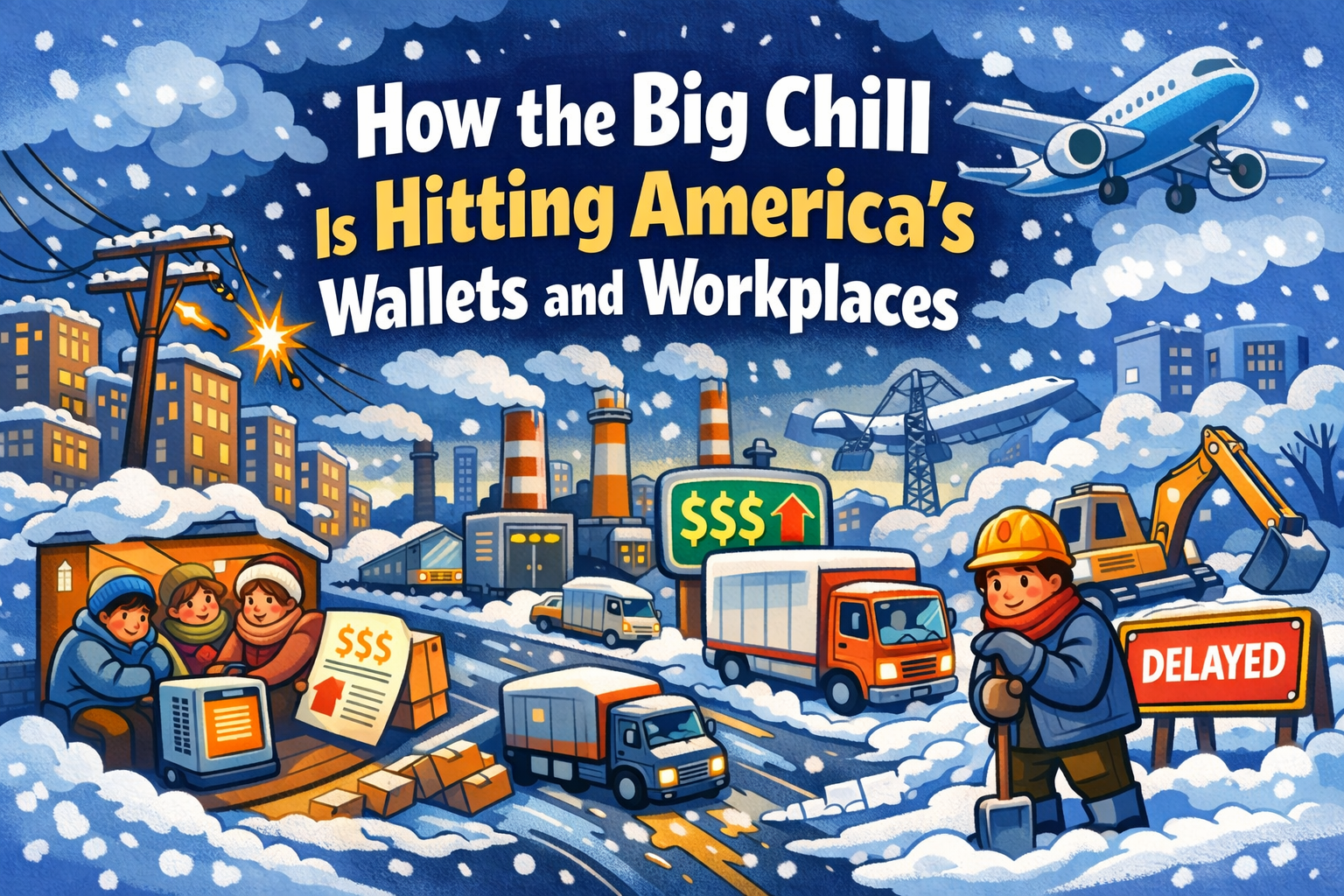
From soaring heating bills to power outages and shipping delays, extreme cold is already reshaping the U.S. economy
The deep freeze gripping large swaths of the United States this winter has moved well beyond discomfort. Prolonged cold temperatures and major winter storms are now producing measurable economic damage, pushing up energy prices, straining infrastructure, and disrupting workplaces across the country.
Unlike hypothetical future risks, the effects of this winter’s chill are already showing up in household bills, market prices, and regional economic activity.
Heating Costs Are Already Spiking
Extreme cold has driven a sharp increase in heating demand — and the price response has been swift.
In late January, U.S. natural gas prices surged more than 140% in just weeks, reaching their highest levels in roughly three years as freezing temperatures coincided with weather-related production disruptions. During peak cold periods, spot natural gas prices in parts of the Northeast briefly surged into triple-digit levels per million British thermal units, a dramatic departure from normal winter pricing.
For households, the impact is immediate:
- The average U.S. household winter heating bill is now projected to approach $1,000, up more than 10% from last season
- Roughly one in five Americans reports being unable to fully afford their heating bills this winter
- Electricity-heated homes are seeing some of the steepest increases, with seasonal electricity heating costs up more than 10% year over year
In New York City alone, local estimates suggest a single 12-day cold snap could add nearly $400 to a typical household’s heating bill.
Emergency Relief as Bills Rise
The scale of rising energy costs has prompted government intervention in some states.
Massachusetts, for example, announced plans to waive roughly $180 million in utility charges, temporarily cutting electric bills by about 25% and gas bills by roughly 10% during peak winter months. The move reflects growing concern that sustained cold could overwhelm household budgets without relief.
Power Outages and Infrastructure Strain
The cold has also stressed energy infrastructure.
A major winter storm system affecting more than 20 states left over one million customers without power at its peak. Ice accumulation, heavy snow, and extreme cold slowed restoration efforts and exposed vulnerabilities in power distribution systems.
Beyond homes, outages disrupted:
- Retail operations forced to close temporarily
- Manufacturing plants idled by loss of power
- Offices and schools shifting to emergency closures
At the same time, snow and ice led to more than 10,000 flight cancellations nationwide, delaying business travel, cargo shipments, and time-sensitive deliveries.
Regional Impacts: Not All Cold Hits Equally
The economic toll varies sharply by region:
- Northeast: Among the highest heating costs in the country, driven by heavy reliance on natural gas and heating oil combined with older housing stock
- Midwest: Severe cold slowed manufacturing output and freight movement, despite generally winter-ready infrastructure
- South: Less winterized systems faced disproportionate strain, with freezing conditions driving sharp spikes in electricity demand
These differences show how local infrastructure, fuel mix, and preparedness shape economic exposure.
Supply Chains and Workplaces Are Already Feeling It
Winter weather has translated into real disruptions for businesses:
- Icy roads and rail slowdowns delayed freight shipments across multiple corridors
- Construction projects were paused as frozen ground and unsafe conditions halted work
- Agricultural producers faced crop and livestock losses due to unexpected freezes
For workers, the impact has been uneven:
- Outdoor and gig-economy workers saw reduced hours during extreme cold
- Retail foot traffic declined as consumers stayed home
- Utilities and delivery services ramped up staffing to meet demand, often at higher overtime costs
Markets React to Cold-Driven Volatility
Financial markets have responded quickly to weather-driven supply stress.
Natural gas futures experienced extreme short-term volatility, with prices jumping as much as 50% during cold waves. Energy and utility stocks saw heightened trading activity as investors weighed higher revenues against infrastructure risks and regulatory pressure.
Commodity volatility also raised concerns about inflation persistence, as higher energy costs ripple into transportation, food prices, and manufacturing expenses.
What Another Round of Cold Is Likely to Add
Forecasts calling for another widespread cold push this weekend and into early next week suggest that many of these impacts are unlikely to ease quickly — and may intensify.
Because energy systems, supply chains, and household budgets are already under strain, additional cold is expected to:
- Push final winter heating bills above current projections, as furnaces and electric heaters continue running at elevated levels
- Extend stress on power grids already operating near peak winter capacity, increasing the risk of localized outages and slower restoration times
- Prolong shipping delays as snow and ice compound backlogs already built up across rail, trucking, and air cargo networks
- Deepen labor disruptions, especially for hourly outdoor workers who have already lost income earlier in the winter
Rather than restarting the clock, the next cold wave adds to cumulative damage, turning short-term shocks into multi-week economic pressure.
What the Numbers Make Clear
This winter’s cold is not a theoretical risk — it is already reflected in:
- Heating bills nearing $1,000 per household on average
- Triple-digit natural gas price spikes in the Northeast
- Over one million power outages during peak storms
- Thousands of canceled flights and delayed shipments
- Emergency government intervention to lower utility costs
Conclusion: The Economic Impact Is Still Building
The data shows that extreme cold has become a direct economic force, capable of reshaping spending, work patterns, and market behavior in real time.
With more cold ahead, the financial toll of this winter is likely to deepen before it fades — reinforcing the reality that weather volatility is now an economic variable, not a seasonal footnote.