
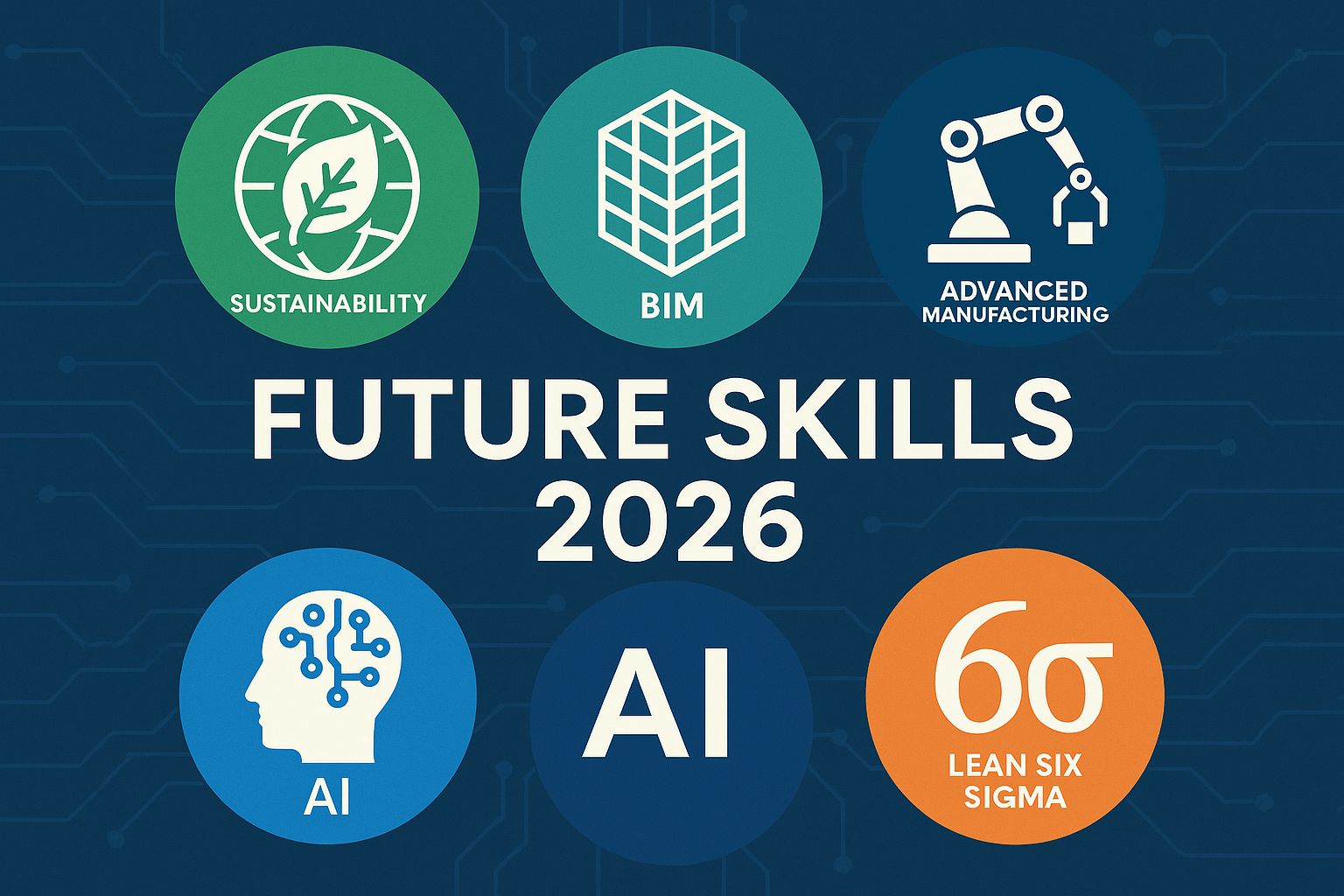
As technology accelerates and industries shift toward automation, sustainability, and data-driven operations, the certifications that matter in 2026 look vastly different from those valued just a few years ago. Employers across engineering, construction, manufacturing, environmental science, logistics, and technology are prioritizing credentials that prove future-ready skills—those aligned with digital transformation, climate action, and operational excellence.
Below is a breakdown of the fastest-rising certifications shaping hiring trends in 2026, why they matter, and how professionals can leverage them to stay competitive.
Sustainability & Climate Credentials Are Becoming Mandatory
Demand for sustainability-skilled professionals is skyrocketing across construction, engineering, energy, and manufacturing.
Top Rising Sustainability Certifications
LEED Green Associate / LEED AP – increasing relevance with the surge in green building mandates.
ISO 14001 Environmental Management Certification – becoming a baseline for manufacturing and industrial employers.
Corporate Sustainability Reporting (CSRD) & ESG Credentials – heavily sought as ESG regulations expand globally.
Why It Matters in 2026:
Companies need professionals who can track carbon emissions, manage waste reduction, lead energy-efficiency initiatives, and ensure regulatory compliance. These credentials demonstrate an understanding of renewable resources, sustainable materials, and climate reporting standards—critical for organizations navigating tightening environmental laws.
Advanced Manufacturing & Industry 4.0 Certifications
Manufacturing is transforming through automation, robotics, and smart technologies. Professionals who understand these systems are in high demand.
Key Certifications Gaining Momentum
SME Certified Manufacturing Engineer (CMfgE) – validates advanced manufacturing knowledge.
ISA/IEC 62443 Cybersecurity Certification – essential as factories integrate connected systems.
Robotics-focused credentials (Fanuc, ABB, UR) – relevant for automation technicians and engineers.
NIMS Smart Manufacturing Certifications – aligned with digital factory and data-centric production skills.
Why It Matters in 2026:
Employers need talent capable of managing interconnected machinery, predictive maintenance, automated production lines, and machine-learning-driven optimization. These certifications prove real-world readiness for high-tech manufacturing floors.
BIM Proficiency Is Now a Baseline in Construction & Engineering
Building Information Modeling (BIM) has rapidly evolved from a competitive advantage to an industry requirement.
Most Valuable BIM Credentials
Autodesk Certified Professional (Revit, Civil 3D, Navisworks)
buildingSMART Professional Certification
Graphisoft Archicad Certifications
Why It Matters in 2026:
BIM proficiency enables firms to reduce construction risk, increase accuracy, minimize rework, and ensure seamless coordination among architects, engineers, and contractors. Employers increasingly require BIM-certified talent for both design and field roles.
Lean Six Sigma Remains a Gold Standard for Process Optimization
Lean Six Sigma continues expanding beyond manufacturing into logistics, healthcare, financial services, and even tech companies.
Credentials That Stand Out in 2026
Lean Six Sigma Green Belt
Lean Six Sigma Black Belt
ASQ & IASSC certifications (most widely recognized)
Why It Matters in 2026:
Organizations under pressure to reduce costs and improve efficiency rely on professionals skilled in process mapping, defect reduction, and continuous improvement. Lean Six Sigma illustrates the ability to solve complex operational problems with measurable results.
AI & Data Literacy Certifications Are Surging
With AI tools, automation, and analytics becoming embedded in every job, certifications demonstrating digital fluency are essential.
Top AI/Data Credentials to Watch
Microsoft Azure AI Fundamentals
Google Data Analytics Professional Certificate
CompTIA Data+
IBM AI Engineering Professional Certificate
Why It Matters in 2026:
Companies want employees who can interpret data, automate workflows, and use AI responsibly—skills becoming crucial in nearly every industry, including HR, marketing, and project management.
Cybersecurity Credentials Continue Exploding in Demand
Security remains a top concern for organizations adopting cloud systems, IoT devices, and remote work structures.
Most Impactful Security Certifications for 2026
ISC2 Certified in Cybersecurity (CC) – now one of the fastest-growing entry-level credentials.
CompTIA Security+ – the new baseline across industries.
CISA, CISSP, CEH – still top-tier for advanced security professionals.
Why It Matters in 2026:
Cyber threats are increasing in frequency and sophistication. Employers must ensure teams can protect sensitive data and maintain system integrity—especially in infrastructure, healthcare, and finance.
Certifications That Matter Most in 2026
Sustainability credentials (LEED, ESG, ISO 14001) are becoming essential across industries.
Industry 4.0 manufacturing certifications are surging as factories go digital.
BIM certification is now a baseline requirement for AEC professionals.
Lean Six Sigma remains a proven metric for operational excellence.
AI, data, and cybersecurity skills are required for nearly every modern role.
FAQs
Which certifications offer the fastest ROI in 2026?
Lean Six Sigma Green Belt, Autodesk BIM certifications, and entry-level AI/data certificates provide quick, tangible career benefits.
Are sustainability certifications worth it?
Yes—regulatory changes and corporate climate initiatives are driving rapid demand for sustainability expertise.
Do employers prefer certificates or degrees?
Both matter, but industry-recognized credentials increasingly serve as proof of job-ready skills, especially in technical roles.
Is BIM certification required?
Not legally, but many engineering and construction firms now treat BIM proficiency as a baseline for project roles.