
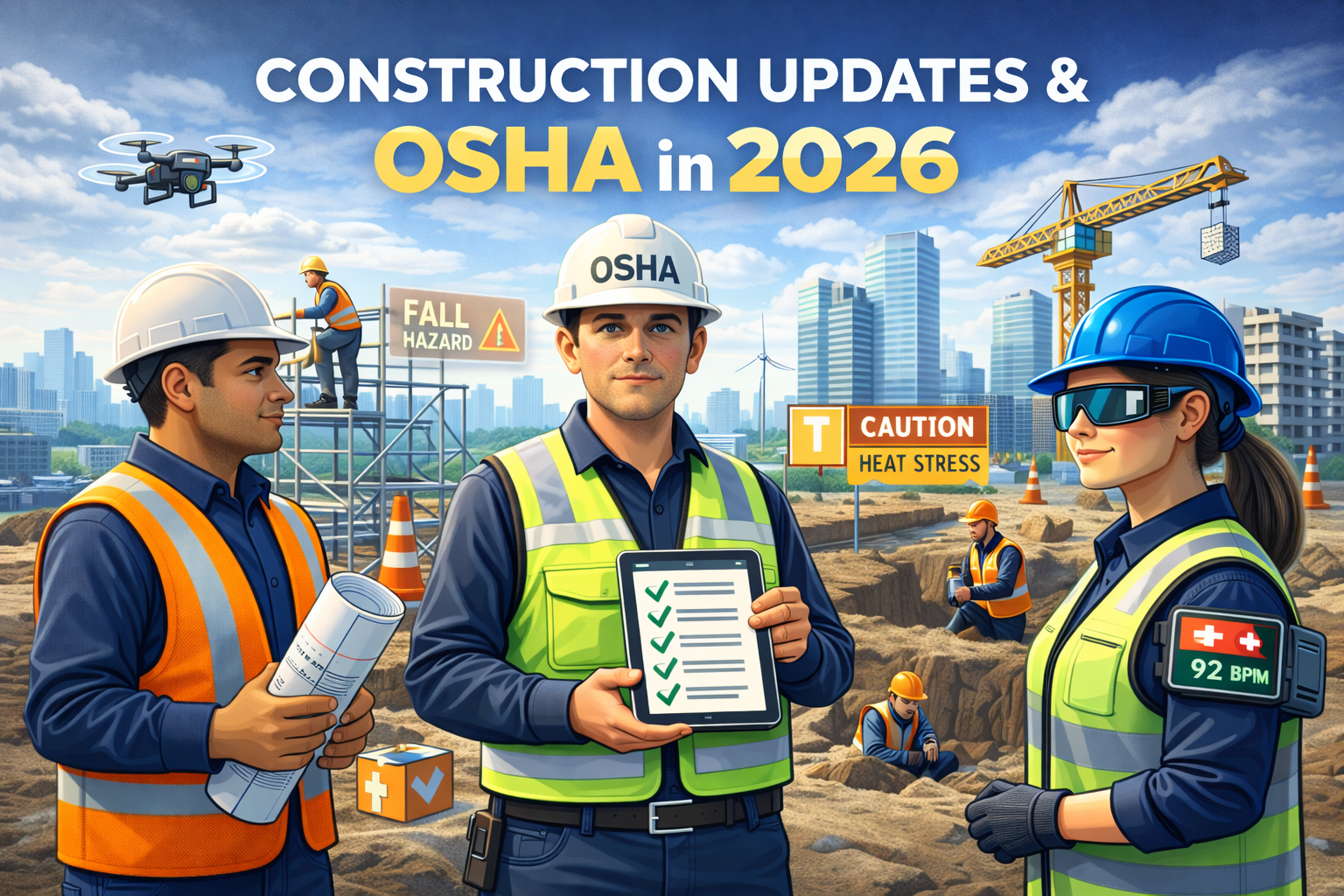
The construction industry is entering 2026 facing a mix of opportunity, regulation, and transformation. From major infrastructure investments and labor shortages to evolving safety expectations, contractors can no longer afford to treat compliance as an afterthought. At the center of this shift is OSHA, whose 2026 priorities are reshaping how construction projects are planned, staffed, and executed.
Understanding the latest construction updates and OSHA trends for 2026 is critical for staying compliant, avoiding costly penalties, and protecting workers on increasingly complex job sites.
Construction Industry Updates Heading Into 2026
1. Infrastructure and Commercial Growth Continues
Public infrastructure spending and private-sector development remain strong entering 2026. Transportation projects, data centers, renewable energy facilities, and advanced manufacturing plants are driving demand for skilled construction labor.
Key impacts:
Larger, multi-employer job sites
Longer project timelines
Increased OSHA scrutiny on high-risk projects
2. Technology Is Now Central to Jobsite Safety
By 2026, technology is no longer optional in construction. Contractors are increasingly relying on digital tools to manage safety, compliance, and productivity.
Common jobsite technologies include:
Drones for inspections and hazard identification
Wearable devices to monitor fatigue and heat exposure
Digital safety logs and incident reporting systems
These tools are also changing how OSHA evaluates compliance, with more emphasis on documented, proactive safety programs.
3. Labor Shortages Increase Safety Risks
The ongoing shortage of skilled construction workers means more new hires and less experienced labor on job sites. OSHA has made it clear that lack of training is not an excuse for violations, placing responsibility squarely on employers.
Expect increased focus on:
Comprehensive onboarding safety training
Language-accessible instruction
Supervisor accountability
OSHA’s Focus Areas in 2026
Enhanced Enforcement and Inspections
OSHA’s enforcement strategy in 2026 emphasizes targeted inspections. Rather than random visits, inspectors are prioritizing high-risk construction activities such as:
Falls from height
Trenching and excavation
Crane and heavy equipment operations
Repeat offenders and contractors with prior violations are especially vulnerable.
Fall Protection Remains the Top Priority
Falls continue to be the leading cause of fatalities in construction. In 2026, OSHA is expanding enforcement related to:
Improper guardrail systems
Misuse of personal fall arrest systems
Inadequate training for elevated work
Contractors should expect stricter interpretations and fewer warnings before citations.
Heat Illness and Worker Health Standards
As extreme heat events become more common, OSHA is increasing oversight around heat-related illnesses. Construction employers are expected to implement:
Heat exposure monitoring
Mandatory rest and hydration breaks
Heat illness prevention plans
Failure to address environmental hazards may result in citations under OSHA’s General Duty Clause.
Documentation and Recordkeeping Requirements
In 2026, OSHA inspections are increasingly document-driven. Inspectors now expect:
Digital access to safety plans
Up-to-date training records
Incident and near-miss documentation
Poor recordkeeping alone can trigger violations—even if no accident has occurred.
What Construction Employers Should Do Now
To prepare for OSHA expectations in 2026, contractors should:
Audit current safety programs and update written policies
Invest in supervisor safety leadership training
Leverage technology to track compliance and incidents
Partner with safety consultants or workforce specialists
Stay informed on OSHA guidance and enforcement trends
Proactive compliance is no longer just about avoiding fines—it’s about protecting workers and maintaining project continuity.
Construction in 2026 brings growth—and greater OSHA scrutiny. With stronger enforcement, emphasis on fall protection, heat illness prevention, and detailed documentation, contractors must modernize safety programs now to stay compliant and competitive.
FAQ: Construction and OSHA in 2026
Will OSHA rules change in 2026?
While many core standards remain the same, enforcement intensity and interpretations are evolving, especially around heat exposure and fall protection.
Are small contractors affected?
Yes. OSHA applies standards equally, regardless of company size.
Can technology help with OSHA compliance?
Absolutely. Digital safety tools improve training, documentation, and inspection readiness.
What’s the biggest OSHA risk for construction in 2026?
Falls from height remain the leading cause of violations and fatalities.