
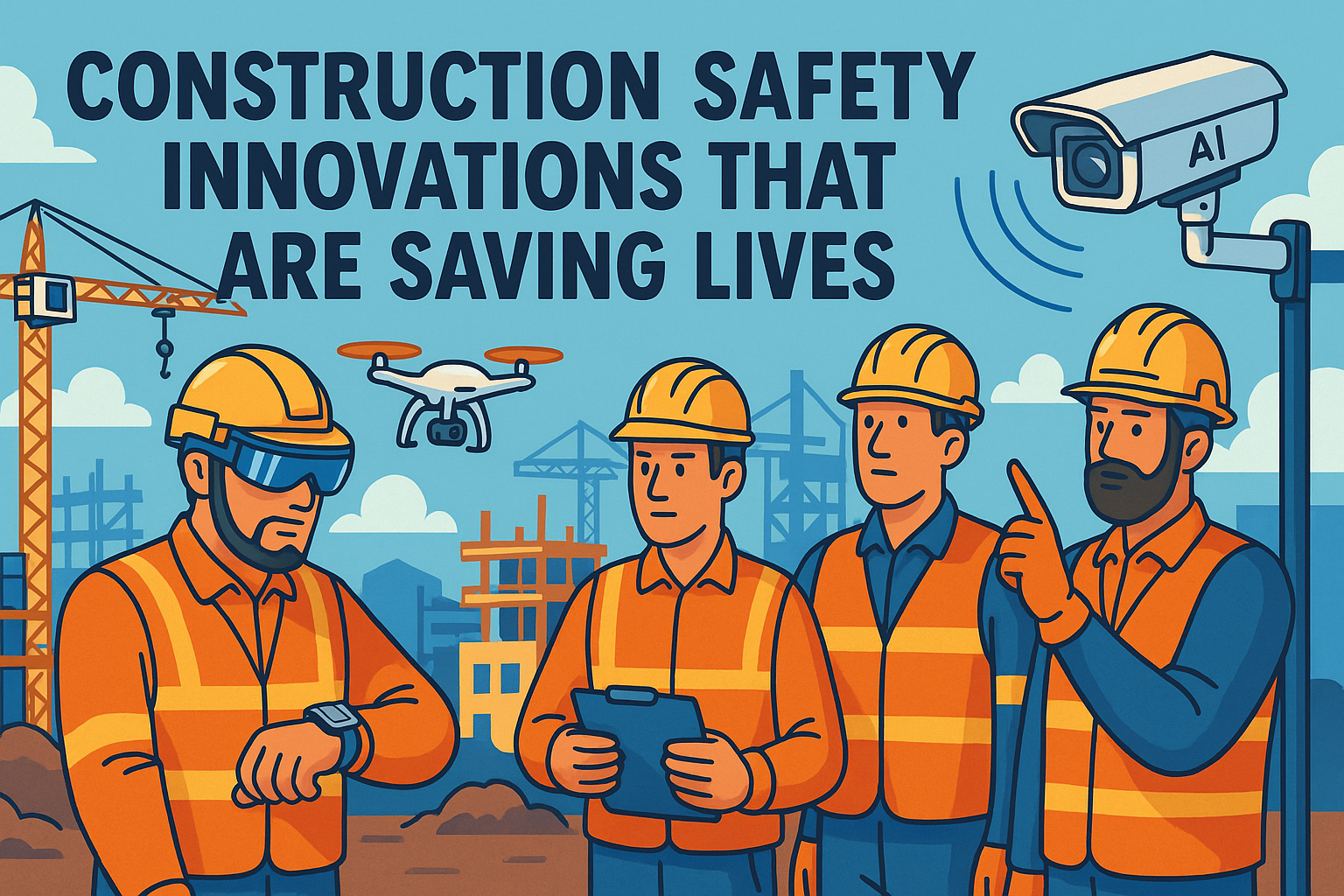
Construction remains one of the most dangerous industries in the world—but that reality is rapidly changing. Thanks to cutting-edge construction safety innovations, jobsite fatalities and serious injuries are declining as companies adopt smarter, tech-driven solutions designed to protect workers in real time.
From AI-powered cameras to wearable technology and robotics, today’s construction safety technology is doing more than meeting compliance—it’s actively saving lives.
Why Construction Safety Innovation Matters More Than Ever
According to the U.S. Bureau of Labor Statistics, construction consistently ranks among the industries with the highest number of workplace fatalities. Falls, struck-by incidents, electrocutions, and caught-in/between accidents continue to pose serious risks.
In response, contractors and developers are increasingly investing in proactive safety solutions that:
Identify hazards before accidents occur
Monitor worker health and fatigue
Reduce exposure to dangerous tasks
The result? Safer jobsites and stronger long-term workforce retention.
Smart Wearables: Real-Time Protection for Workers
One of the biggest breakthroughs in construction safety is wearable technology.
Smart Helmets and Vests
Modern safety gear now includes sensors that can:
Detect falls or sudden impacts
Monitor heart rate and body temperature
Alert supervisors if a worker enters a restricted zone
These wearables provide real-time data that allows safety managers to respond immediately—often preventing minor incidents from becoming fatal accidents.
AI and Computer Vision: Preventing Accidents Before They Happen
Artificial intelligence is revolutionizing construction site safety monitoring.
AI-Powered Cameras
Installed across jobsites, AI-enabled cameras can:
Detect when workers aren’t wearing proper PPE
Identify unsafe behavior near heavy equipment
Flag hazardous conditions like unstable scaffolding
Unlike human observers, AI systems operate 24/7, dramatically reducing blind spots and human error.
Drones: Safer Site Inspections from the Sky
Drones are replacing manual inspections in high-risk areas such as rooftops, bridges, and large-scale infrastructure projects.
How Drones Improve Safety
Eliminate the need for workers to access dangerous heights
Provide real-time aerial views of evolving site conditions
Identify structural issues early
By removing workers from hazardous environments, drones significantly reduce fall-related injuries.
Exoskeletons: Reducing Long-Term Injuries
Wearable exoskeletons are gaining traction for physically demanding construction tasks.
Benefits of Construction Exoskeletons
Reduce strain on the back, shoulders, and knees
Lower the risk of musculoskeletal injuries
Extend career longevity for skilled tradespeople
These devices don’t replace workers—they enhance human strength while minimizing injury risk.
Robotics and Automation: Keeping Humans Out of Harm’s Way
Robotic technology is now handling some of the most dangerous construction tasks.
Examples include:
Demolition robots in unstable structures
Automated bricklaying and welding systems
Remote-controlled equipment in hazardous zones
By automating high-risk work, companies can significantly reduce exposure to life-threatening conditions.
Data-Driven Safety Culture: The New Industry Standard
Beyond individual tools, the biggest shift is cultural. Construction firms are increasingly using data analytics to track near-misses, identify trends, and refine safety training programs.
This proactive, prevention-first approach is proving far more effective than traditional reactive safety models.
Construction safety is evolving fast. Smart wearables, AI monitoring, drones, exoskeletons, and robotics are helping prevent accidents before they happen—saving lives and reshaping the future of the construction industry.
FAQ: Construction Safety Innovations
Q: Are construction safety technologies expensive to implement?
A: While upfront costs exist, most companies see long-term savings through fewer accidents, lower insurance premiums, and reduced downtime.
Q: Do safety wearables replace traditional PPE?
A: No. They enhance PPE by adding real-time monitoring and alerts.
Q: Is AI safety monitoring legal on jobsites?
A: Yes, when used in compliance with privacy and labor regulations. Transparency with workers is key.