
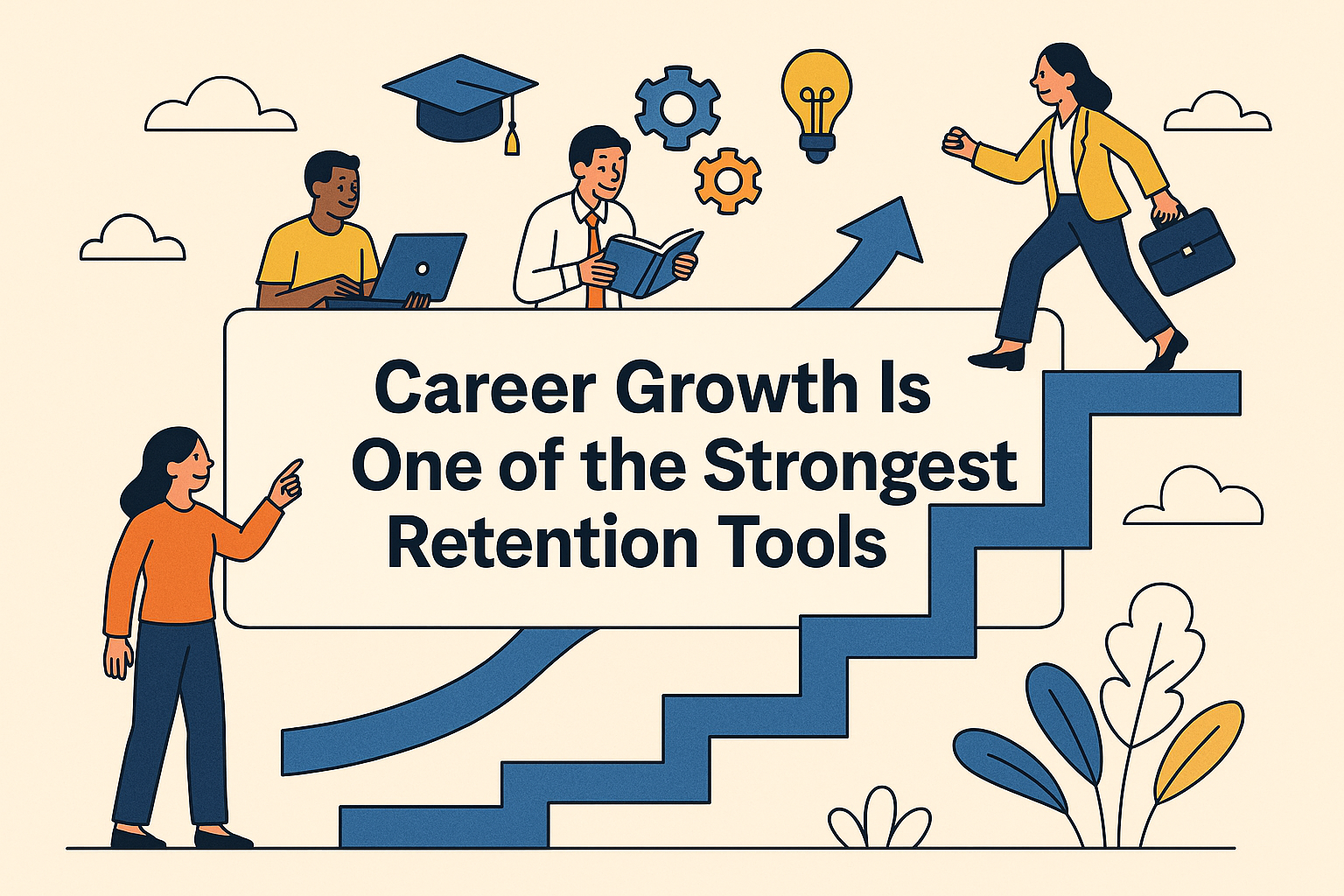
Why Employees Stay Where They See a Future
In today’s competitive labor market, compensation alone is no longer enough to keep top talent. Employees are increasingly asking a deeper question: “Can I grow here?” Organizations that answer that question clearly—and consistently—are far more likely to retain engaged, high-performing teams.
Career growth has emerged as one of the most powerful employee retention tools, aligning individual ambition with long-term business success. When employees see a future inside the organization, they’re far more likely to invest their energy, creativity, and loyalty into their work.
Why Career Growth Doesn’t Always Mean Promotion
One of the most common misconceptions in workforce management is that career growth equals a new title. In reality, promotions are limited, but growth opportunities should not be.
Career growth can take many forms, including:
Expanded responsibilities
Cross-functional projects
Leadership exposure without formal management roles
Deeper expertise within a specialty
When growth is defined too narrowly, employees may feel stuck even in organizations with strong performance and culture. Companies that broaden the definition of advancement give employees more reasons to stay—even when vertical movement isn’t immediately available.
The key insight: Employees don’t leave because they aren’t promoted fast enough. They leave because they feel invisible, underutilized, or stagnant.
The Importance of Skill-Building in Employee Retention
Skill-building is the foundation of sustainable career growth. Employees who are continuously learning feel more confident, capable, and invested in their roles.
Effective skill-building strategies include:
Ongoing training and upskilling programs
Mentorship and coaching relationships
Access to certifications or industry learning resources
Opportunities to apply new skills on real business challenges
From a business perspective, skill development isn’t just an employee benefit—it’s a competitive advantage. Organizations that prioritize learning build stronger internal pipelines, reduce hiring costs, and adapt faster to change.
When employees grow their skills, the business grows its capabilities.
How Stagnation Leads to Disengagement
Career stagnation is one of the fastest paths to employee disengagement. When individuals feel their work no longer contributes to personal or professional growth, motivation declines—often quietly at first.
Common signs of stagnation include:
Reduced initiative and creativity
Minimal participation in meetings or projects
Increased absenteeism or “quiet quitting”
Higher likelihood of job searching
Disengaged employees don’t just affect morale—they impact productivity, customer experience, and team performance. Over time, stagnation becomes costly, both financially and culturally.
Why Career Growth Resonates With Employees and Employers
Career growth works as a retention tool because it aligns employee needs with business goals. Employees want purpose, progress, and security. Employers want performance, loyalty, and long-term capability.
When growth pathways are clear:
Employees feel valued and motivated
Managers have stronger, more committed teams
Organizations retain institutional knowledge
Recruitment becomes easier through employer branding
In short, career growth creates a shared future—one where employees and organizations succeed together.
Clear Takeaways for Employers
Career growth doesn’t require constant promotions
Skill-building is central to employee engagement
Stagnation fuels disengagement and turnover
Growth-focused cultures retain talent longer
Employees stay where they see a future. Career growth—through skill-building, expanded responsibilities, and learning opportunities—is one of the strongest retention tools available. When growth stalls, engagement fades. When growth is prioritized, both employees and businesses thrive.
FAQ: Career Growth and Employee Retention
Q: Can small companies offer career growth without promotions?
Yes. Skill development, project ownership, and cross-functional exposure are powerful growth tools regardless of company size.
Q: How often should career development conversations happen?
At least annually, but ideally integrated into regular performance check-ins.
Q: Is career growth more important than compensation?
For many employees, long-term growth and learning rival—or exceed—compensation as a retention factor.