
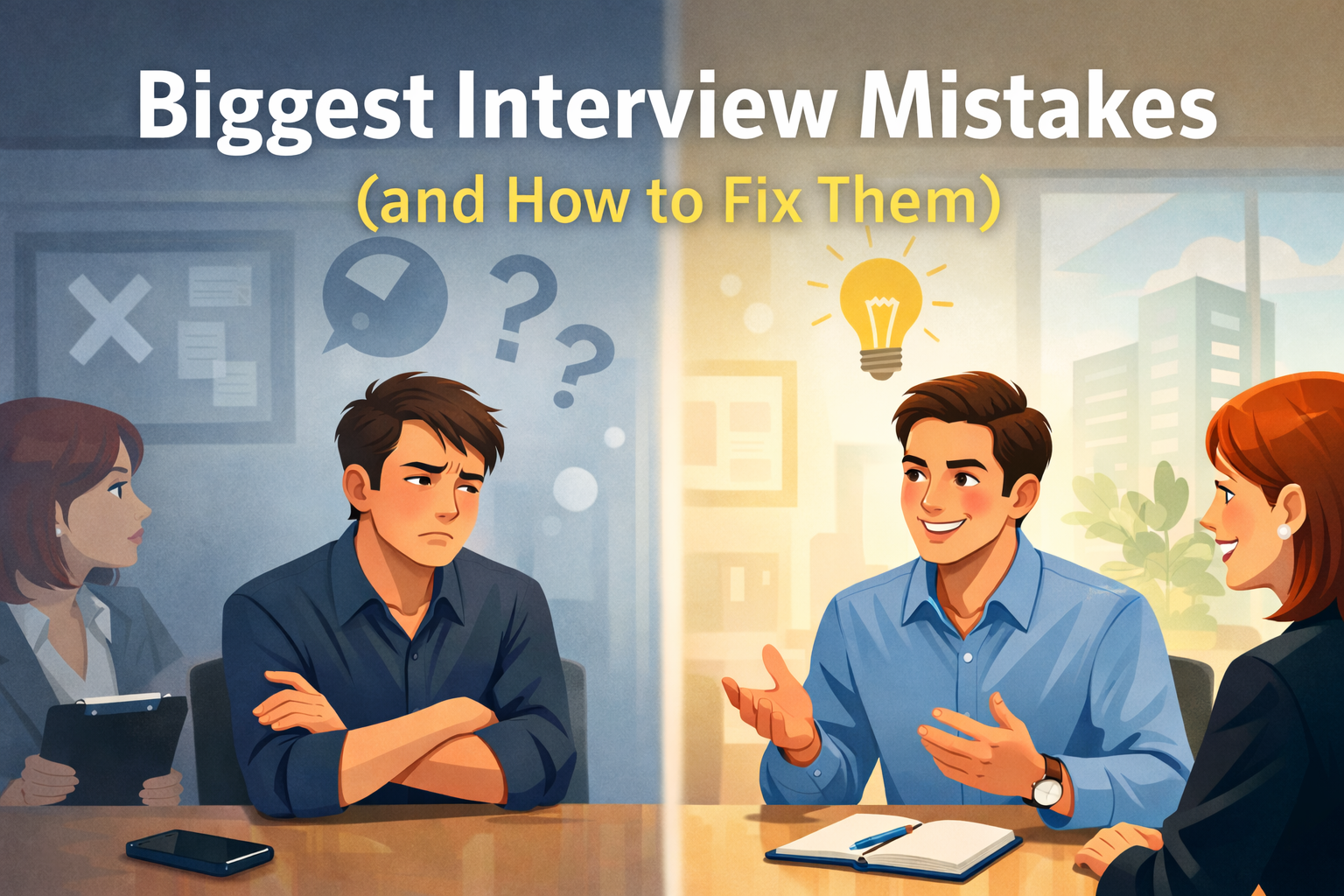
Job interviews can make or break a candidate’s chances—often within the first few minutes. Despite strong resumes and solid experience, many job seekers still lose opportunities due to avoidable interview mistakes. According to recent hiring surveys from LinkedIn, Indeed, and Harvard Business Review, employers consistently point to the same errors when rejecting otherwise qualified candidates.
The good news? Most interview mistakes are easy to fix once you know what to watch for.
Below are the biggest interview mistakes candidates make—and exactly how to fix them to improve your chances of landing the job.
1. Not Researching the Company
The mistake:
Showing up without a clear understanding of the company’s mission, products, or culture.
Recruiters say this signals a lack of interest or preparation. A 2024 LinkedIn hiring survey found that over 60% of recruiters reject candidates who appear underprepared.
How to fix it:
Review the company website, recent news, and social media
Understand their services, clients, and values
Prepare 1–2 thoughtful questions about the company’s goals or challenges
Pro tip: Mention a recent company achievement during the interview—it shows genuine interest.
2. Giving Vague or Rambling Answers
The mistake:
Long-winded responses that never quite answer the question.
Interviewers are listening for clarity, structure, and relevance—not a life story.
How to fix it:
Use the STAR method (Situation, Task, Action, Result)
Keep answers focused and under two minutes
Practice explaining your experience out loud
Clear, concise answers help interviewers remember you for the right reasons.
3. Speaking Negatively About Past Employers
The mistake:
Complaining about former managers, coworkers, or workplaces.
Even if your experience was genuinely bad, negativity raises red flags about attitude and professionalism.
How to fix it:
Keep explanations neutral and fact-based
Focus on what you learned, not what went wrong
Frame changes as growth-driven, not conflict-driven
Example fix:
Instead of “My boss was terrible,” say “I’m looking for an environment with clearer collaboration and growth opportunities.”
4. Failing to Show Enthusiasm
The mistake:
Appearing disengaged, monotone, or uninterested—even if you’re qualified.
According to Indeed hiring managers, enthusiasm often outweighs experience when choosing between close candidates.
How to fix it:
Maintain eye contact and positive body language
Express excitement about the role and team
Smile and vary your tone when speaking
Passion is memorable—and contagious.
5. Poor Body Language
The mistake:
Slouching, avoiding eye contact, checking your phone, or fidgeting.
Nonverbal cues heavily influence first impressions—especially in the first 30 seconds.
How to fix it:
Sit upright and lean slightly forward
Keep hands relaxed and visible
Practice active listening (nod, respond naturally)
For virtual interviews, look into the camera—not the screen.
6. Not Having Questions Ready
The mistake:
Answering “No, I’m good” when asked if you have questions.
This can signal a lack of curiosity or preparation.
How to fix it:
Prepare at least 3 smart questions, such as:
“What does success look like in the first 90 days?”
“How does this team collaborate day to day?”
“What are the biggest challenges facing this role?”
Great questions show strategic thinking and engagement.
7. Ignoring the Follow-Up
The mistake:
Skipping the thank-you email after the interview.
A Harvard Business Review report notes that less than 25% of candidates send follow-ups, yet hiring managers notice who does.
How to fix it:
Send a thank-you email within 24 hours
Personalize it with a specific conversation point
Reaffirm your interest in the role
It’s a small step that leaves a big impression.
Frequently Asked Questions
What is the biggest interview mistake candidates make?
Lack of preparation is the most common—and most damaging—mistake, according to recruiters.
Do interviewers really care about body language?
Yes. Studies show nonverbal communication heavily influences hiring decisions.
Is a thank-you email really necessary?
While not required, it significantly improves your chances and helps you stand out.