
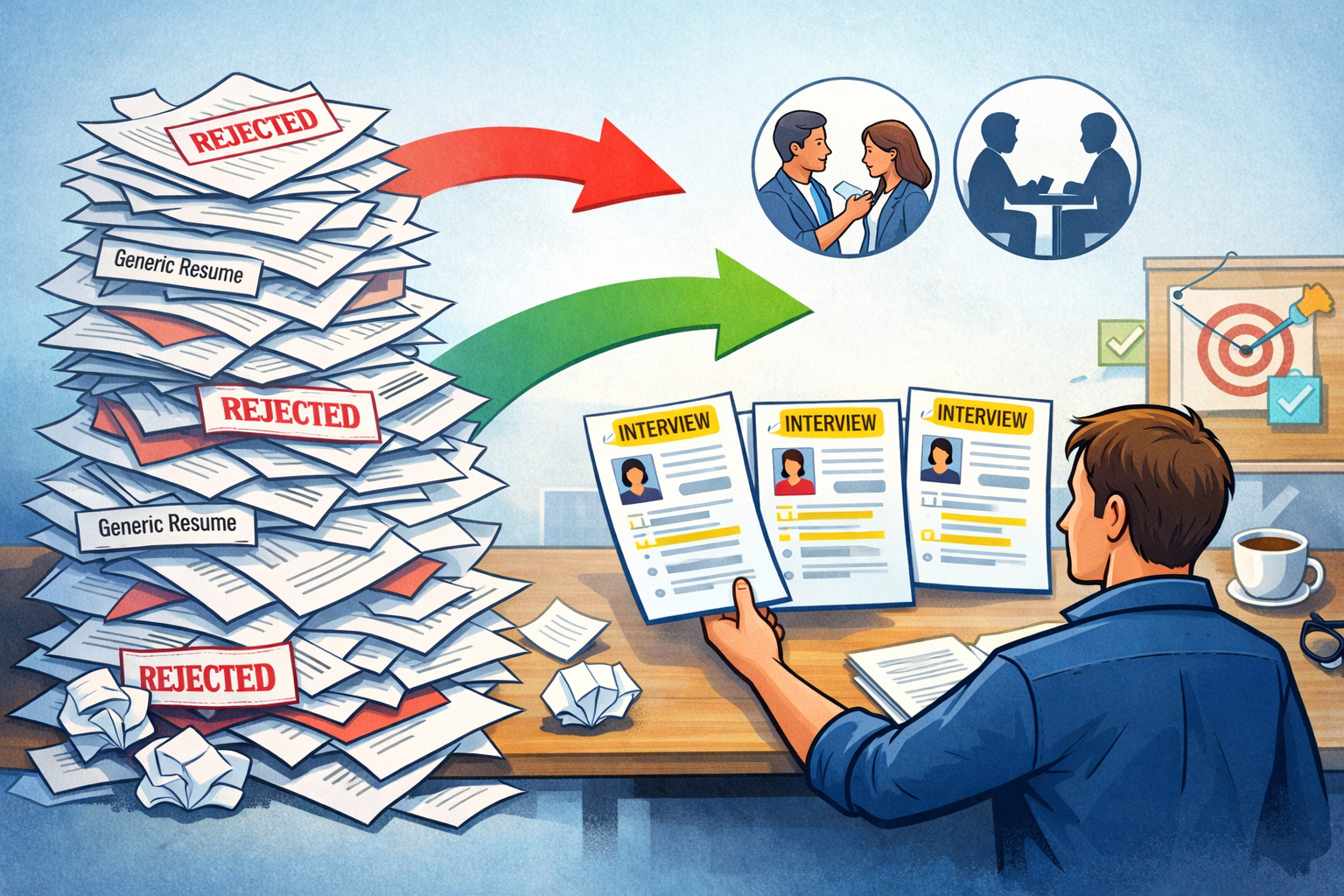
In today’s competitive job market, many candidates default to a “spray and pray” approach: mass applications, generic resumes, and rapid-fire submissions. While this strategy feels efficient, recruiters and hiring managers say it often backfires.
If you’re sending out applications nonstop but hearing nothing back, the problem may not be your experience—it may be how you’re applying.
Here’s a smarter, more effective job search strategy that prioritizes quality over quantity and dramatically improves your odds of landing interviews.
Why Applying to Too Many Jobs Hurts Your Chances
At first glance, more applications should mean more opportunities. In reality, over-applying creates three major problems:
1. Generic Applications Get Filtered Out
Most companies use Applicant Tracking Systems (ATS) that scan for role-specific keywords. A one-size-fits-all resume rarely makes it past this first gate.
2. Recruiters Spot Mass Applicants Instantly
Hiring managers can tell when a candidate hasn’t read the job description carefully. Misaligned skills, vague cover letters, and unfocused experience signal low intent.
3. Burnout Leads to Sloppier Applications
The more you apply, the less attention each application gets—leading to mistakes, weak positioning, and missed opportunities.
The Better Strategy: Fewer Applications, Better Results
Instead of applying everywhere, focus on a targeted, high-impact approach.
1. Narrow Your Target Roles
Define exactly what you’re looking for:
2–3 job titles
Specific industries or company sizes
Clear salary and location preferences
This clarity allows you to tailor your materials with precision.
2. Customize Every Resume (Yes, Every One)
You don’t need to rewrite your resume from scratch—but you do need to:
Mirror keywords from the job description
Highlight only the most relevant achievements
Adjust your summary to match the role
This alone can significantly boost ATS pass rates.
3. Apply to Fewer Jobs Per Week
Aim for 5–10 highly targeted applications instead of 50 rushed ones.
Each application should feel intentional, not automatic.
4. Use Networking as a Force Multiplier
A referral can move your resume to the top of the pile. Reach out to:
Current employees on LinkedIn
Former colleagues or alumni
Recruiters who specialize in your field
Even a brief conversation can outperform dozens of cold applications.
5. Track and Refine Your Results
Keep a simple spreadsheet:
Role applied for
Resume version used
Response outcome
Patterns will quickly emerge—and you’ll know what’s working.
What Recruiters Actually Want to See
Hiring managers consistently look for:
Clear alignment with the role
Evidence of impact (metrics, outcomes, results)
Genuine interest in their company
A focused candidate always stands out over a mass applicant.
FAQ
Isn’t it risky to apply to fewer jobs?
It feels risky, but data shows targeted applications convert at a much higher rate than mass submissions.
How long should I spend on one application?
Ideally 30–60 minutes, including resume tweaks and a thoughtful cover letter (when required).
What if I urgently need a job?
Even under pressure, focused applications paired with networking are faster than mass applying.