
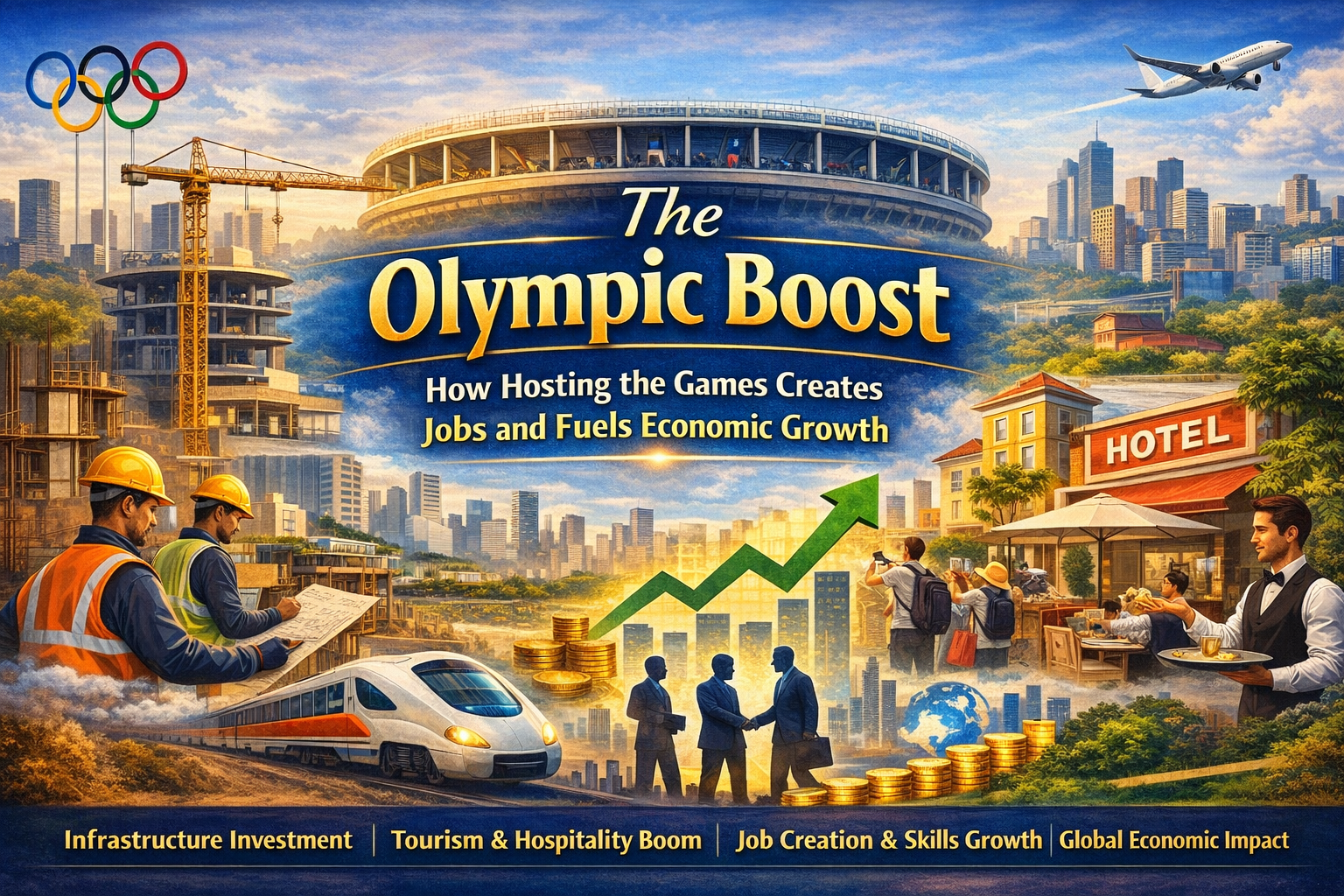
When a city is awarded the Olympic Games, it doesn’t just gain a global spotlight — it unlocks one of the most powerful economic catalysts in the world. From job creation and infrastructure investment to tourism and long-term urban development, the Olympics can spark meaningful economic momentum that extends far beyond the closing ceremony.
While debate often surrounds the costs of hosting, one thing is clear: when strategically planned and responsibly managed, the Olympic Games can generate substantial employment opportunities and leave behind a lasting economic legacy.
A Surge in Jobs Before the First Medal Is Won
Long before the Olympic flame is lit, job creation begins.
Construction and Infrastructure
Host cities invest heavily in building and upgrading stadiums, Olympic villages, transportation systems, and public infrastructure. These projects create:
- Thousands of construction jobs
- Engineering and architecture roles
- Skilled trade and project management positions
- Supply chain and manufacturing opportunities
For example, preparation for recent Olympic Games has mobilized tens to hundreds of thousands of jobs, directly and indirectly tied to construction and development. These are not only short-term positions — many involve transferable skills that strengthen the regional workforce long after the Games conclude.
Tourism and Service Industries Get a Major Lift
The Olympics draw millions of visitors, media professionals, athletes, and sponsors from around the globe. This influx creates powerful ripple effects across local economies.
Industries That Benefit Most:
- Hospitality (hotels, resorts, short-term rentals)
- Restaurants and catering
- Transportation services
- Retail and entertainment
- Event management and security
During Olympic years, host cities often experience significant spikes in visitor spending. Small businesses, in particular, benefit from increased foot traffic and international exposure. The global broadcast audience — often reaching billions — also provides long-term branding for the host city, attracting future tourism and business investment.
A Boost to Economic Output
Research consistently shows that host regions often experience an increase in economic output leading up to and during the Games. The combination of infrastructure spending, tourism, and global trade visibility can temporarily elevate GDP growth above national averages.
More importantly, the Olympics often accelerate projects that might otherwise take decades to complete. Investments in transportation systems, airports, urban redevelopment, and digital infrastructure can modernize a city at record speed — improving productivity and connectivity for years to come.
Transforming Cities for the Future
Some of the most successful Olympic hosts have used the Games as a launchpad for long-term urban renewal.
Barcelona’s 1992 Olympics are widely regarded as a model example. The city transformed its waterfront, upgraded transportation systems, and repositioned itself as a global tourism hub — benefits that continue decades later.
Similarly, London’s 2012 Games revitalized East London, converting former industrial land into housing, business hubs, and public green spaces. The Olympic Park has since become a thriving economic district supporting jobs and new development.
When aligned with broader economic strategies, the Olympics can serve as a once-in-a-generation opportunity to reshape a city’s future.
Workforce Development and Skills Growth
Beyond physical infrastructure, the Games help build human capital.
Major sporting events require expertise in logistics, event management, hospitality operations, security coordination, broadcasting, and international marketing. Workers gain valuable experience in high-pressure, large-scale operations — strengthening the local talent pool.
In some host cities, the Games have also encouraged apprenticeships, job training initiatives, and public-private workforce partnerships designed to prepare residents for both Olympic employment and long-term career opportunities.
Global Visibility Means Long-Term Investment Potential
The Olympics function as a global showcase. Cities benefit from:
- Enhanced international reputation
- Increased foreign investment interest
- Expanded trade relationships
- Strengthened business networks
The global media exposure — often valued in the billions of dollars — creates branding opportunities that would otherwise be financially impossible to replicate through traditional marketing campaigns.
Smart Planning Is the Key
Of course, economic outcomes depend heavily on strategic planning. The most successful Olympic hosts:
- Reuse or retrofit existing venues
- Design facilities with post-Games use in mind
- Integrate projects into long-term urban development plans
- Maintain strict budget oversight
When these principles are followed, the Games become more than a two-week sporting event — they become an engine for sustainable economic growth.
Key Takeaways
- The Olympics generate significant job creation in construction, tourism, and services.
- Infrastructure investments can modernize cities and support long-term growth.
- Tourism and global visibility boost local businesses and attract future investment.
- Workforce development initiatives build skills that last beyond the Games.
- Strategic planning determines the scale and durability of economic benefits.
Final Thoughts
The Olympic Games represent more than athletic excellence — they are a powerful economic catalyst. While careful planning is essential, history shows that when managed effectively, hosting the Olympics can stimulate job growth, enhance infrastructure, elevate global reputation, and reshape cities for generations.
For cities willing to align Olympic preparation with long-term development goals, the rewards can extend far beyond the medal count.