
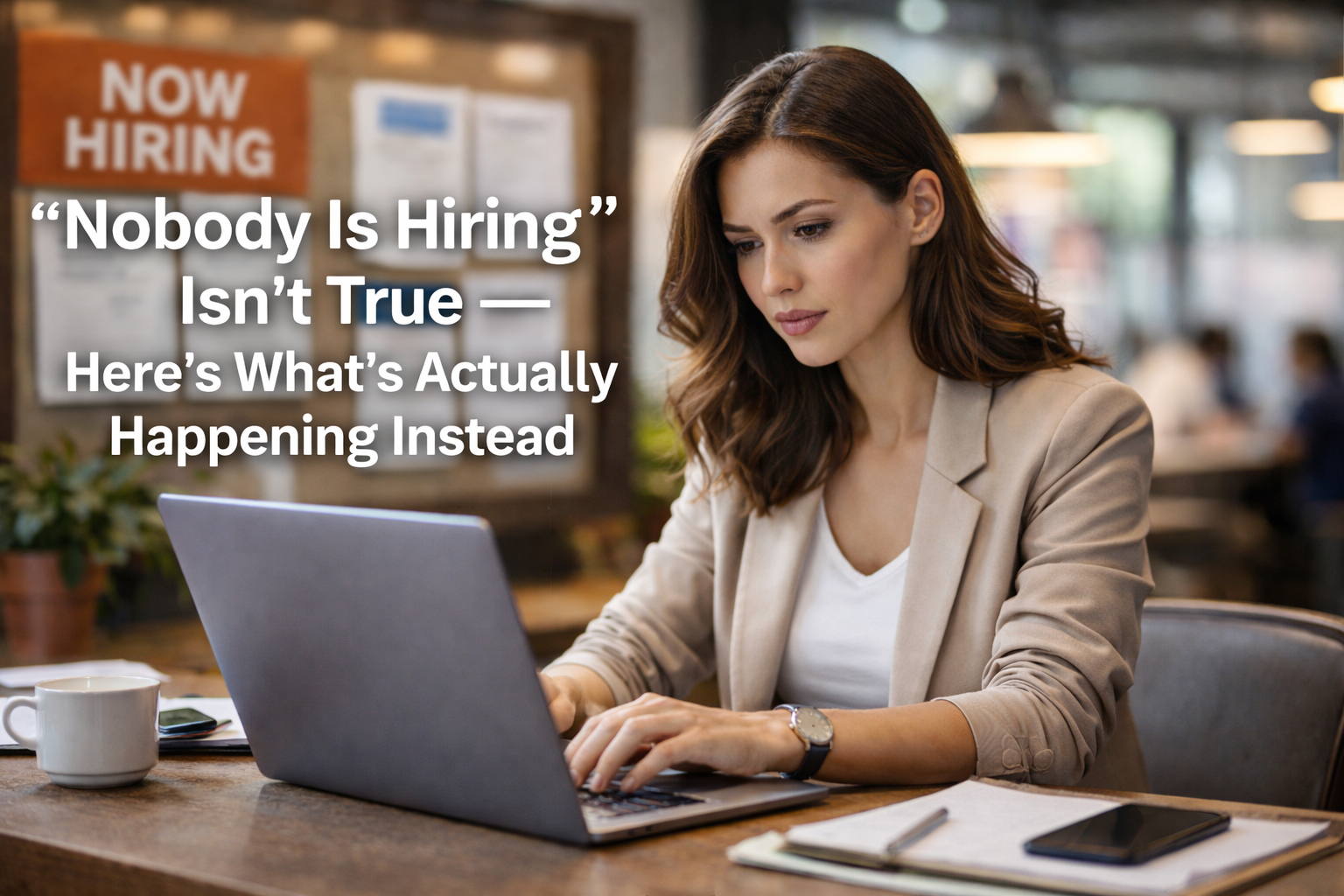
If you’ve spent any time scrolling job boards, LinkedIn, or Reddit lately, you’ve probably seen the same frustration repeated again and again: “Nobody is hiring.” Applications disappear into a void. Interviews stall. Open roles vanish overnight.
But while the feeling is real, the statement itself isn’t entirely accurate.
The truth is more nuanced — and understanding what’s really happening in today’s job market can make the difference between feeling stuck and adapting strategically.
The Job Market Hasn’t Collapsed — It’s Slowed
Hiring hasn’t stopped. It has cooled significantly compared to the post-pandemic boom, when companies were racing to add talent at almost any cost. Recent U.S. labor data shows that employers are still adding jobs, just at a much slower pace than in previous years. At the same time, unemployment has edged up modestly, and job seekers are spending longer between roles.
This creates an uncomfortable middle ground: fewer openings, more competition, and longer hiring timelines. Economists often describe this as a “low hire, low fire” environment. Companies aren’t laying people off en masse, but they’re also hesitant to expand headcount unless there’s a clear business case.
That combination alone can make the market feel frozen, even when it isn’t.
Why It Feels Like Nobody Is Hiring
One major reason the market feels so bleak is uncertainty. Slower economic growth forecasts have made businesses cautious. Instead of hiring ahead of demand, many employers are waiting to see clearer signals before committing to new roles. That caution shows up as paused requisitions, delayed interviews, or roles that stay open for months without movement.
Another factor is selectivity. Employers aren’t just hiring fewer people — they’re hiring more precisely. Job postings may exist, but many are tied to very specific skills, certifications, or industry experience. For candidates who don’t line up perfectly, it can feel like the job market has vanished altogether.
Technology also plays a role. Automated applicant tracking systems and AI-driven screening tools filter resumes aggressively. This means qualified candidates can be rejected before a human ever sees their application, reinforcing the sense that jobs are posted but no one is actually being hired.
Finally, there’s what some economists call “job hugging.” Workers who already have stable employment are choosing to stay put rather than risk a move in an uncertain economy. With fewer people quitting voluntarily, fewer new openings are created — further tightening the market.
Where Hiring Is Still Happening
Even in a slower market, demand hasn’t disappeared across the board. Certain sectors continue to hire, though often in more measured ways.
Healthcare remains one of the most consistent sources of job growth, driven by long-term demographic trends and staffing shortages, even as the explosive post-COVID hiring surge has cooled. Skilled trades — including construction, electrical work, and plumbing — are also seeing steady demand, particularly as infrastructure projects and AI-related data center builds expand.
In many industries, the emphasis has shifted toward skills-based hiring. Employers are prioritizing candidates who can demonstrate immediate, practical value, whether through technical expertise, certifications, or hands-on experience. Generalist roles are harder to land, while specialized positions continue to open quietly.
What This Means for Job Seekers
The takeaway isn’t that the job market is hopeless — it’s that it’s different.
Jobs still exist, but employers are moving more slowly and cautiously. Hiring processes take longer. Competition is tougher. And “spray and pray” applications are less effective than they once were. For many job seekers, success now depends on tailoring applications, sharpening specific skills, and networking more deliberately.
In other words, “nobody is hiring” isn’t the right diagnosis. A better one might be: companies are hiring carefully, selectively, and on their own timeline.
That distinction matters — because adapting to a slower, more intentional job market is very different from waiting for a hiring freeze to end.
Sources
Associated Press — U.S. jobs and unemployment data (2025–2026 coverage)
Financial Times — Analysis of the “low hire, low fire” labor market
JPMorgan — U.S. labor market and economic growth outlook
Robert Half — Hiring trends and employer selectivity reports
Axios — Healthcare hiring trends and labor market shifts
Tom’s Hardware — Skilled trades demand tied to AI and infrastructure expansion
Morningstar — U.S. labor market outlook and skills-based hiring trends
Wikipedia — “Job hugging” labor market concept