
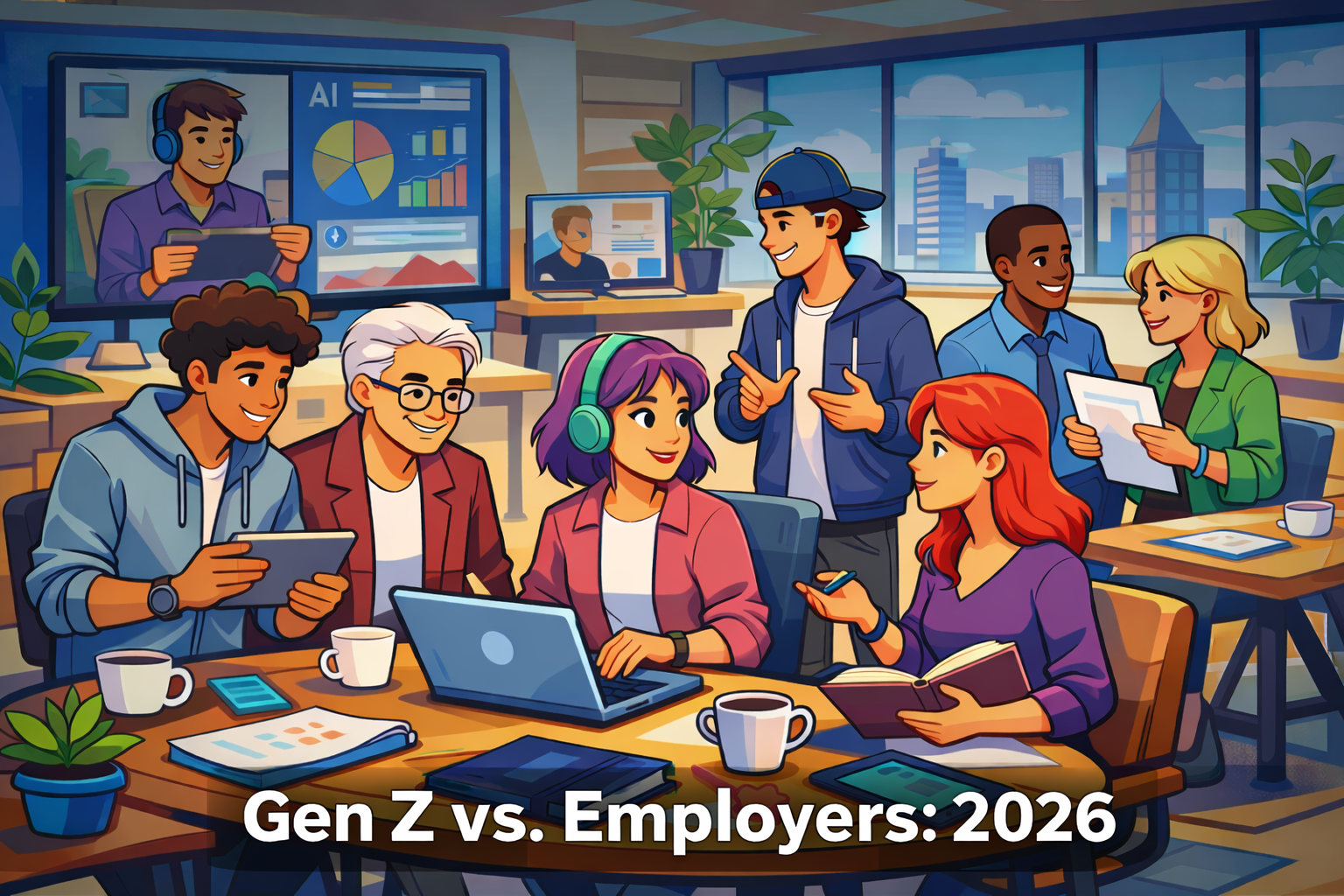
A 2026 Workforce Reality Check for Hiring Leaders
As Gen Z becomes the fastest-growing segment of the workforce, employers are being forced to rethink long-standing hiring, management, and workplace culture assumptions. By 2026, this generation—born roughly between 1997 and 2012—will make up more than 30% of the global workforce, according to recent labor projections from the U.S. Bureau of Labor Statistics and LinkedIn Workforce Reports.
But Gen Z isn’t just younger millennials with better tech skills. Their expectations around work, leadership, flexibility, and purpose are reshaping how companies compete for talent. At the same time, employers are becoming more vocal about what they need from Gen Z to succeed in a rapidly changing economy.
This generational workforce update breaks down what Gen Z job seekers expect from employers in 2026—and the expectations employers have in return.
What Gen Z Job Seekers Expect from Employers in 2026
1. Flexibility Is Non-Negotiable
Gen Z entered the workforce during remote work normalization. For them, flexibility isn’t a perk—it’s a baseline expectation.
By 2026, Gen Z job seekers expect:
- Hybrid or remote options whenever possible
- Flexible scheduling focused on outcomes, not hours
- Trust-based management rather than micromanagement
Companies insisting on rigid, fully in-office roles without a clear business case risk losing Gen Z talent early in the hiring funnel.
2. Transparent Pay and Faster Growth Paths
Gen Z is highly pay-aware and data-driven. Platforms like Glassdoor, Reddit, and TikTok have made salary transparency unavoidable.
Key expectations include:
- Clear salary ranges in job postings
- Defined promotion timelines and growth criteria
- Frequent performance feedback—not annual reviews
For Gen Z, career stagnation is a dealbreaker.
3. Mental Health Support That’s Actually Used
Unlike previous generations, Gen Z openly prioritizes mental health at work—and expects employers to do the same.
In 2026, this means:
- Normalized use of mental health days
- Access to counseling or wellness programs
- Managers trained in empathetic leadership
Symbolic wellness initiatives without leadership buy-in are quickly seen as performative.
4. Purpose-Driven Work and Ethical Leadership
Gen Z wants to understand why their work matters.
They expect employers to:
- Demonstrate real commitments to DEI, sustainability, and ethics
- Align company actions with public messaging
- Offer opportunities to contribute ideas and make an impact early
Purpose alone won’t retain talent—but lack of purpose will push them out.
5. Continuous Learning and Skill Development
Raised in a rapidly evolving digital world, Gen Z understands that skills—not job titles—drive career longevity.
Top expectations include:
- Employer-funded training and certifications
- Upskilling in AI, automation, and emerging tech
- Mentorship and cross-functional learning opportunities
Companies that invest in Gen Z’s growth tend to earn stronger loyalty in return.
What Employers Expect from Gen Z Employees in 2026
While Gen Z expectations are shaping workplace norms, employers are also clarifying what they need from this generation to succeed.
1. Accountability and Professional Communication
Employers increasingly expect Gen Z workers to:
- Meet deadlines consistently
- Communicate proactively, not reactively
- Adapt communication style across teams and leadership levels
Digital fluency is assumed—professional reliability is what differentiates top performers.
2. Adaptability in a Rapidly Changing Workplace
From AI integration to evolving business models, employers need employees who can pivot quickly.
In 2026, employers value Gen Z professionals who:
- Embrace new tools and workflows
- Accept constructive feedback
- Stay resilient during organizational change
Flexibility must work both ways.
3. Willingness to Learn Beyond the Job Description
While Gen Z expects growth opportunities, employers expect initiative in return.
That includes:
- Learning new skills independently
- Volunteering for stretch assignments
- Building business acumen—not just technical expertise
Curiosity and coachability remain critical hiring traits.
4. Collaboration Across Generations
With four generations now working side by side, employers expect Gen Z employees to collaborate effectively across age groups.
Success in 2026 means:
- Respecting diverse working styles
- Learning from experienced colleagues
- Contributing fresh perspectives without dismissing legacy knowledge
The 2026 Reality: Mutual Adaptation Wins
The most successful workplaces in 2026 won’t be the ones that “cater” to Gen Z—or demand Gen Z conform entirely to old models. They’ll be the organizations that adapt on both sides, aligning expectations around flexibility, accountability, growth, and purpose.
For hiring leaders, understanding this balance isn’t just about recruitment—it’s about long-term retention, culture stability, and future-proofing the workforce.
FAQ
Q: Will Gen Z prefer remote work in 2026?
A: Yes, but flexibility matters more than location alone. Hybrid models remain the most attractive.
Q: What causes Gen Z employees to leave jobs fastest?
A: Lack of growth, unclear expectations, and misalignment between company values and actions.
Q: How can employers better attract Gen Z talent?
A: Be transparent, invest in development, train managers, and communicate purpose authentically.