
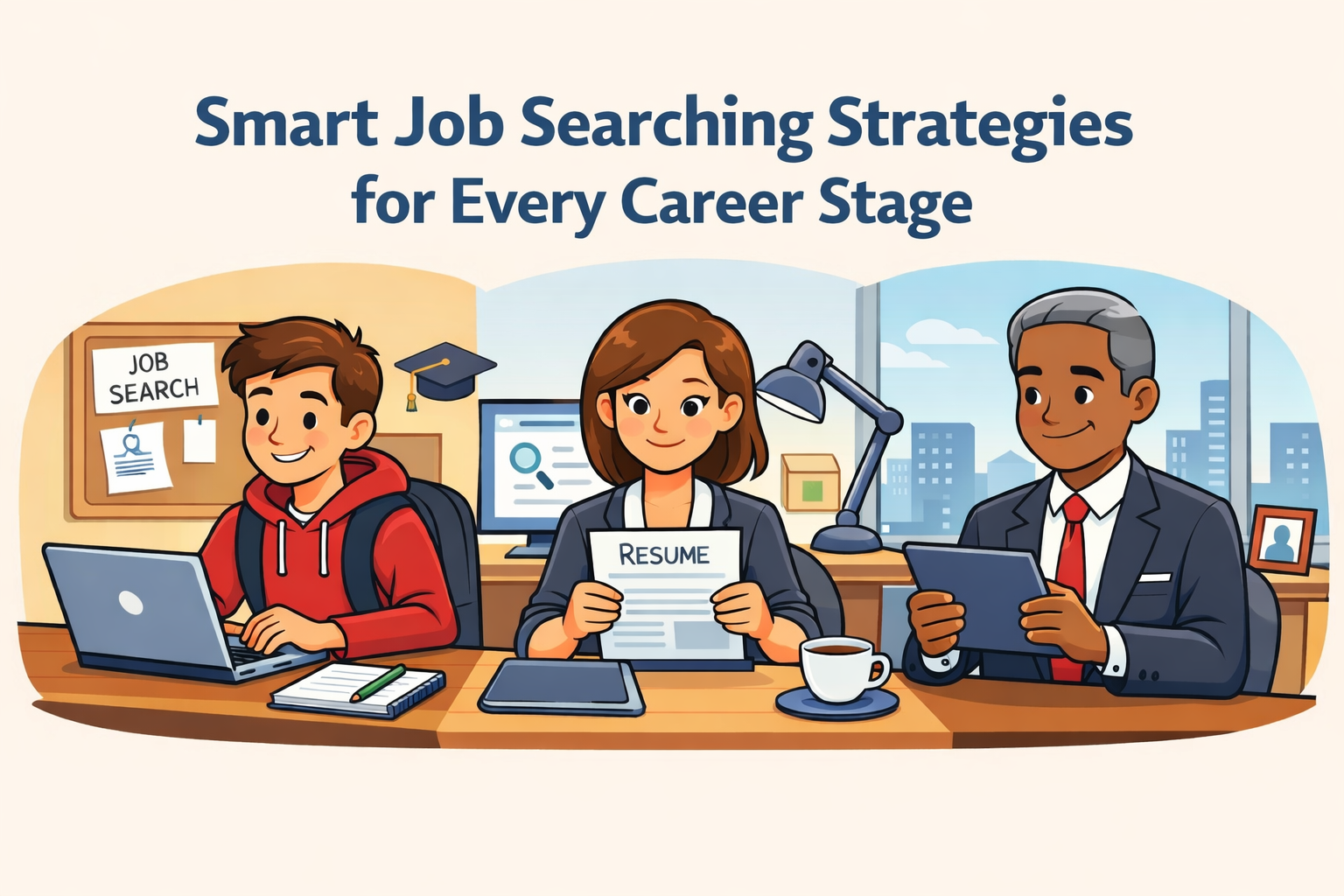
Whether You’re Laid Off, Just Starting Out, or Leading at the Top
Job searching looks different depending on where you are in your career—but one thing is universal: it demands time, energy, and emotional resilience.
For laid-off professionals, the search often comes unexpectedly.
For recent graduates, it can feel uncertain and overwhelming.
For executives, it’s frequently confidential, strategic, and slower-moving.
Regardless of title or experience level, today’s job market requires focus, structure, and patience. The most successful job seekers aren’t just working harder—they’re working smarter and protecting their confidence along the way.
Why Routine Is Critical—At Any Career Level
When structure disappears—whether after a layoff or graduation—it’s easy for motivation to slip. Establishing a daily routine helps restore control and momentum.
Simple habits matter:
- Get up at a consistent time
- Get dressed and treat the day professionally
- Plan your job-search tasks intentionally
Routine creates stability, and stability builds confidence—especially during periods of transition.
What to Do Daily vs. Weekly in a Healthy Job Search
Trying to do everything every day leads to burnout. A more sustainable approach is separating daily momentum tasks from strategic weekly activities.
Daily Job Search Priorities (All Levels)
These tasks keep you visible and responsive without overwhelming you:
- Check and respond to emails from recruiters or contacts
- Review job alerts on your primary platforms
- Submit a small number of targeted, high-quality applications
- Follow up on interviews or recent conversations
- Track progress and next steps
For most professionals, 2–4 focused hours per day is enough to stay effective.
Weekly or Less-Frequent Focus Areas
These are important—but better handled in batches:
- Resume updates or customization
- LinkedIn profile optimization
- Networking outreach and follow-ups
- Interview practice or mock interviews
- Skills training or certifications
- In-depth company research
This approach prevents decision fatigue and keeps daily effort manageable.
Tailored Tips by Career Stage
For Laid-Off Professionals
A layoff can feel personal—even when it isn’t. Focus on regaining confidence and control.
- Treat your job search like a structured workday
- Reconnect with former colleagues and managers early
- Don’t rush into panic applications—be selective
- Acknowledge the emotional impact and give yourself grace
Your experience still matters. One employment change doesn’t erase your value.
For Recent Graduates
Early career job searches are often about momentum and exposure.
- Apply consistently, but don’t underestimate networking
- Practice interviews frequently—confidence comes with repetition
- Use slow days to build skills or certifications
- Remember: your first role doesn’t define your entire career
Rejection at this stage is normal—and rarely personal.
For Executives and Senior Leaders
Executive searches are strategic and often longer by nature.
- Focus more on relationship-building than job boards
- Keep outreach intentional and discreet
- Expect fewer interviews, but deeper vetting
- Use time between opportunities to refine your narrative and leadership story
At senior levels, patience is not a setback—it’s part of the process.
When Progress Feels Slow, Change the Pace—Not the Goal
There will be days with no leads, no interviews, and no promising postings. That doesn’t mean you’re failing.
Use slower days to reset:
- Take a walk or step away from screens
- Spend time with people who ground you
- Organize your space or tackle a personal project
- Shift to low-pressure career prep like skill-building or interview practice
Stepping back briefly often leads to better clarity and performance.
Your Job Title Doesn’t Define Your Worth
Job searches—especially long ones—can test even the most confident professionals. It’s easy to measure success by responses, offers, or timelines.
Don’t.
Your worth isn’t determined by how quickly you land your next role.
Each conversation builds experience. Each step expands your network. Each day you show up counts.
Tomorrow is another opportunity—and the right one is worth the wait.
FAQ
How long should a job search take?
It varies. Entry-level searches may take months, while executive searches often take longer due to strategy and fit.
Should I apply to jobs every day?
Not necessarily. Targeted applications and networking are more effective than mass applying.
What if I feel discouraged or stuck?
That’s normal. Step back briefly, refocus on routine, and remember that momentum isn’t always immediate.