
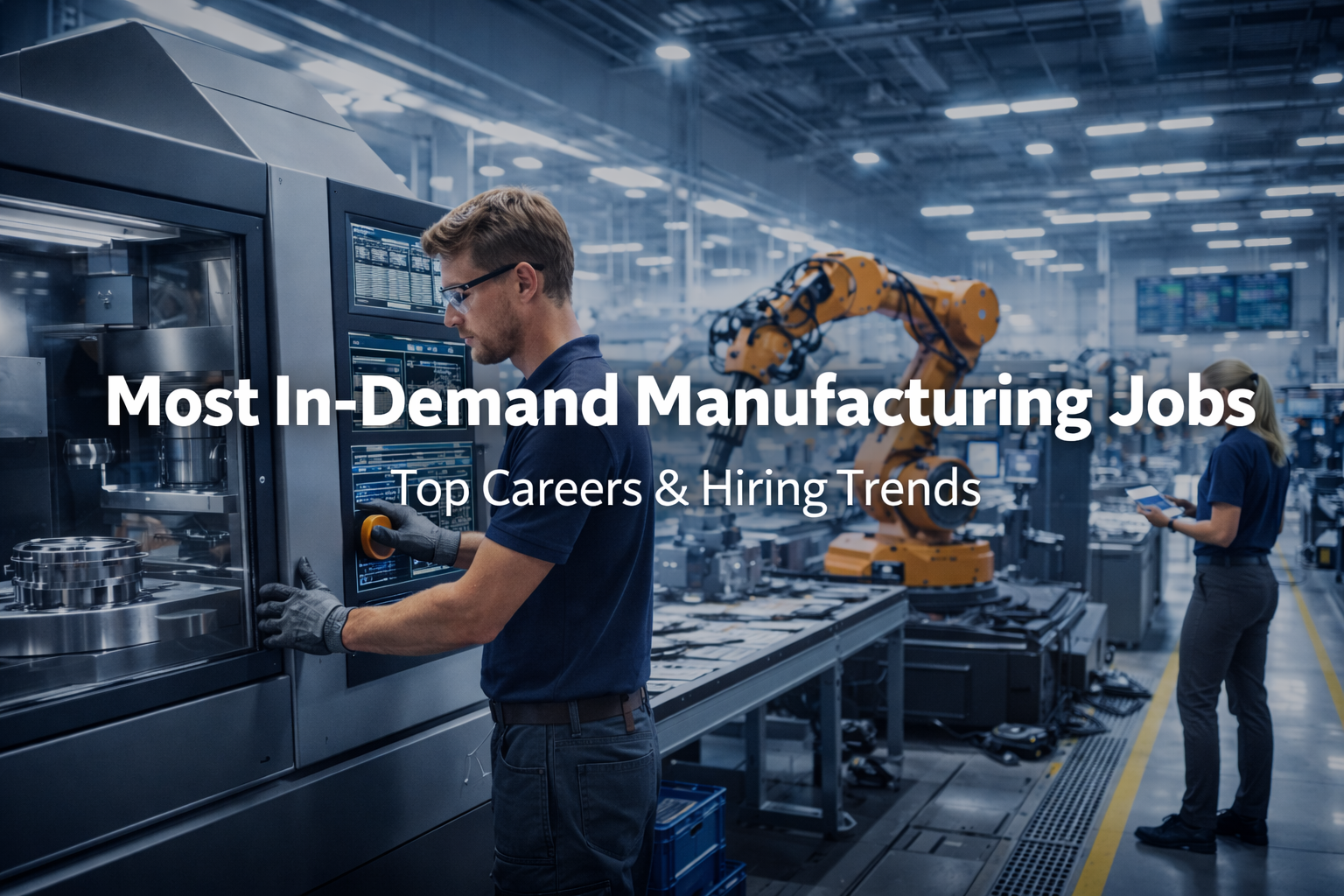
Manufacturing is entering a defining era. Automation, artificial intelligence, reshoring initiatives, and ongoing labor shortages are reshaping how factories operate — and who they hire. As companies modernize their operations, demand is surging for workers who combine hands-on manufacturing experience with technical and digital skills.
Below is a breakdown of the most in-demand manufacturing roles this year, why employers are hiring aggressively for them, and what job seekers should know heading into 2025–2026.
What’s Driving Manufacturing Hiring in 2025
Several forces are fueling demand across the manufacturing workforce:
Automation & Smart Factories: Robotics, sensors, and AI-driven systems require skilled technicians and engineers to install, operate, and maintain them.
Persistent Labor Shortages: Manufacturers continue to struggle to fill skilled roles, especially in maintenance, machining, and engineering.
Reshoring & Domestic Expansion: Companies are bringing production back to the U.S. to stabilize supply chains and reduce global risk.
Industry 4.0 Transformation: Data, connectivity, and predictive technologies are now core to modern manufacturing operations.
The Most In-Demand Manufacturing Roles This Year
CNC Machinists & Programmers
CNC machinists remain foundational to modern manufacturing, especially in aerospace, automotive, medical devices, and defense. These professionals operate and program precision machines that produce complex, high-tolerance parts.
Why demand is high: Precision manufacturing still requires skilled human oversight, even as automation increases.
Automation & Robotics Technicians
Automation technicians install, troubleshoot, and maintain robotic systems, PLCs, and automated production lines. As factories become more digitized, these roles are among the fastest-growing in manufacturing.
Why demand is high: Automation investments are accelerating across nearly every manufacturing sector.
Industrial Maintenance Technicians & Mechanics
Maintenance professionals keep production equipment running efficiently by performing preventive maintenance, diagnostics, and repairs on mechanical, electrical, and automated systems.
Why demand is high: Equipment downtime is costly, and skilled maintenance talent is in short supply.
Industrial & Process Engineers
Industrial engineers analyze workflows, improve efficiency, reduce waste, and integrate new technologies into production processes.
Why demand is high: Manufacturers are under constant pressure to increase productivity while controlling costs.
Production Supervisors & Manufacturing Managers
Supervisors oversee daily operations, manage teams, enforce safety and quality standards, and ensure production targets are met.
Why demand is high: Workforce turnover and expansion have increased the need for experienced leadership on the shop floor.
Machine Operators, Assemblers & Production Workers
Despite automation, manufacturers still rely heavily on skilled operators and assemblers for flexible, hands-on production tasks.
Why demand is high: Reshoring and increased production volumes continue to drive hiring at the operational level.
Quality Control Inspectors
Quality inspectors test and measure products to ensure they meet strict specifications and compliance standards.
Why demand is high: Tighter tolerances and regulatory requirements make quality assurance more critical than ever.
Supply Chain Coordinators & Production Schedulers
These professionals manage inventory, coordinate materials, and align production schedules to avoid delays and inefficiencies.
Why demand is high: Supply chain volatility has made planning and coordination essential skills.
Manufacturing Data & Automation Analysts
As factories generate more data, analysts help interpret production metrics, optimize performance, and support predictive maintenance strategies.
Why demand is high: Data-driven decision-making is becoming standard across manufacturing operations.
Skills Employers Want Most
Across these roles, manufacturers consistently prioritize:
Technical and mechanical aptitude
Automation and robotics experience
CNC programming and blueprint reading
Lean manufacturing and Six Sigma knowledge
Digital literacy and problem-solving skills
Relevant certifications, apprenticeships, or hands-on training
Manufacturing careers in 2025–2026 are defined by technology, adaptability, and skill depth. While traditional production roles remain essential, the strongest job prospects are found where hands-on experience intersects with automation, engineering, and data. For job seekers, investing in technical training and continuous learning is the clearest path to long-term stability and growth in today’s manufacturing workforce.
FAQ
Is manufacturing still a good career choice?
Yes. Despite automation, manufacturing continues to offer stable, well-paying careers — especially for skilled and technical workers.
Do manufacturing jobs require a college degree?
Many in-demand roles rely on certifications, apprenticeships, or vocational training rather than four-year degrees.
Which manufacturing roles are growing fastest?
Automation, robotics, maintenance, and engineering roles are among the fastest-growing segments.
Sources
Robert Half – Employment Trends in the Manufacturing Industry (2024)
Old National Bank – The Most In-Demand Manufacturing Jobs of 2025 (2024)
Panasonic Toughbook – The Most In-Demand Manufacturing Jobs of 2025 (2024)
Thomasnet – In-Demand Manufacturing Jobs & Skills (2024)
Industry Today – The Growing Demand for Manufacturing & Logistics Talent (2024)
Robotics & Automation News – Robotics Hiring Trends and Workforce Demand (2024)
U.S. Bureau of Labor Statistics – Manufacturing Occupational Outlook (latest available data)