
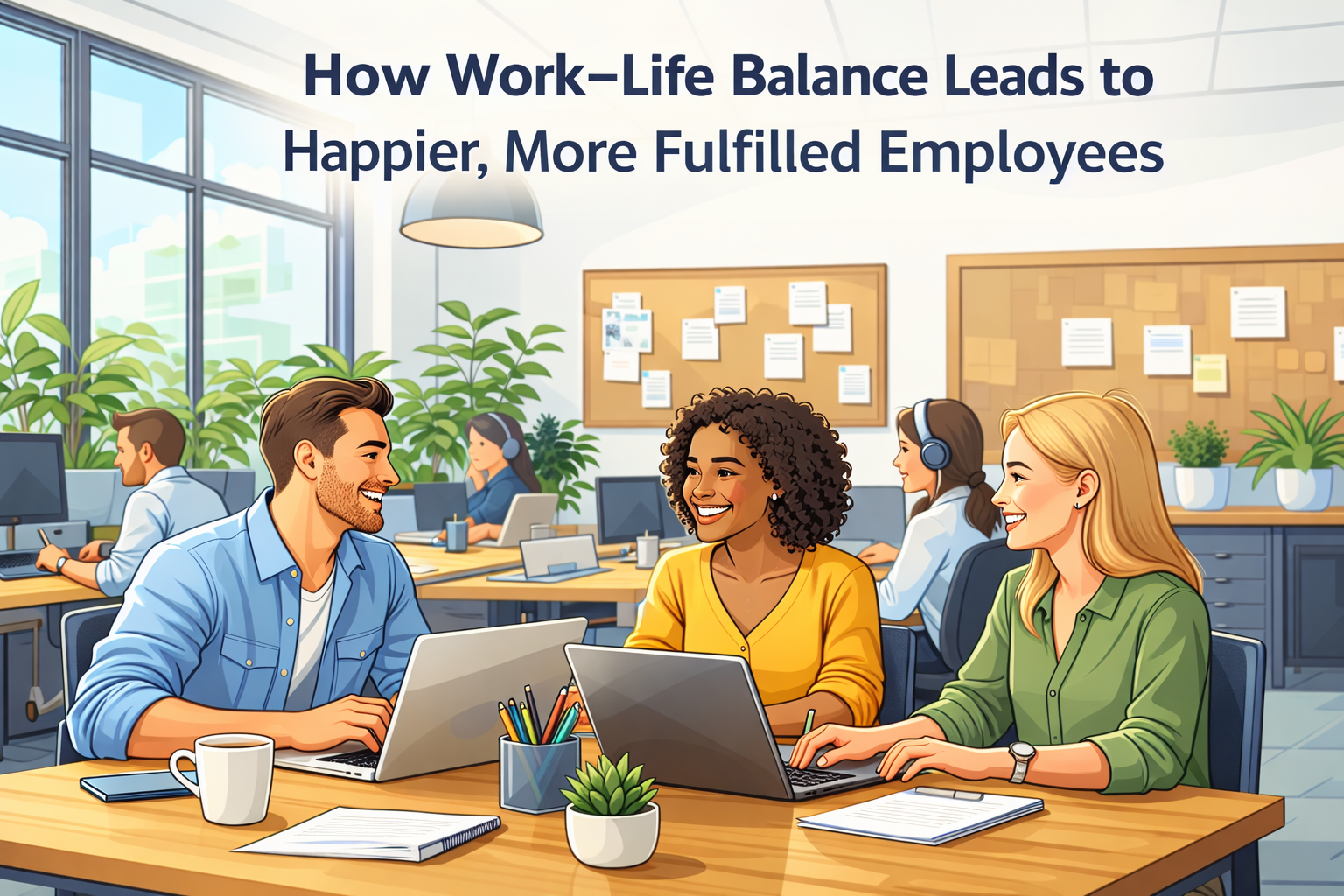
In an era where technology keeps employees constantly connected, work–life balance has become one of the most important factors shaping workplace satisfaction. The traditional model of long hours and constant availability is no longer sustainable—and employees are increasingly vocal about their need for balance, flexibility, and personal well-being.
Organizations that recognize this shift are not only improving employee happiness, but also building stronger, more adaptable teams. Work–life balance is no longer just an HR initiative; it is a core business strategy that directly impacts performance, retention, and company culture.
The Modern Workplace Is Redefining Success
For decades, professional success was measured by hours worked and physical presence in the office. Today, success looks different. Employees value autonomy, flexibility, and meaningful work that fits into their broader lives.
When companies allow people to manage their schedules effectively, employees feel trusted. That trust fosters a sense of ownership over their work, leading to higher engagement and a stronger emotional connection to the organization.
Work–Life Balance and Mental Well-Being
One of the most significant benefits of work–life balance is its impact on mental health. Chronic overwork often leads to anxiety, fatigue, and burnout—issues that can quietly damage both employees and organizations.
Balanced employees have time to rest, pursue hobbies, and maintain social connections. These activities act as natural stress relievers, helping individuals return to work refreshed rather than depleted. Over time, this reduces absenteeism and improves overall workplace morale.
Happier Employees Are More Engaged Employees
Employee happiness and engagement go hand in hand. When people feel supported in their personal lives, they are more likely to be emotionally invested in their roles.
Rather than viewing work as an obligation, balanced employees see it as a meaningful part of their lives. This mindset encourages initiative, creativity, and a willingness to go the extra mile when it truly matters—not because they feel pressured, but because they feel valued.
The Role of Balance in Preventing Burnout
Burnout rarely happens overnight. It builds gradually through unrealistic expectations, constant deadlines, and a lack of downtime. Work–life balance serves as a protective barrier against this slow erosion of motivation.
Clear boundaries—such as respecting evenings, weekends, and vacation time—allow employees to recover from daily demands. When recovery becomes part of the work culture, burnout decreases and long-term performance improves.
Productivity Improves When Balance Is Respected
Contrary to outdated beliefs, longer hours do not equal better results. In fact, overworked employees are more prone to mistakes, slower decision-making, and reduced creativity.
Balanced employees tend to work more efficiently during their scheduled hours. With better focus and energy, they can complete tasks faster and with higher quality, benefiting both individuals and the organization as a whole.
Work–Life Balance Strengthens Workplace Relationships
Stress often spills over into workplace interactions. When employees are exhausted, communication suffers and conflicts become more frequent.
By promoting balance, organizations create calmer, more collaborative environments. Employees who feel emotionally and physically well are better communicators, better teammates, and more empathetic leaders.
Employer Support Makes the Difference
Work–life balance is most effective when it is actively supported by leadership. Policies alone are not enough—employees take cues from how managers behave.
When leaders model healthy habits, such as taking time off and setting boundaries, it sends a powerful message. Employees feel safer prioritizing their well-being without fear of judgment or negative consequences.
A Key Driver of Retention and Loyalty
Employees are far more likely to stay with companies that respect their time and personal lives. In competitive job markets, work–life balance is often a deciding factor when candidates choose between employers.
Organizations that prioritize balance reduce turnover, preserve institutional knowledge, and save significantly on recruitment and training costs. Loyalty grows when employees feel their well-being is genuinely valued.
The Long-Term Cultural Impact
Over time, a commitment to work–life balance shapes company culture. It creates workplaces where people feel energized rather than drained, motivated rather than overwhelmed.
This kind of culture attracts high-performing professionals who are looking for sustainable careers—not just short-term jobs.
Work–life balance leads to happier, more fulfilled employees by supporting mental health, preventing burnout, improving productivity, and strengthening engagement. Companies that embrace balance benefit from stronger cultures, higher retention, and better long-term performance.
Frequently Asked Questions
Why is work–life balance important for employees?
It helps reduce stress, improve mental health, and create a sense of fulfillment both inside and outside of work.
How does work–life balance affect company performance?
Balanced employees are more productive, engaged, and loyal, which directly improves business outcomes.
What are simple ways employers can support balance?
Offering flexibility, respecting time off, setting realistic expectations, and leading by example.
Can work–life balance really reduce burnout?
Yes. Consistent boundaries and recovery time significantly lower the risk of long-term burnout.